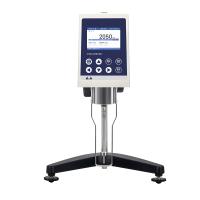
Brief introduction, operation and selection method of Rotational Viscometer
A Rotational Viscometer is an instrument used to measure the viscosity of liquids or soft substances. Viscosity is an important parameter for the fluidity of substances, and it has a wide range of applications in many fields such as industry, biology and chemistry.
working principle
Rotational viscosity is based on measuring a substance's response to force. When a substance is rotated, its internal molecules create drag, causing it to accelerate less. This resistance, also known as viscoelastic force, is caused by the viscosity of the substance.
A Rotational Viscometer typically consists of a rotating platform in which a substance is driven to rotate and determines its viscosity by measuring its response to the force. Typically, a rotating platform is driven by a motor that controls the speed of rotation. In addition, the Rotational Viscometer can also include an acceleration sensor, which is used to measure the acceleration of the substance, so as to obtain the value of viscosity.
The numerical value of viscosity can be calculated by the following formula:
η=F/(2*π*r*a)
in:
η: Viscosity
F: The resistance exerted by the matter on the rotating platform
r: radius of rotation
a: acceleration
By measuring viscosity, we can evaluate the properties of substances, such as fluidity, viscosity, etc., which are of great value in production, scientific research and other fields.

operation method
The operating steps of the Rotational Viscometer are as follows:
Prepare the sample: Pour the substance into the Rotational Viscometer, making sure it is the right amount for accurate measurements.
Calibrate the instrument: If it is the first time to use, or enter the use state from a long-term unused state, the instrument needs to be calibrated.
Setting parameters: Set parameters such as rotation speed and time as required.
Start the instrument: press the start button to make the material start to rotate on the rotating platform.
Measurement data: During the rotation of the substance, the instrument will measure its acceleration synchronously, and calculate the viscosity value through the viscosity formula.
Record the results: record the measurement results in the data sheet, and save the original data of the instrument for subsequent analysis.
End test: press the end button to stop the instrument from working.
These steps are common to all models of Rotational Viscometers, but there may be some minor differences depending on the instrument model. Before use, please read the instructions carefully to ensure correct operation.
Selection method
Selecting a Rotational Viscometer requires consideration of the following factors:
Test sample: It is necessary to consider the properties, concentration, temperature and other parameters of the sample to determine the measurement range of the required Rotational Viscometer.
Test accuracy: According to the accuracy requirements of the test, determine the accuracy level of the required Rotational Viscometer.
Ease of operation: According to the technical level of the user, choose a Rotational Viscometer that is easy to operate and easy to use.
Price: According to the budget, choose a Rotational Viscometer with higher cost performance.
Brand and after-sales service: choose a brand with reputation and perfect after-sales service.
Before choosing a Rotational Viscometer, you need to understand its parameters and performance in detail, and compare it with multiple brands to ensure that you choose a suitable Rotational Viscometer.


- 1Rotational viscometer - principle, classification, application and calibrating
- 2Application of NDJ-8S digital Rotational Viscometer in viscosity measurement of cosmetic raw materials
- 3NDJ-5S digital Rotational Viscometer accurate measurement of natural oil viscosity
- 4Viscosity of polypropylene (PP) amide measured by NDJ Viscometer
- 5Application of HBDV-1H swirl/spin High Temperature Viscometer in Viscosity Determination of Plastic Particles
- 6Rotational viscometer selection guide: How to choose the right viscosity equipment for you?
- 7Principle, type and accuracy control of Rotational Viscometer
- 8Which Viscometer to Choose for Licorice Extract Viscosity Testing? How to Test?
- 9Application of Rotational viscometer in Waterborne Polyurethane Adhesive