Color painting common defects - bleeding and exposed
1. Bleeding
Bleeding mainly occurs in the car color change coating of nitro paint, the reason is that nitro paint thinner (banana water) can dissolve the dry film of nitro paint (paint film after drying), so in the color change coating, if the new paint The color of the installed paint film is different from that of the old paint. After the new paint is sprayed, if the coating is sprayed thicker, the solvent in the new paint will easily dissolve the old paint, so that the appearance of the new paint will show the color of the old paint. Commonly known as bleeding. The prevention of this kind of bleeding is as follows: First, when spraying color-changing lacquer, the moving speed of the Spray Gun should be appropriately faster, so that the paint film after spraying is thinner, so that the solvent in the paint film can be volatilized as soon as possible, which can avoid dissolving the old paint And produce bleeding.
The second is to spray a layer of nitro thinner insoluble paint on the surface of the old paint as an isolation layer. For example, spray a layer of polyurethane acrylic clear paint first, and then spray the color-changing nitro paint after drying to prevent bleeding.
Two, exposed bottom
It mainly refers to that after the color change is painted, some parts can faintly show the color of the primer, which affects the uniformity and appearance of the color change. The reasons are:
The color of the old paint is too dark and the color of the new paint is too light, and it is caused by spraying the new paint directly without spraying the light-colored transition layer (priming paint) when spraying the new paint, such as changing red to white, black to blue, etc. Spraying the bottom transition layer is easy to produce bottom exposure.
Caused by uneven pressure gun. When spraying the color-changing topcoat, if the pressure gun is uneven during spraying, the paint film at the leaking gun will be thin and the bottom will be exposed.
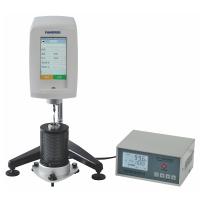
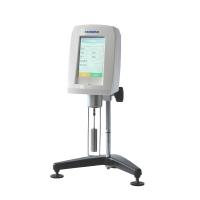
The paint viscosity is too low (testing instrument: viscometer). If the viscosity of the color-changing topcoat is adjusted too low, the paint is too thin, the paint film is thin after spraying, and the hiding power is poor (testing instrument: hiding power paper), resulting in exposed bottom.
The measures to prevent the bottom from being exposed are as follows: firstly, spray the bottoming transition layer for the painting from dark color to light color, so that the color of the transition layer tends to or is close to the color changing paint; second, the viscosity of the color changing paint should be moderate, and pay attention to the uniform pressure gun when spraying .
For the remediation of the exposed bottom, when the exposed bottom is slight, local repairs can be carried out. When the exposed bottom is serious, a complete rework is required.



- 1Why does the appearance of the paint film wrinkle, bleed and change color?
- 2Determination of film drying performance
黄秉升 - 《《涂装与电镀》编辑部》
- 3A film of uniform thickness prepared with drawdown blades
- 4General method of film preparation
- 5Introduction of coating softness inspection method
- 6Coating solvent
- 7How is film flexibility measured?
- 8How is film thickness measured?
- 9How to measure film and film Drying time?