Common defects of color change painting - orange pattern and sand marks
1. Orange pattern
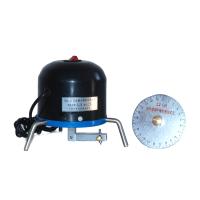
Also known as orange peel. Refers to the appearance of the paint film after drying (testing instrument: drying time Tester) like orange peel. There are three kinds of common orange grains: thick, medium and thin. Fine orange grains usually have little effect on the quality of ordinary and medium-grade coatings, while coarse orange grains and medium orange grains have a certain impact on the appearance of the paint film, especially coarse orange grains. Streaks will seriously affect the smoothness and brightness of the paint film. The reasons are:
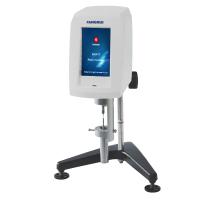
The viscosity of the paint solution is too high. If the spraying viscosity is too high and the paint quality is too thick (testing instrument: viscometer), it is easy to produce rough orange lines after spraying. Caused by spraying too far apart. If the distance between the Spray Gun and the surface to be sprayed is too far, most of the solvent in the paint will volatilize before the coating film is formed, resulting in poor leveling of the coating film and rough lines.
The temperature in the construction site is too high, and the thinner solvent volatilizes too quickly. For example, use fast thinner for spraying in summer.
To prevent orange streaks, one is to adjust the viscosity of the paint before spraying; the other is to use thinners with corresponding volatilization speeds according to the temperature of the construction season; the third is to control the spraying distance when spraying, not too far. To remedy the orange streaks, if the orange streaks are slight, you can polish it with sand wax after the paint film is completely dry, or smooth it with fine water sandpaper first and then polish it with wax. When the orange pattern is serious, it needs to be ground and re-sprayed.
2. Sand marks
It means that after the paint film of color-changing coating dries, there will be coarse sand marks or random sand marks, which will affect the appearance of the paint film. The reasons are:
The abrasive cloth or water sandpaper used for sanding before color change has a large abrasive particle size.
After sanding with a coarse emery cloth or coarse water emery paper, it is not effective to use a fine emery cloth or a fine grit emery paper, or to go too fine
(such as leakage grinding, etc.).
When grinding with water sandpaper, if it is not wetted with water in time, the grinding dirt will stick to the sand surface and form coarse sand marks.
The precautionary measures are as follows:
After sanding with coarse emery cloth or sandpaper, it is necessary to use fine water sandpaper for comprehensive fine-graining without missing sanding.
When water milling, it should be continuously wetted with water to prevent rough marks caused by dryness.
Old paint with good smoothness should not be sanded with coarse emery cloth or sandpaper.
Remedy: Partial sand marks can be scraped off with pitting putty or putty first, then polished and repaired after drying. When the sand marks are slight, sand wax can be used for smoothing. When there are many sand marks, it needs to be scraped and polished again, and then sprayed again.








- 1Why does the appearance of the paint film wrinkle, bleed and change color?
- 2Determination of film drying performance
黄秉升 - 《《涂装与电镀》编辑部》
- 3A film of uniform thickness prepared with drawdown blades
- 4General method of film preparation
- 5Introduction of coating softness inspection method
- 6Coating composition additives
- 7Coating solvent
- 8How is film flexibility measured?
- 9How is film thickness measured?