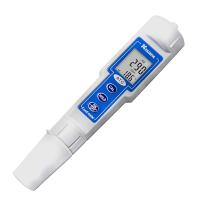
How to choose a high-precision conductivity meter?
The high-precision conductivity meter is a precision instrument used to measure the conductivity of electrolyte solutions, and is usually used for conductivity measurement in laboratories and scientific research fields. The following is a detailed introduction to the selection points and precautions of high-precision conductivity meters.
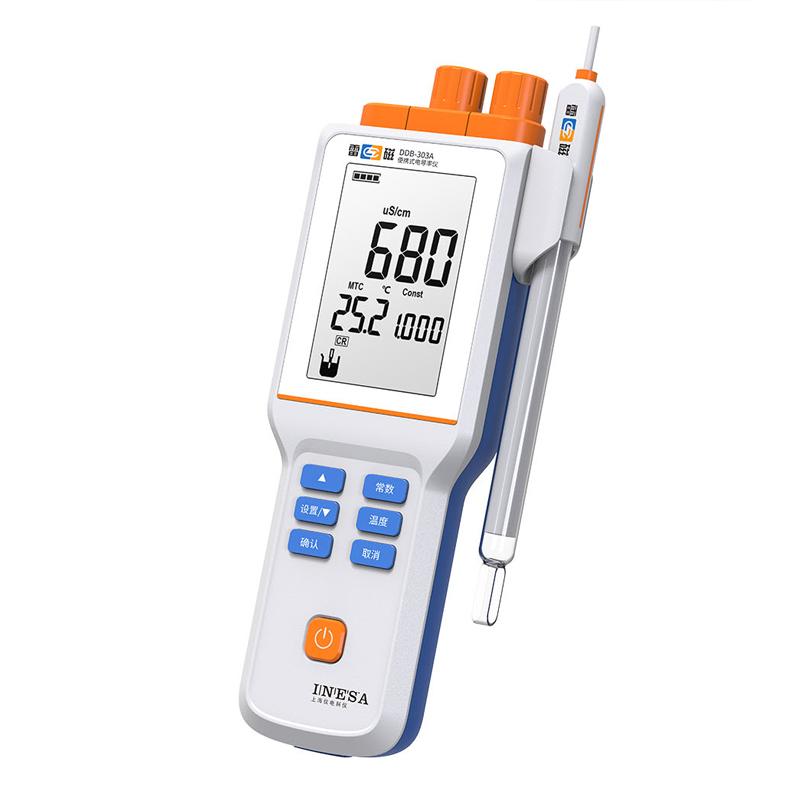
select points
Measuring range: Different types of conductivity meters have different measuring ranges, and the appropriate instrument should be selected according to the conductivity range to be measured.
Accuracy requirements: High-precision conductivity meters usually have higher accuracy and resolution, but the corresponding price is also higher. When selecting an instrument, it should be considered comprehensively according to actual needs and budget.
Automatic temperature compensation: Since the conductivity is greatly affected by temperature, the automatic temperature compensation function is very important. When selecting an instrument, make sure it has an automatic temperature compensation function to obtain more accurate measurement results.
Electrode type: The electrode is the key component of the conductivity meter, and different types of electrodes are suitable for different application scenarios. In general, choosing a variety of electrode types can meet different experimental needs.
Data output: High-precision conductivity meters usually have a variety of data output methods, such as USB, RS232, Bluetooth, etc., and should be selected according to actual needs.
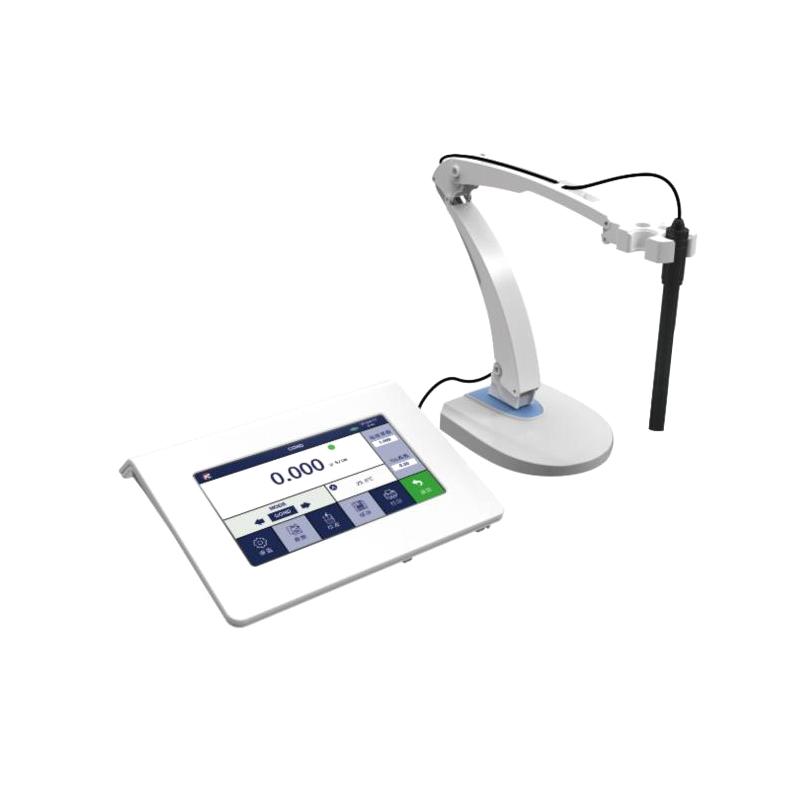
Precautions
Electrode maintenance: The electrode is the core component of the conductivity meter, maintaining the electrode can prolong its service life and maintain accuracy. After use, it should be cleaned and stored in a protective solution.
Temperature control: Temperature control is very important in conductivity measurement, so the instrument should be placed in an environment with stable temperature for measurement, or a conductivity meter with automatic temperature compensation function should be used.
Calibration: Regular calibration of your conductivity meter is critical to ensure accuracy. Standard solutions should be used for calibration and calibration should be performed in accordance with the instrument manual.
Electrode selection: Different types of electrodes should be selected according to different experimental needs, such as disc electrodes are suitable for conventional liquid measurement, and flow-through electrodes are suitable for online flow measurement.
Environmental requirements: The conductivity meter should be placed in a dry, well-ventilated, and temperature-stable environment for use, so as not to affect the accuracy and stability of the instrument

- 1The Working Principle of Gel Conductivity Meter Has Been Detailed
- 2Detection Principle and Application Analysis of Conductivity Meter
- 3Principle of Conductivity Analyzer
- 4Several common electrode types for Conductivity Meters
- 5Differences between three STIP-scans: pH Meter, Conductivity Meter, and Dissolved Oxygen Meter
- 6Conductivity Meter and Ion Meter specific differences
- 7Common types and application differences of STIP-scan
- 8How to detect the conductivity of lithium battery coating slurry?
- 9How to choose a microcomputer conductivity meter?