Non-contact Colorimeter selection considerations
The non-contact Colorimeter is an instrument used to measure the color and color difference of an object. Its working principle is to use a photoelectric sensor to measure the spectral information reflected or transmitted through the sample after the light source irradiates it, and convert it into a number according to the color space model Signals are processed and compared. The following is a detailed introduction to the key points and precautions for the selection of non-contact color measuring instruments:
select points
1. Measuring range: different types of non-contact color measuring instruments have different measuring ranges, and the appropriate measuring range should be selected according to actual needs.
2. Light source type: Common light source types include D65, A, C, F, etc. Different light source types are suitable for different application scenarios. For example, D65 is suitable for color measurement under indoor lighting, and A is suitable for color measurement under indoor lighting. , C is suitable for industrial color detection, etc.
3. Measurement accuracy: Measurement accuracy is one of the core indicators of non-contact color measuring instruments, generally expressed by ΔE value. It is necessary to choose a color measuring instrument with high accuracy to ensure the reliability and accuracy of the test results.
4. Equipment accuracy: In addition to measurement accuracy, the accuracy of the equipment itself is also one of the key points for selection. Brands and models with high equipment precision and stable and reliable work should be selected as much as possible.
5. Portability: The portable non-contact Colorimeter can be brought to the scene that needs to be measured, which is more flexible and convenient, but it should also pay attention to its measurement accuracy and measurement range.
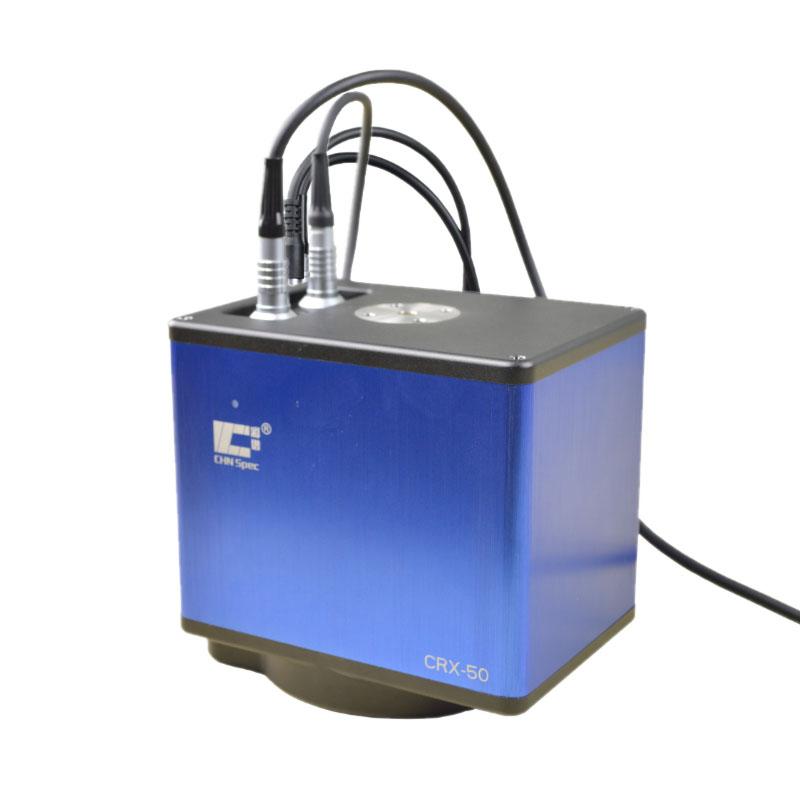
Precautions
1. Calibration is required before use: The non-contact Colorimeter needs to be calibrated by white board and black board before use, so as to ensure the accuracy of the test results.
2. Sample preparation: The state and environment of the sample will also affect the test results. Care should be taken to remove dust, stains, etc. on the surface of the sample, and to control environmental temperature, humidity and other factors.
3. Light source interference: The light source will interfere with the test results. Care should be taken to place the sample under uniform light conditions for testing to avoid interference from other light sources.
4. Avoid human factors: During the testing process, it is necessary to avoid the influence of human factors on the test results, such as avoid touching the samples with fingers, and avoid covering the samples with hair etc. during the test.
- 1What is the difference between tristimulus Colorimeter and Colorimeter?
- 2How does Colorimeter detect particulate matter (PM) color differences?
- 3Application of Colorimeters in paint&Coating color difference detection
- 4Several selection points about food Colorimeters
- 5Selection points of portable Spectrophotometer
- 6Color Measurement Challenges Faced by Manufacturers in the Metals Industry
- 7CS-810 Desktop Spectrophotometer Application Case Cleaner Color Detection
- 8How to calibrate Spectrophotometer s and Colorimeters?
- 9What is the difference between a Colorimeter and a Spectrophotometer ?
-
![KINGWELL JZ-300 general Colorimeter 8mm diameter, plastic, lame plating, Eletroplating, printing industry special]()
-
![CHNSPEC CRX-50 Online Colorimeter, Non-Contact Colorimeter]()
-
![CHNSPEC CRX-51 Non-Contact Colorimeter]() CHNSPEC CRX-51 Non-Contact Colorimeter$ 11243.00
CHNSPEC CRX-51 Non-Contact Colorimeter$ 11243.00 -
![CHNSPEC CRX-52 Automotive Paint Online Colorimeter]()
-
![INESA WSC-2S Colorimeter touch screen control, multi-interface output]()
-
![JZ-630 High Precision Colorimeter Suitable for Textile, coating powder industry color difference detection measurement diameter 14mm]()