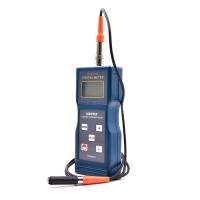
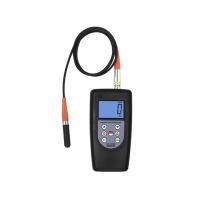
Selection method of handheld coating Thickness Gauge
Handheld coating Thickness Gauges are commonly used instruments for non-destructive measurement of coating thickness on various material surfaces. The following are the selection points and precautions:
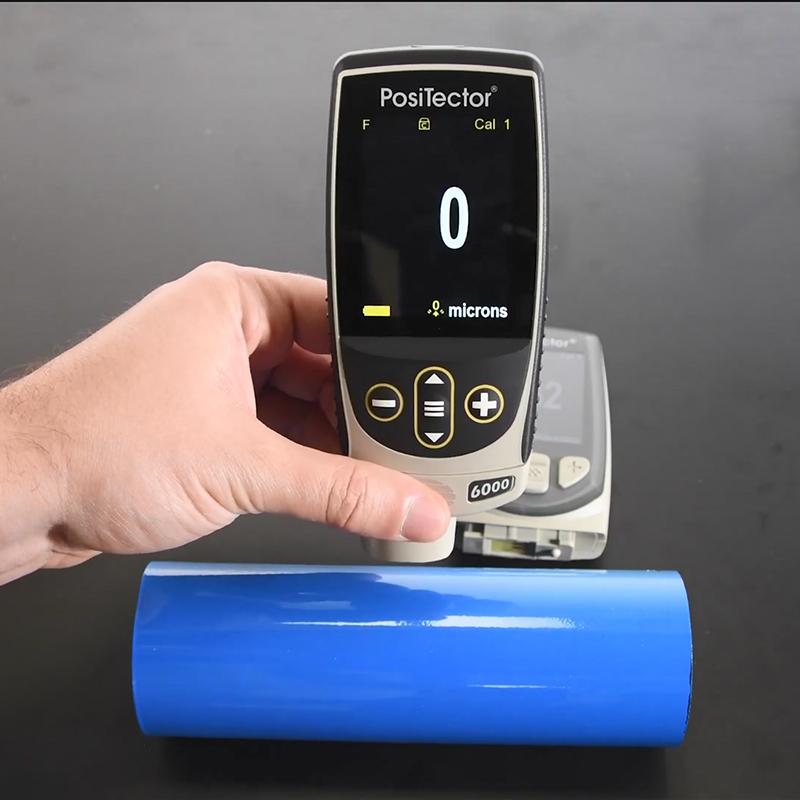
select points
Measuring range: When choosing a handheld coating Thickness Gauge, it should be considered whether its measuring range can cover the coating thickness range to be measured. Generally speaking, the measurement range of the instrument should be between 0-2000um.
Accuracy: Accuracy is an important indicator that affects the accuracy of measurement results. Therefore, when choosing a handheld coating Thickness Gauge, you should choose an instrument with high precision.
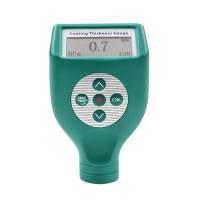
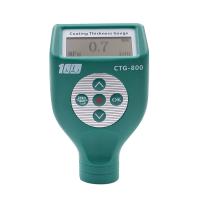
Display mode: The display mode of the hand-held coating Thickness Gauge should be convenient and fast, and the digital display mode is more common, and some advanced instruments also have LCD screen and backlight function.
Data storage: Some advanced handheld coating Thickness Gauges can store multiple sets of data, and can transmit data to a computer or mobile device via USB or Bluetooth.
Operation method: When choosing a handheld coating Thickness Gauge, you should consider whether its operation method is simple and easy to understand, and whether it needs special training to master it.
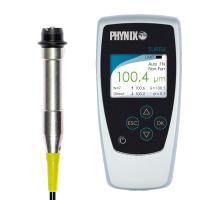
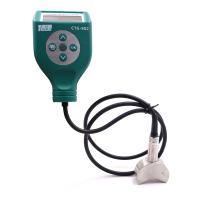
Types of probes: Hand-held coating Thickness Gauges need to be equipped with different probes, brackets, fixtures and other accessories to meet the measurement requirements of samples of different shapes and sizes.

Precautions
Calibration: Calibration is required before using a handheld coating Thickness Gauge. The purpose of calibration is to ensure the accuracy and reliability of the instrument.
Cleaning: Before measuring, the instrument should be cleaned to avoid contamination such as dust or grease from affecting the measurement results.
Measurement location: When measuring, a representative measurement location should be selected to ensure the accuracy of the measurement results.
Environmental factors: The measurement results of the handheld coating Thickness Gauge may be affected by environmental factors, such as temperature, humidity, etc. Therefore, attention should be paid to the stability of the environment during use.
Maintenance: During use, attention should also be paid to the maintenance and maintenance of the handheld coating Thickness Gauge, cleaning and replacing accessories such as probes in time to ensure its long-term use effect.
- 1Nondestructive measurement Coating thickness
- 2Principle, application and selection of traffic coatings Coating Thickness Gauge
- 3Principle, Application and Selection of Eddy current Coating Thickness Gauge
- 4Principle, Application and Type Selection of Electronic Coating Thickness Gauge
- 5Explore the principle, application and selection of phosphating layer Coating Thickness Gauge
- 6Principle, Application and Type Selection Analysis of Chrome Coating Thickness Gauge
- 7Principle, Application and Selection of Coating Thickness Gauge for inner wall of small pipe
- 8Basic principle and application scenario of steel Coating Thickness Gauge
- 9Principle and Application Analysis of Coating Thickness Gauge