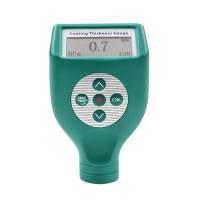
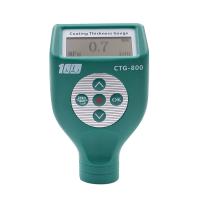
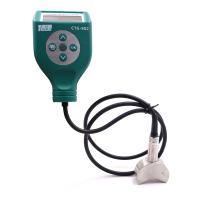
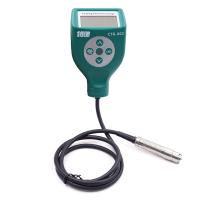
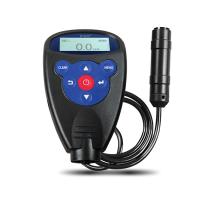
The correct selection method of non-destructive film thickness meter
A non-destructive Film Thickness Gauge is an instrument used to non-destructively measure the thickness of a material film or coating. Here are some key points and considerations when choosing a non-destructive Film Thickness Gauge:
1. Measuring range: When choosing a non-destructive film thickness meter, the instrument should be selected according to the material and thickness range to be measured. Generally, the measurement range of the instrument should be able to meet the application requirements, and at the same time, do not over-purchase a measurement range higher than the requirement, so as to avoid unnecessary cost waste.
2. Measurement accuracy: Accuracy is an important indicator to measure the performance of non-destructive Film Thickness Gauge. When choosing a non-destructive film thickness meter, you should choose an instrument with sufficient precision to ensure the reliability and accuracy of the measurement results.
3. Measuring principle: The measuring principles of non-destructive Film Thickness Gauges are usually divided into various types, such as X-ray fluorescence, laser reflection, eddy current, etc. When selecting an instrument, the appropriate measurement principle should be selected according to the application requirements.
4. Material type: Different types of materials have different requirements for the selection of measurement principles and instruments. For example, X-ray fluorescence technology is suitable for measuring the film thickness of metal and non-metallic materials, while laser reflection technology is suitable for measuring the film thickness of transparent materials such as glass and plastic.
5. Use environment: Non-destructive Film Thickness Gauges are usually used in different environments, such as in the laboratory, workshop, field or outdoors. Therefore, when choosing a non-destructive Film Thickness Gauge, the use environment should be considered to choose a suitable model.
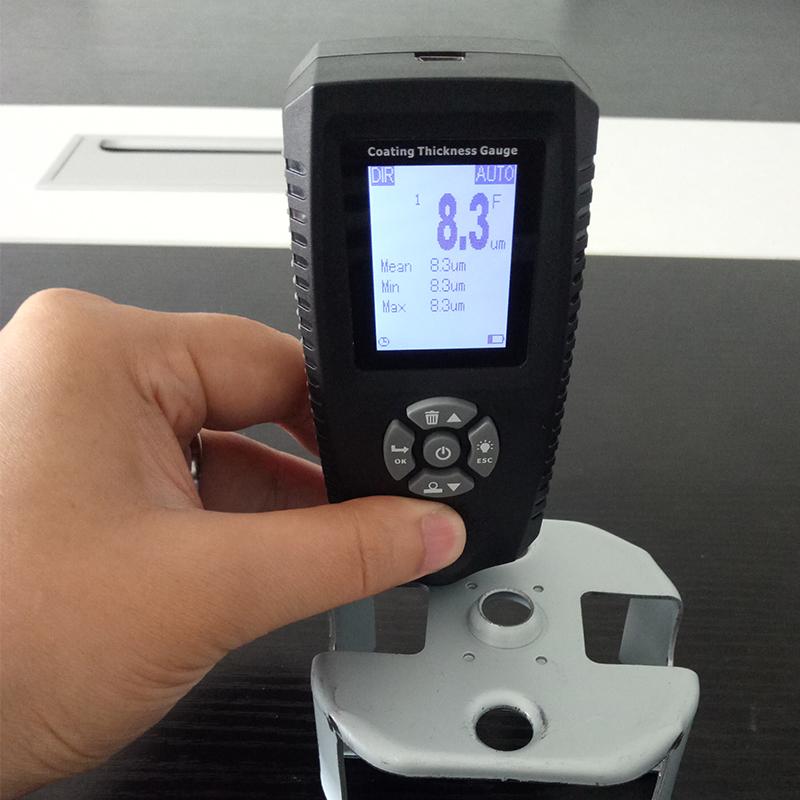
Precautions
1. When using a non-destructive Film Thickness Gauge, follow the instruction manual, and perform calibration and maintenance as required.
2. Before measuring, the measuring surface should be cleaned to ensure the measurement accuracy.
3. The operating environment of the non-destructive Film Thickness Gauge should be dry, dust-free, oil-free, and corrosive gas-free.
4. When using the non-destructive film thickness meter in different environments, attention should be paid to the influence of temperature and humidity on the measurement, and correction should be made.
5. Attention should be paid to factors such as the working temperature of the instrument, power supply life and storage conditions to ensure the long-term stable operation of the non-destructive film thickness meter
- 1Principle characteristics and application of silver Film Thickness Gauge
- 2Nondestructive measurement of dry coating thickness
- 3Coated steel coatings - Determination of dry-film thickness
- 4Application scheme of coating thickness test on wood board [with test video]
- 5Curved plastic coating thickness test application scheme [with test video]
- 6PosiTector200C ultrasonic coating Thickness Gauge on concrete coating thickness measurement application
- 7Coating Metering rodsFAQ
- 8Film Thickness Gauge and its calibration method
- 9Measuring method of nondestructive heat spray-on lining thickness