Drying technology of automobile topcoat
Automotive topcoats can be divided into two categories according to their drying characteristics: thermoplastic and thermosetting, based on thermosetting synthetic resin coatings
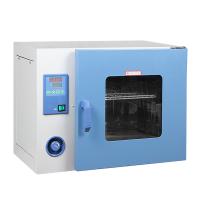
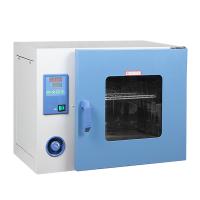
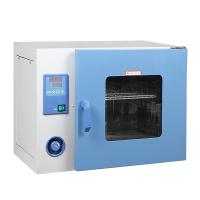
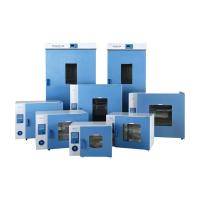
The performance of the coating film is greatly superior to that of thermoplastic coatings (such as nitro car spray paint). Today's new automotive topcoats are almost all thermosetting automotive coatings. Thermosetting synthetic resin automotive topcoat can be divided into two-component low-temperature drying type and one-component high-temperature baking type (also known as baking paint). The former is suitable for body coatings that do not have drying conditions or cannot withstand high-temperature baking (such as body coatings for buses and minibuses, automotive repair coatings, and coatings for plastic exterior parts of automobiles and motorcycles. Two-component coatings are used. polyurethane acrylic automotive topcoat). Almost all of the body coating lines produced in mass production use baking-type automotive topcoats. (Related instrument: oven)
The paint varieties and drying conditions for automobiles are listed in Table 2-5-10. Figure 2-5-9 shows the typical drying specification curve of automotive topcoat (solvent type); Figure 2-5-10 shows the typical drying specification .

The topcoat drying process is one of the main processes of the topcoat coating process. The selection and implementation of the drying specification is appropriate or not, the technical state of the drying equipment and the cleanliness of the drying environment, etc. directly affect the performance of the topcoat film and the first time of the topcoat coating.
Pass rate. The topcoat drying process should pay attention to the following items.
1. Make sure that the drying room and the surrounding environment are clean. The drying room should be cleaned regularly (it is recommended to wipe it with sticky gauze). The dusty car body absorbs the remaining dust in the drying room. (Related instrument: drying time Tester)

2. The temperature of the drying room should be uniform and stable, and should meet the requirements of the process regulations. The temperature-time curves of the upper, middle and lower parts of the drying chamber and each part of the body to be dried should be measured regularly.
3. The fresh air and circulating hot air supplied to the drying room should be filtered to ensure that the air in the drying room is clean and dust-free. It is recommended to supply fresh air from the drying room (such as inhaled from the drying room inlet), to ensure that the concentration of volatile organic compounds (VOC) should be lower than 25% of the lower explosion limit.
4. It should be ensured that the coating film on each part of the car body is cured uniformly. The structure of the car body is relatively complex, the volume is large, the thickness of the steel plate is different, and there are factors such as the cavity structure, which cause the temperature rise rate to be different, and the degree of curing of the coating film affecting each part is different. Attention should be paid to the holding time after the temperature of each part of the body reaches the temperature required by the process.
5. The transportation of the car body during the drying process should adopt the ground transportation method. The topcoat drying room should adopt a heating method combining radiation and hot air convection, and use radiation heating in the heating section to prevent hot air from blowing and dust from sticking to the wet coating film.
- 1Principle, application and selection of Electric Oven
- 2Principle, application and selection of Electric Oven
- 3Principle, application and selection of ozone sterilizing oven
- 4Glue spreader technical guide on Resin
- 5Principle, application and selection of tunnel oven
- 6Working principle and application analysis of laboratory oven
- 7Acrylic resin: performance inspection and Application
- 8Acrylic resin and its performance testing subjects and methods
- 9Hot Air Oven FAQ and its solution