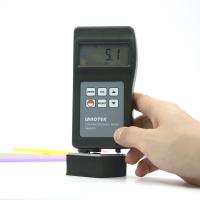
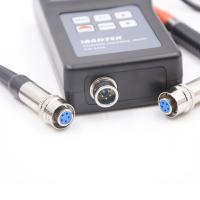
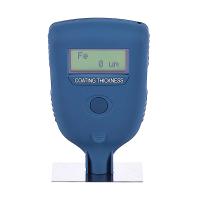
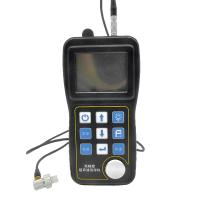
Portable Thickness Gauge Detailed Selection Skills
A portable Thickness Gauge is a measuring device that is easy to carry and use, and is usually used to quickly and accurately measure the coating or wall thickness of various workpieces. The following is a detailed introduction to the key points and precautions for the selection of portable Thickness Gauges:

select points
1. Measuring range: First of all, you should choose the measuring range according to your own needs. Generally, you can choose the appropriate model according to the thickness of the object to be measured. Instruments with a slightly larger range than actually needed should be selected to accommodate future changes.
2. Measurement accuracy: Accuracy is one of the important indicators to measure the quality of the instrument. Generally speaking, the higher the accuracy of the instrument, the more accurate the measurement results, but the price will increase accordingly. Therefore, it is necessary to choose the appropriate precision according to the actual needs and economic strength.
3. Applicability: Different types of portable Thickness Gauges are suitable for different types of workpiece measurement, such as metal, plastic, ceramics, etc. You need to choose the model that suits your needs.
4. Ease of use: Portable Thickness Gauges are usually easy to use, but it is necessary to choose a model that is easy to operate and easy to read, especially for non-professionals.

Precautions
Calibration: Portable Thickness Gauges need to be calibrated before use to ensure accurate and reliable measurements. Typically, calibration is required before each use to avoid measurement errors.
Cleanliness: Measuring instruments need to be kept clean and dry so as not to affect measurement accuracy. An easy-to-clean model should be chosen to better protect the instrument.
Maintenance: Need to pay attention to maintenance, such as regular replacement of batteries, maintenance of instrument sensors, etc. Proper maintenance can prolong the life of the instrument.
Operating environment: The portable Thickness Gauge needs to be used in a dry, clean, vibration-free, and electromagnetic-interference-free environment to ensure accurate and reliable measurement results.
Learning to use: For users who are not familiar with the use of portable Thickness Gauges, they need to read the instruction manual carefully and conduct training to ensure the correct use of the instrument and avoid misuse.