Common methods for preparing specific film thickness samples in coating laboratories
preparation steps
Preparation of a coating sample at a given film thickness typically involves the following steps:
Determine the required film thickness: According to the experimental requirements and application requirements, determine the film thickness of the coating that needs to be prepared.
Choose the right paint: Choose the right paint system according to the required film thickness and experimental requirements.
Prepare the coating substrate: The quality and surface roughness of the coating substrate are of great importance to the uniformity and accuracy of the coating film thickness. Choose a suitable substrate and carry out surface treatment.
Design coating process: According to the selected coating and substrate, design a suitable coating process. Coating process includes coating method, spraying pressure, nozzle size, coating speed, etc.
Implement the coating process: apply the paint evenly on the substrate, and operate according to the selected coating process.
Measuring the film thickness: use a suitable instrument (such as a micro Thickness Gauge) to measure the film thickness of the coating, and make adjustments and corrections as needed.
Coating method
Some common coating process methods include:
Spraying method: Use a Spray Gun to evenly spray the paint on the surface of the substrate.
Roller coating method: Use a roller to evenly roll the paint on the surface of the substrate.
Scraper coating method: Use a scraper to evenly coat the paint on the surface of the substrate.
Dip coating method: Dip the substrate into the coating so that its surface is evenly covered with the coating.
In practice, different coatings and substrates may require the use of different coating process methods and parameters to achieve the desired film thickness. Therefore, before carrying out the coating experiment, it is necessary to fully consider the experimental requirements and application requirements, select the appropriate coating and substrate, and determine the appropriate coating process.
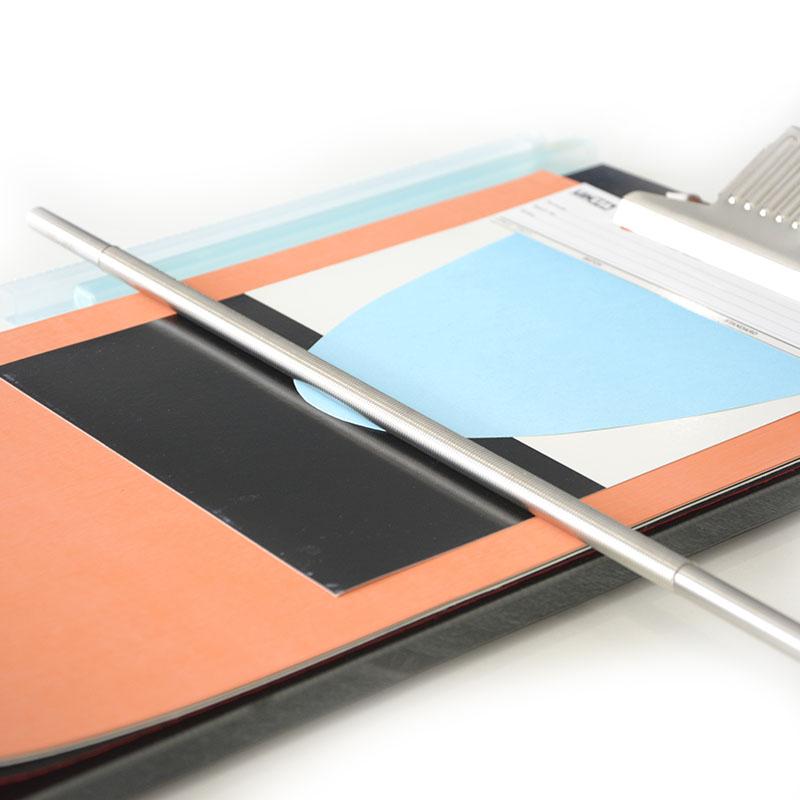
The knife coating method is a commonly used coating process method, which is mainly used to prepare thin films and coatings. The principle of the knife coating method is to evenly coat the paint on the surface of the substrate with a scraper, and then use an oven or other appropriate methods to cure the paint.
Preparation steps of scrape coating method
The following are some specific steps of the scraping method:
Preparation of coatings and substrates: Select a suitable coating system and substrate, and perform surface treatment according to the experimental requirements, such as cleaning, grinding, removing impurities, etc.
Choose the right scraper: choose the right scraper according to the required film thickness, usually stainless steel or plastic scraper. The width and length of the scraper should match the size of the substrate.
Adjust the paint viscosity: Pour the paint into the container, add thinner or solvent as needed to adjust the paint viscosity and fluidity. The viscosity of the paint should be suitable so that it can be evenly spread on the substrate when it is applied.
Coating: Dip the scraper into the coating and evenly coat the coating on the surface of the substrate. The scraper should maintain a certain angle with the substrate, and maintain a relatively stable scraping speed and pressure to ensure coating uniformity and film thickness.
Curing: After coating, the substrate is cured in an oven or other suitable method to allow the coating to form a strong coating.
Measuring the film thickness : Use a micro-Thickness Gauge and other instruments to measure the film thickness of the coating, and make adjustments and corrections as needed.
The knife coating method is a relatively simple and easy-to-control coating method, which is suitable for the preparation of thin films and coatings. In practice, it is necessary to select the appropriate scraper and coating system according to the experimental requirements and application requirements, and pay attention to controlling the scraping speed and pressure to ensure the uniformity and film thickness of the coating.
- 1What is "film thickness"?
- 28 Coating Thickness Measurement Methods
- 3Thickness measurement of surface high temperature coating
蜈蚣 - 《南北潮商城》
- 4Mayer Rods Moulding FAQ Solutions
Air - 《南北潮商城》
- 5Film Film thickness measurement
- 6Test of film thickness of workshop primer
- 7Study on common control technology of color coated steel film thickness
高兴昌;宋成革 - 《本钢技术》
- 8Analysis of common measurement techniques for color coated steel film thickness
- 9Application of Ultrasonic Thickness Gauge in Spinning Tube Abrasion Monitoring
张学勇 - 《超声波测厚仪在吐丝管磨损监测中的应用》