How is the viscosity of the paste tested?
The viscosity of a paste is a measure of its resistance to flow. The characteristics of paste viscosity are as follows:
Presents non-Newtonian fluid characteristics: the viscosity of the paste does not change linearly with the increase of the shear rate, but shows a nonlinear change. This behavior is called non-Newtonian fluid behavior and is an important characteristic of paste viscosity.
Viscosity changes with temperature: The viscosity of the paste usually decreases with the increase of temperature, because the increase of temperature will cause the molecular thermal motion to intensify, and the intermolecular force will weaken, so that the viscosity of the paste will decrease.
Affected by factors such as composition and pH value: The composition and pH value of the paste will also affect its viscosity. For example, some additives can increase the viscosity of the paste, while certain chemicals can reduce the viscosity of the paste.
Application-related: different applications have different requirements for paste viscosity. For example, the paste viscosity required for the preparation of pharmaceuticals may be higher than that required for the preparation of cosmetics, so it needs to be adjusted according to specific requirements in practical applications.
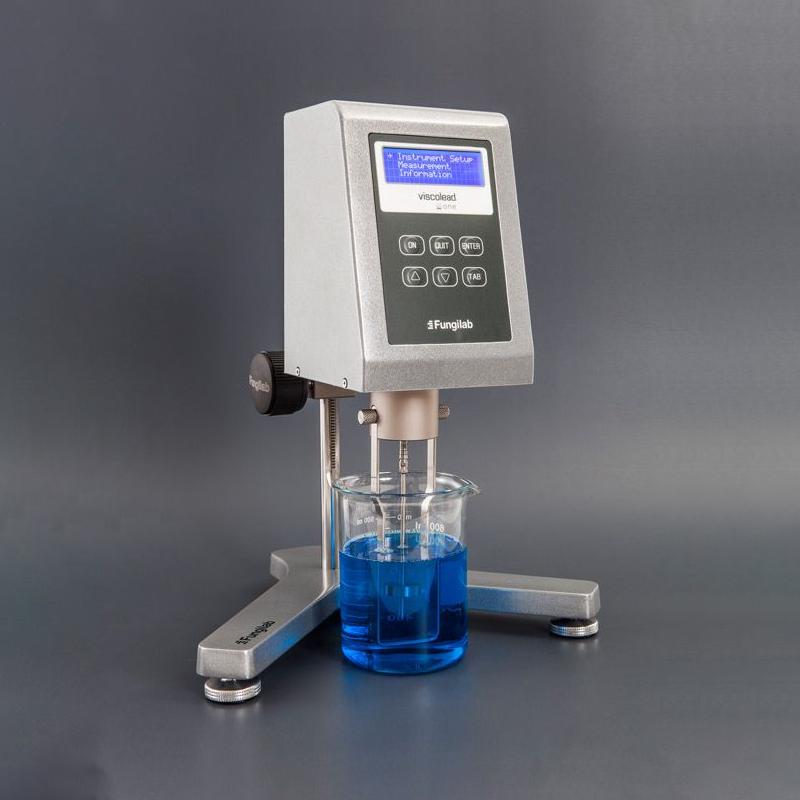
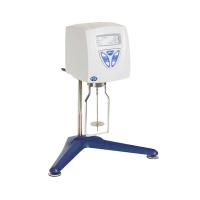
The viscosity of the paste can be tested by methods such as Rotational Viscometer, casing viscometer or disc viscometer. The following is the test method of Rotational Viscometer:
Prepare the sample: Take an appropriate sample of the paste and place it in the sample chamber of the Rotational Viscometer.
Prepare the Rotational Viscometer: Place the Rotational Viscometer in a constant temperature Water Bath and adjust the temperature to the desired temperature.
Start the test: Turn on the Rotational Viscometer and start the test, the Rotational Viscometer will rotate the sample in the sample well and measure its viscosity. At a stable reading, record the viscometer reading.
Clean the sample tank: After the test is completed, use the corresponding solvent to clean the sample tank and Rotational Viscometer for the next test.
North and South Tide Tips: Different types of pastes may exhibit different viscosities at different temperatures. Therefore, when testing, an appropriate temperature should be selected according to the characteristics of the paste and application requirements. In addition, when using a Rotational Viscometer for testing, attention should also be paid to whether the rotational speed of the Rotational Viscometer and the specifications of the viscometer meet the experimental requirements.
If there is no Rotational Viscometer and other equipment, the mass method or time method can also be used to test the viscosity of the paste, for example, the viscosity can be calculated by measuring the mass or volume of the paste flowing within a fixed time. However, this method is generally rough and may not be suitable for applications requiring high precision.

- 1Rotational viscometer - principle, classification, application and calibrating
- 2Application of NDJ-8S digital Rotational Viscometer in viscosity measurement of cosmetic raw materials
- 3NDJ-5S digital Rotational Viscometer accurate measurement of natural oil viscosity
- 4Viscosity of polypropylene (PP) amide measured by NDJ Viscometer
- 5Application of HBDV-1H swirl/spin High Temperature Viscometer in Viscosity Determination of Plastic Particles
- 6Rotational viscometer selection guide: How to choose the right viscosity equipment for you?
- 7Principle, type and accuracy control of Rotational Viscometer
- 8Which Viscometer to Choose for Licorice Extract Viscosity Testing? How to Test?
- 9Application of Rotational viscometer in Waterborne Polyurethane Adhesive