Polymer Solution Viscosity Testing Solutions
test meaning
Viscosity measurement of polymer solution is one of the important experiments in polymer material research and engineering application. The significance of the test lies in the following aspects:
Quality control: The viscosity of polymer solution is one of its physical properties, which is of great significance to the quality control in the production and processing of polymer materials. By testing the viscosity of the solution, the quality inspection and quality control of polymer materials can be carried out to ensure the stability and reliability of the product.
Physical property research: The viscosity of polymer solution is also an important parameter in the physical property research of polymer materials. By testing the viscosity of different polymer solutions, the physical properties such as the structure, spatial configuration and molecular weight of polymer molecules can be studied, providing a basic theoretical basis for the development and design of materials.
Process optimization: Polymer solution viscosity can also be used for process optimization. By testing the viscosity of polymer solutions at different temperatures, different solvent concentrations, and different pH values, better processing technology and process parameters can be determined to improve production efficiency and reduce costs.
Application research: Polymer solution viscosity can also be used to study polymer materials in different applications. For example, in the application of coatings, plastics, glue, etc., viscosity is an important physical parameter. By testing the viscosity of the solution, the performance of polymer materials can be optimized and the application effect can be improved.

Test Methods
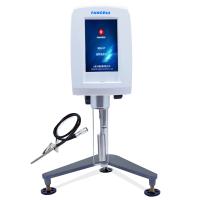
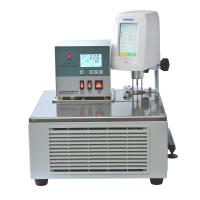
The viscosity of polymer solutions can usually be measured using different types of viscometers such as rotational or drum viscometers. The following are the basic steps for taking measurements with a Rotational Viscometer:
Sample preparation: Take out a certain amount of polymer solution, add appropriate amount of solvent or other additives as required, and mix well.
Adjust the viscometer: select the rotation speed and measuring range, and adjust the viscometer to the appropriate parameters.
Measure a sample: Dip the test head of the viscometer into the sample to start the test. The test time usually needs to be adjusted according to the characteristics of the sample and the test requirements.
Record test results: After the test is over, record the test results and perform data analysis and processing.
North and South Chao reminds you: Before testing, the viscometer needs to be preheated to ensure the accuracy of the test results. In addition, it is necessary to pay attention to avoid the generation of air bubbles during the test, so as not to affect the test results. If the solution contains solid particles or other impurities, pretreatment steps such as filtration are required to obtain accurate test results.

- 1Viscosity of polypropylene (PP) amide measured by NDJ Viscometer
- 2Application of SNB-1 + L0 digital swirl/spin Viscometer in Oil Industry
- 3Which Viscometer to Choose for Licorice Extract Viscosity Testing? How to Test?
- 4Application of Rotational Viscometer in juice viscosity test
- 5Working Principle, Classification and Application of Capillary Viscometer
- 6Liquid viscosity measurement and application
- 7Measuring method of coating viscosity
- 8Principle, Characteristics and Application of Dial Viscometer
- 9Basic Principle and Application of Ceramic Viscometer


