Glue viscosity test scheme
test meaning
The main purpose of measuring the viscosity of the glue is to control the quality and production process of the glue to ensure that the performance of the glue in use meets expectations. Specifically, measuring glue viscosity can help us make decisions about:
The viscosity value can be used to determine the fluidity and adhesion properties of the glue, so as to ensure that it can achieve the expected use effect.
By measuring the viscosity of the glue, the stability of its quality can be judged, so that adjustments can be made in production to ensure that the quality of the glue meets the specification requirements.
Measuring glue viscosity can also help manufacturers determine appropriate production parameters and processes to optimize the production process and improve production efficiency.
The measurement of glue viscosity can also be used to develop new glue formulations by adjusting the glue composition to achieve the desired viscosity and performance goals.
Measuring the viscosity of glue can help manufacturers ensure that the products produced meet the requirements, improve production efficiency and product quality, and also help researchers better understand and master the performance and characteristics of glue.
Test Methods
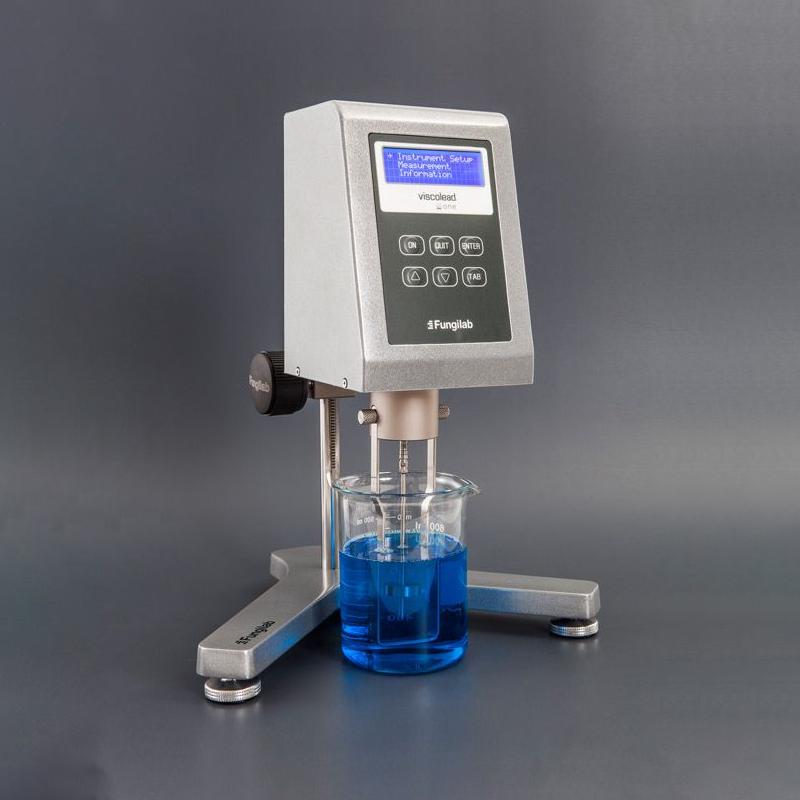
The viscosity of the glue can be measured with a rotary viscometer. This instrument measures the frictional force experienced by a liquid as it rotates and converts it into a viscosity value. Here are some steps for measuring glue viscosity:
Prepare testing equipment: Rotational Viscometer, glue sample, measuring cup, timer, and thermometer.
Add a certain amount of glue sample into the measuring cup and place it on the test stand of the rotary viscometer.
Slowly dip the tip of the Rotational Viscometer into the glue sample until fully submerged and stationary.
Start the Rotational Viscometer and record the measurement time and rotational speed.
Stop the test for a preset time and record the measurement results.
Calculate the viscosity of the glue according to the test results, and record the results.
Beichao reminds you: the viscosity of glue is affected by many factors, such as glue type, solvent content, temperature and so on. Therefore, when testing, it is necessary to ensure that standardized test methods are used and comparisons are made under the same test conditions. Different types of glue viscosity testing methods may be slightly different, for example high viscosity glue may require the use of a rotary viscometer. Before performing a viscosity test, the instructions of the viscometer and glue sample should be carefully read, and appropriate adjustments and calibrations should be made as needed.
- 1Viscosity of polypropylene (PP) amide measured by NDJ Viscometer
- 2Application of SNB-1 + L0 digital swirl/spin Viscometer in Oil Industry
- 3Which Viscometer to Choose for Licorice Extract Viscosity Testing? How to Test?
- 4Application of Rotational Viscometer in juice viscosity test
- 5Working Principle, Classification and Application of Capillary Viscometer
- 6Application Technology of Small Automatic Film Applicator Applying Glue on Plastic-keeping Film
- 7Application technology and optimization of wire-rod Film Applicator on non-woven fabric
- 8Application of Vacuum adsorption Film Applicator on PET Film
- 9Principle, Characteristics and Application of Dial Viscometer


