How to measure the viscosity of heavy oil?
What is heavy oil?
Heavy oil refers to crude oil with higher viscosity, generally refers to oil with kinematic viscosity above 1000 mSv. Due to the high viscosity of heavy oil, its fluidity is poor during mining, transportation and processing, which has a certain impact on industrial production and economic development.
Viscosity measurement value of heavy oil
Measuring the viscosity of heavy oil can help to understand its fluidity and handling performance, which is of great significance to the operation and design of heavy oil production, transportation and processing. For example, in heavy oil production, knowing the viscosity of heavy oil can help determine better oil recovery methods and processes, thereby improving recovery; in heavy oil transportation, knowing the viscosity of heavy oil can help choose better transportation methods and Transmission parameters, thereby reducing transportation costs; in heavy oil processing, knowing the viscosity of heavy oil can help determine better processing technology and equipment, thereby improving production efficiency and reducing production costs.
Test Methods
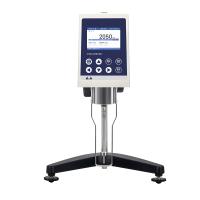
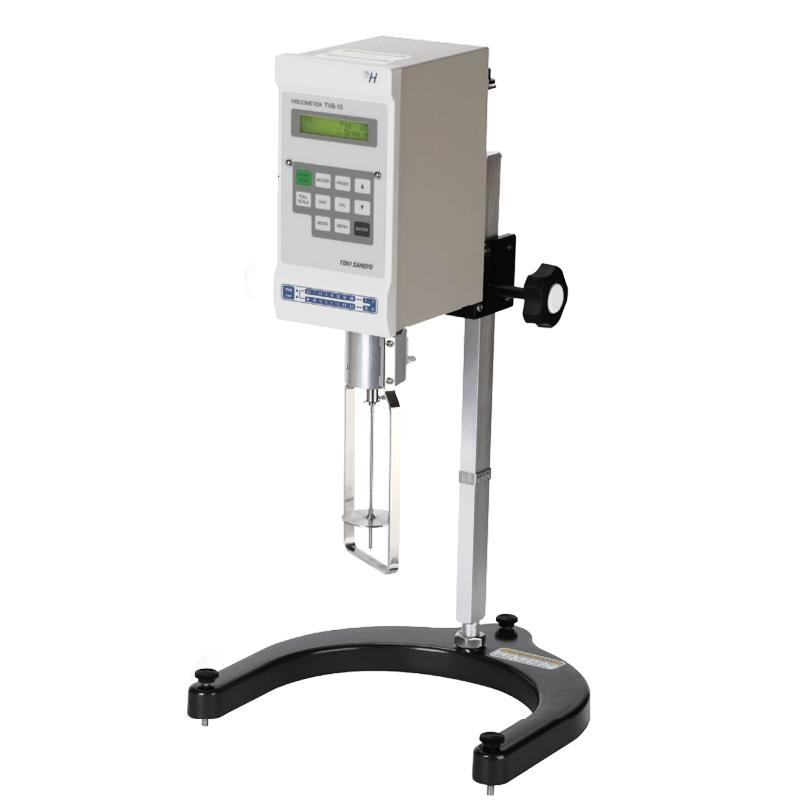
Viscosity testing of heavy oils is usually performed using a Rotational Viscometer. Specific steps are as follows:
Prepare the sample: Stir the heavy oil sample well to ensure that the various components in the oil are evenly mixed. The sample is then transferred to the test container to ensure the accuracy of the tested viscosity.
Calibration of the viscometer: put the Rotational Viscometer into the calibration liquid, and calibrate according to the instruction manual of the viscometer.
Adjust temperature: The viscosity of heavy oil changes with temperature, so the sample needs to be heated or cooled to a specific temperature before testing. A temperature controller or thermostat can be used to control the temperature of the sample as needed.
Measure sample viscosity: Insert the Rotational Viscometer into the sample and start the test. It is often necessary to measure multiple data points over a certain period of time and calculate the average value. During the test, parameters such as rotation speed and measurement time need to be controlled.
Clean the viscometer: Take the viscometer out of the heavy oil sample and clean it with a clean solvent or water.
Beichao reminds you: Safety and environmental protection should be paid attention to during the viscosity test of heavy oil. Due to the high viscosity and high temperature of heavy oil, there may be a risk of fire and explosion, so it needs to be tested under the guidance of professionals. At the same time, heavy oil may cause pollution to the environment, so it is necessary to take measures to reduce environmental pollution during the test.
- 1Rotational viscometer - principle, classification, application and calibrating
- 2Application of NDJ-8S digital Rotational Viscometer in viscosity measurement of cosmetic raw materials
- 3NDJ-5S digital Rotational Viscometer accurate measurement of natural oil viscosity
- 4Viscosity of polypropylene (PP) amide measured by NDJ Viscometer
- 5Application of HBDV-1H swirl/spin High Temperature Viscometer in Viscosity Determination of Plastic Particles
- 6Rotational viscometer selection guide: How to choose the right viscosity equipment for you?
- 7Principle, type and accuracy control of Rotational Viscometer
- 8Which Viscometer to Choose for Licorice Extract Viscosity Testing? How to Test?
- 9Application of Rotational viscometer in Waterborne Polyurethane Adhesive