Determination of Fiber Length How is the distribution frequency calculated?
There are usually many ways to measure fiber length, the following are two common methods:
microscopic counting
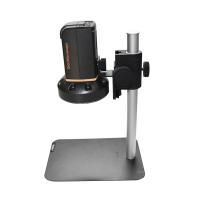
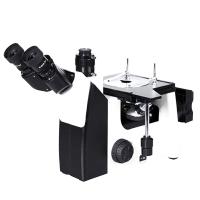
This method needs to put the fiber sample under the microscope, and count and count the fiber length data observed by the microscope. The advantage of this method is that it is more intuitive and can directly observe the fiber shape and length, but it requires certain experience and skills. The fiber length distribution determined by microscopic counting usually exhibits a Poisson distribution.
image analysis
This method uses computer technology to process and analyze fiber images, and uses image analysis software to measure fiber length. The advantage of this method is that it is highly automated and capable of processing large amounts of data, but requires certain image processing and computer programming skills.
As for the calculation of the fiber distribution frequency, it is usually necessary to measure the fiber length distribution first, then classify the fiber lengths, and calculate the ratio of the number of fibers in each length interval to the total number of fibers to obtain the fiber distribution frequency. For example, the fiber length can be classified according to 1mm as a length interval, the number of fibers in each length interval can be counted, and the ratio of the number of fibers in each length interval to the total number of fibers can be calculated.


- 1Microscope classification, operation and application
- 2How to use trinocular Microscope
- 3How to detect the color difference of fluorescent color-changing materials?
- 4How is the content of non-fibroblasts determined?
- 5 How to measure cell wall thickness and cell cavity diameter?
- 6How to determine the fiber morphology of plant fiber raw materials?
- 7Important instruments in clinical laboratories
- 8Coating Thickness Gauge: How to measure the dry film thickness of non-metallic substrates?
- 9What is a Destructive Dry Film Thickness Gauge?