


UK Elcometer 456 T456CFNF1S Iron-based/non-iron-based dual-use straight probe
SE T456CFNF1S

-
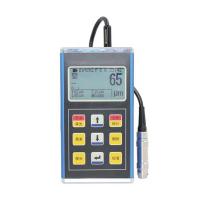 IPRE CT400 magnetic Induction eddy Current Coating Thickness Gauge Measurement range 0~1500μm$ 256.00SE
 -
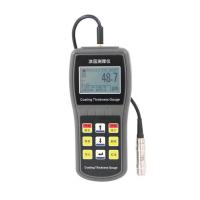 IPRE CT150 Coating Thickness Gauge Measurement range 0~1500μm$ 236.00SE
 -
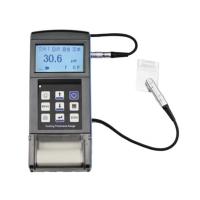 IPRE CT300 paints film thickness Measurement Instrument magnetic Induction/eddy Current dual-use$ 373.00SE
 -
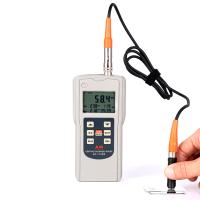 AMITTARI AC-112BS split Coating Thickness Gauge with statistical function$ 511.00SE




Elcometer T456CFNF1S probeSPEC
Elcometer T456CFNF1S probeDetails
Elcometer T456CFNF1S probePacking list

- SKU
- NB012230
- Measurement principle
- Magnetic Induction + eddy Current
- Measurement range
- 0~1500μm
- margin of error
- ±1~3%/±2.5μm
- resolution
- 0.1μm|1μm
- Minimum measurement surface
- F:4mm;N:6mm
- Minimum radius of curvature
- Convex 4mm (F)/26mm (NF); Concave 12.5mm
- probe
- straight probe
- Calibrated Certificate
- Yes.
- Minimum headroom
- 88mm
- compatible model
- Elcometer 456 Series
- width
- -

Introduction
Iron-based probes measure the thickness of non-magnetic coatings on ferromagnetic substrates. The Elcometer 456 is an iron-based instrument that recognises any iron-based probe. Non-ferrous probes measure the thickness of non-conductive coatings on non-ferrous metal substrates and the Elcometer 456 is approved for any non-ferrous probe. The dual-purpose FNF probe can be used for both ferrous and non-ferrous applications, and has the function of automatic substrate identification. The Elcometer 456 FNF Class Instrument recognises all iron-based, non-ferrous and dual-purpose FNF probes.
Elcometer probes are available in a maximum operating temperature of 80°C (176°F), in addition to the 150°C (300°F) for split iron-based probes and 250°C (480°F) for high-temperature PINIP. The specified temperature is at the substrate temperature and the duty cycle of the probe needs to be reduced to ensure a minimum of temperature accumulation within the probe.
All Elcometer probes come with a certificate of test and a set of calibration diaphragms for the probe's scale range.
Elcometer 456Probe series
To meet the specific application requirements of our customers, all Elcometer 456 probes are fully interchangeable.A wide range of designs and graduations are available.
| Probe image | Probe name and application |
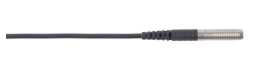 | Straight probe Coatings can be measured on both flat and curved surfaces |
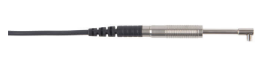 | Miniature probes It is the perfect product for measuring edge coatings, narrow tube coatings or coatings on small surface areas |
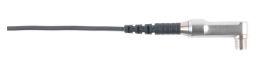 | Right-angle probe It is used to measure hard-to-reach places |
 | PINIP™ probes Plug-in probes to transform a split instrument into a monolithic instrument |
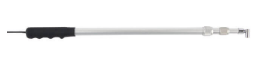 | Distal probes Extend the right-angle probe to reach places that are difficult to reach with conventional probes |
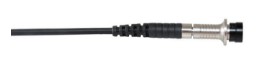 | Scanning probes These probes are fitted with interchangeable probe caps – allowing the user to take a single reading or scan large surface areas without damaging the probe |
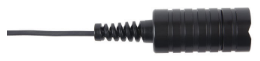 | Waterproof probe Closed design, used in deep water, even wearing diving gloves does not affect use |
 | High temperature probes Can be used on coatings up to 250°C (480°F). |
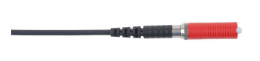 | Anodizing probes Resistant to chemical solvents, it is ideal for use in anodizing environments |
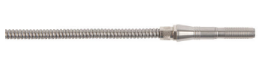 | Armoured probes The probe comes with a heavy-duty metal-reinforced cable that reduces the risk of cable damage |
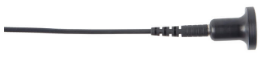 | Soft-coated probes Large-area surface probe for inspection of soft overlay materials (HVCA certified) |
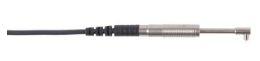 | Professional probes These probes can be used to measure on specialized substrates such as graphite or plated components |
- 1GB/T 44757-2024《Anodizing coating on titanium and titanium alloys》
- 2QJ 990.3A-2011《Inspection methods of coating.Part 3:Measurement of coating thickness》
- 3NF EN ISO 2808-2007《Paints and varnishes - Determination of film thickness.》
- 4JJG 818-2018《Magnetic and Eddy Current M easuring I nstrument for Coating Thickness》
- 5GB/T 1727-2021《General methods for preparation of coating films》
- 6HG/T 20720-2020《Construction and acceptance specification of waterborne anti-corrosion coatings for steel structures in industrial buildings》
- 7HG/T 5367.1-2018《Coatings for rail transit vehicles - Part 1: Waterborne coatings》
- 8ASTM B244-2021《Standard Test Method for Measurement of Thickness of Anodic Coatings on Aluminum and of Other Nonconductive Coatings on Nonmagnetic Basis Metals with Eddy-Current Instruments》
- 9ASTM B499-2021《Standard Test Method for Measurement of Coating Thicknesses by the Magnetic Method: Nonmagnetic Coatings on Magnetic Basis Metals》
- 10 B530-2014《》