


Elcometer 456 T456CFNF1P Iron/Non-Iron PINIP Integral Probe
SE T456CFNF1P

-
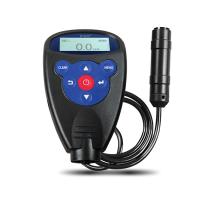 IWAVE WH92 split coating Film thickness meter$ 190.00SE
 -
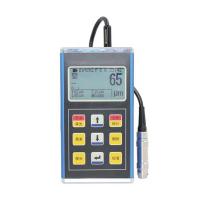 IPRE CT400 magnetic Induction eddy Current Coating Thickness Gauge Measurement range 0~1500μm$ 256.00SE
 -
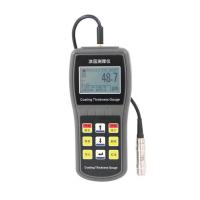 IPRE CT150 Coating Thickness Gauge Measurement range 0~1500μm$ 236.00SE
 -
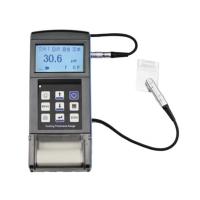 IPRE CT300 paints film thickness Measurement Instrument magnetic Induction/eddy Current dual-use$ 373.00SE
 -
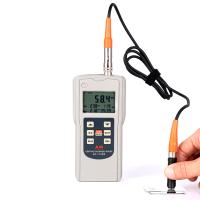 AMITTARI AC-112BS split Coating Thickness Gauge with statistical function$ 511.00SE





Elcometer T456CFNF1P probeSPEC
Elcometer T456CFNF1P probeDetails
Elcometer T456CFNF1P probePacking list

- SKU
- NB012234
- Measurement principle
- Magnetic Induction + eddy Current
- Measurement range
- 0~1500μm
- margin of error
- ±1~3%/±2.5μm
- Resolution
- 0.1μm|1μm
- Minimum measurement surface
- F:4mm;N:6mm
- Minimum radius of curvature
- 凸 4mm(F)/26mm(NF);凹 65mm
- probe
- Right Angle Probe
- Calibrated Certificate
- Yes.
- Minimum headroom
- 180mm
- compatible model
- Elcometer 456 Series
- width
- -
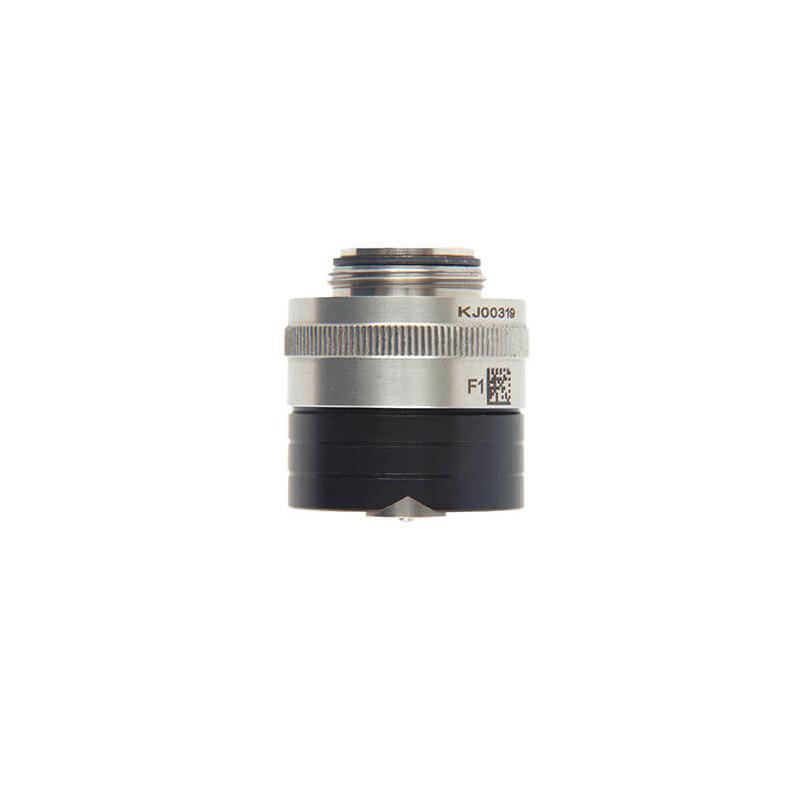
Introduction
Iron-based probes measure the thickness of non-magnetic coatings on ferromagnetic substrates. The Elcometer 456 Iron-based instrument accepts any iron-based probe. Non-ferrous based probes measure the thickness of non-conductive coatings on non-ferrous metal substrates. The Elcometer 456 non-ferrous based instrument accepts any non-ferrous based probe. The dual-purpose FNF probe can be used for both ferrous and non-ferrous applications and has the function of automatically identifying the matrix. The Elcometer 456 FNF category instrument accepts all ferrous, non-ferrous and dual purpose FNF probes.
Elcometer probes are available with a maximum operating temperature of 80°C (176°F) except for the split iron-based probe which is 150°C (300°F) and the high-temperature PINIP which is 250°C (480°F). The specified temperature is the substrate temperature and the probe duty cycle needs to be reduced to ensure a minimum temperature build-up within the probe.
All Elcometer probes come with a certificate of inspection and a set of calibration diaphragms suitable for the probe's scale range.
Elcometer 456 Probe Series
To meet customers' specific application requirements, all Elcometer 456 probes are fully interchangeable and available in a wide range of designs and calibration ranges.
| Probe pictures | Probe name and application |
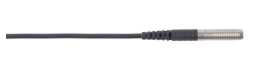 | straight probe Coatings can be measured on flat and curved surfaces |
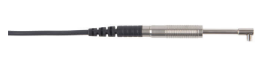 | Micro probe Ideal for measuring edge coatings, coatings on narrow tubes or coatings on small surface areas |
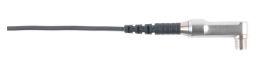 | Right angle probe For measuring inaccessible places |
 | PINIP⢠probe Plug-in probe that converts a separate instrument into an integral instrument |
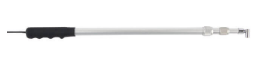 | Distal probe The right-angle probe can be extended to reach places that are difficult to reach with ordinary probes |
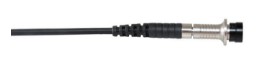 | scanning probe These probes are equipped with replaceable probe covers - users can take single readings or scan large surface areas without damaging the probe |
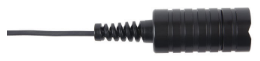 | Waterproof probe Closed design, used in deep water, even wearing diving gloves will not affect the use |
 | High temperature probe Can be used on coatings at temperatures up to 250°C (480°F) |
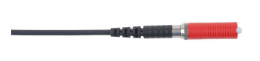 | Anodizing probe Resistant to chemical solvents and ideal for use in anodizing environments |
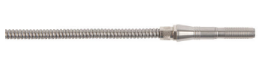 | Armored probe Probes feature heavy-duty metal-reinforced cables to reduce risk of cable damage |
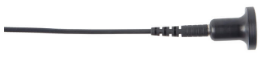 | Soft coated probe Large area surface probe for testing soft covering materials (HVCA certified) |
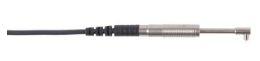 | Professional probe These probes can be used for measurements on specialized substrates such as graphite or electroplated components. |
- 1GB/T 44757-2024《Anodizing coating on titanium and titanium alloys》
- 2QJ 990.3A-2011《Inspection methods of coating.Part 3:Measurement of coating thickness》
- 3NF EN ISO 2808-2007《Paints and varnishes - Determination of film thickness.》
- 4JJG 818-2018《Magnetic and Eddy Current M easuring I nstrument for Coating Thickness》
- 5GB/T 1727-2021《General methods for preparation of coating films》
- 6HG/T 20720-2020《Construction and acceptance specification of waterborne anti-corrosion coatings for steel structures in industrial buildings》
- 7HG/T 5367.1-2018《Coatings for rail transit vehicles - Part 1: Waterborne coatings》
- 8ASTM B244-2021《Standard Test Method for Measurement of Thickness of Anodic Coatings on Aluminum and of Other Nonconductive Coatings on Nonmagnetic Basis Metals with Eddy-Current Instruments》
- 9ASTM B499-2021《Standard Test Method for Measurement of Coating Thicknesses by the Magnetic Method: Nonmagnetic Coatings on Magnetic Basis Metals》
- 10 B530-2014《》