
Transparency Tester RJD-412 RONGJIDA Test accuracy +/- 1% varnish/oil, etc
 RJD-412

RongJiDa RJD-412 Transparency MeterSPEC
RongJiDa RJD-412 Transparency MeterDetails
RongJiDa RJD-412 Transparency MeterPacking list

- SKU
- NB001238
- Optical inspection system
- Single beam of light, 1200/mm Diffraction grating
- Display mode
- LCD display
- Light source/wavelength
- 340-1000Nm adjustable
- Light source/wavelength
- Tungsten halogen lamp
- Precision of light transmitance
- ±1%
- Repeatability of light transmitance
- ±0.5%
- Light transmitter test range
- 0.0%~125.0%
- Stability of light transmitance
- ±0.5%/3min
- Power supply Voltage
- AC 220V ±22V 50Hz±1Hz
- Dimensions
- 475*342*150nm
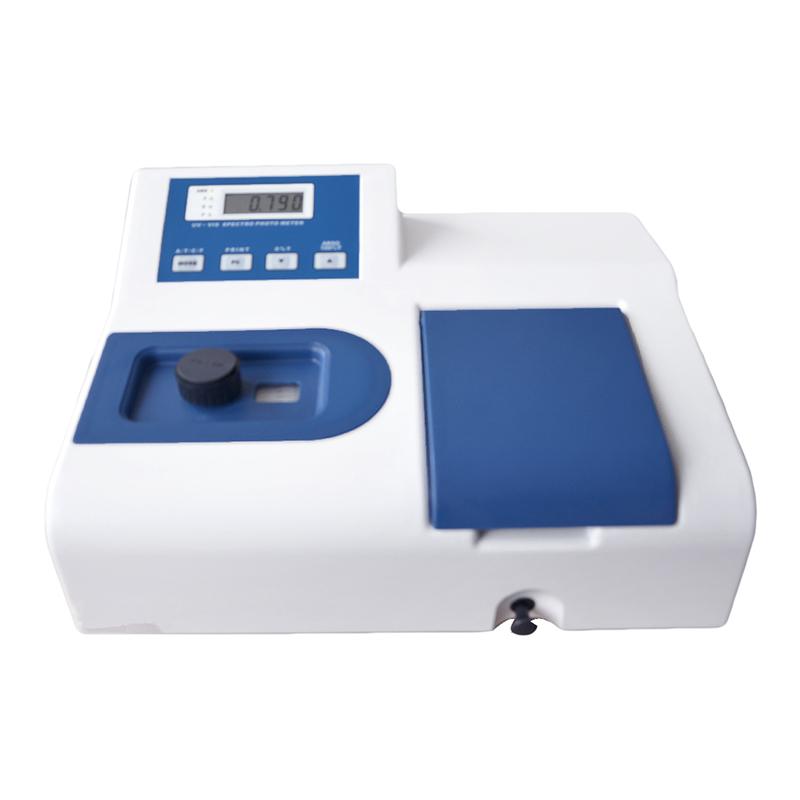
Introduction
Rongjida RJD-412 transparency Tester is a special detection instrument for detecting the transparency of varnish, oil and dilution solvents, etc., which is an upgraded version of TMD transparency Tester, which achieves a higher test accuracy of ±1% and a larger test range of 0.0%~125.0%.RJD-412 transparency Tester is designed and produced according to the standard GB1721 "Varnish, Oil and Thinner Appearance and Transparency Determination Method", through LCD display, tungsten halogen lamp is used as the test light source, single beam optical system of optical path, simple and convenient operation, no need to add any standard reagents, quantifying the level of product transparency.
Product principle
The working principle of the RJD-412 transparency Tester is to use the selective absorption of light of different wavelengths by substances to carry out qualitative and quantitative analysis of substances. If the measured solution is completely transparent, when a beam of directional incident light I passes through the solution, the light intensity of the directional transmitted light IC can be detected; if the solution has different degrees of turbidity, when the directional incident light I passes through the solution, the light diffusion will be produced, so that the light intensity of the directional transmitted light IC is reduced, so as long as the light intensity of the directional transmitted light IC is accurately measured, the transparency of the solution can be quantitatively reflected.
Operating Environment
1. The rated Voltage is 220V ±22V, 50Hz±1Hz. An abnormal supply Voltage will prevent the RJD-412 transparency meter from working properly.
2. RJD-412 transparency Tester should be installed in a dry room, the environmental degree is 5 °C ~ 35 °C (15 °C ~ 28 °C is good), and the Relative Humidity is not more than 85% (generally controlled at 45%-65%).
3. Avoid direct blowing of strong wind and direct exposure of light.
4. RJD-412 should be installed on a strong and stable workbench without strong vibration or continuous vibration.
5. When using the Tester, there is no corrosive gas such as hydrogen sulfide and nitrite fluorine in the room.
6. Keep away from high-intensity magnetic fields, electric fields or instruments and equipment that will produce high-frequency waves.
7. The power supply of the transparency Tester should be well grounded, and it is better to be an independent ground wire.
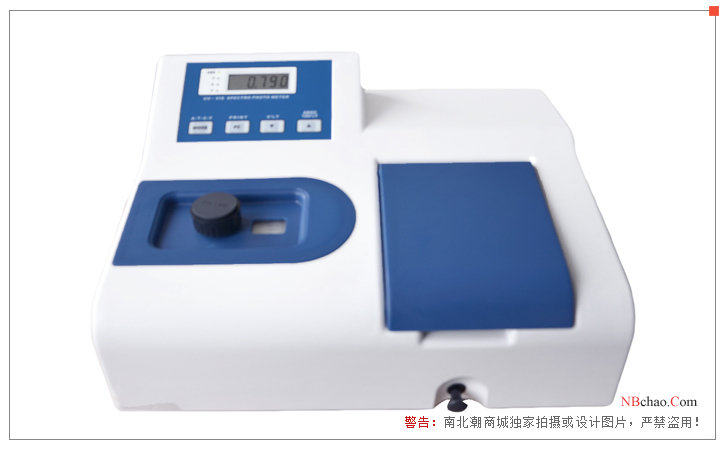
Actual picture of the product
How to use:
1. Boot and preheat: The RJD-412 transparency Tester should be preheated for 30 minutes before use.
2 Wavelength Adjustment: Turn the wavelength knob and observe the wavelength display window to adjust to the desired test wavelength (460 sodium meters).
Note: After the rotation test wavelength is corrected (transmittance is 100%), wait until it is stable for 5 minutes before testing (in line with industry standards and the requirements of the verification procedures of the metrology department).
3 Set up the test mode
If you want to toggle between "Transmittance" and "Absorbance" in another test mode, you can press Function Fitness.
4 Pairing of glass cuvettes
The glass cuvettes attached to the RJD-412 transparency analyzer are paired tested, and unpaired cuvettes will affect the test accuracy of the sample. If there are handprints or solution traces on the cuvette, and if there are bubbles and suspended solids in the solution to be measured, the test accuracy of the sample will be affected.
The cuvette should be washed immediately after use.
5 Zeroing (0% emissivity)
In T mode, place the shield into the sample holder, close the sample chamber, and pull the holder lever to enter the optical path. Then press the "Zero" button, "00.0" or "-00.0" will be displayed on the display, and then the T zero adjustment will be completed, and after the T zero adjustment is completed, the light shield will be removed.
Sample transparency level
| transparency | No colored solution | Colored solution |
| transparent | 86.0~100.0 | 70.0~100.0 |
| Slightly cloudy | 63.0~85.0 | 31.0~69.0 |
| Turbidity | <60.0 | <30.0 |
- 1Coating transparency testing method
- 2 Talking about the tinctorial strength and covering power of printing ink
栾存富 - 《略谈印墨的着色力和遮盖力》
- 3Talking about the calibration method and uncertainty analysis of reflectivity meter
夏铭袁;海林;余培瑛 - 《反射率测定仪的校准方法研究及其不确定度分析》
- 4What is the reason why the large lacquer film is dark and opaque for a long time?
- 5Coating Transparency Detection Method
- 6Preparation and production process of transparent coating powder
- 7Varnish, Clear Oil and diluting Agent Appearance and Transparency Determination
- 8Transparency measurement: diffused light measurement and transmitted light measurement