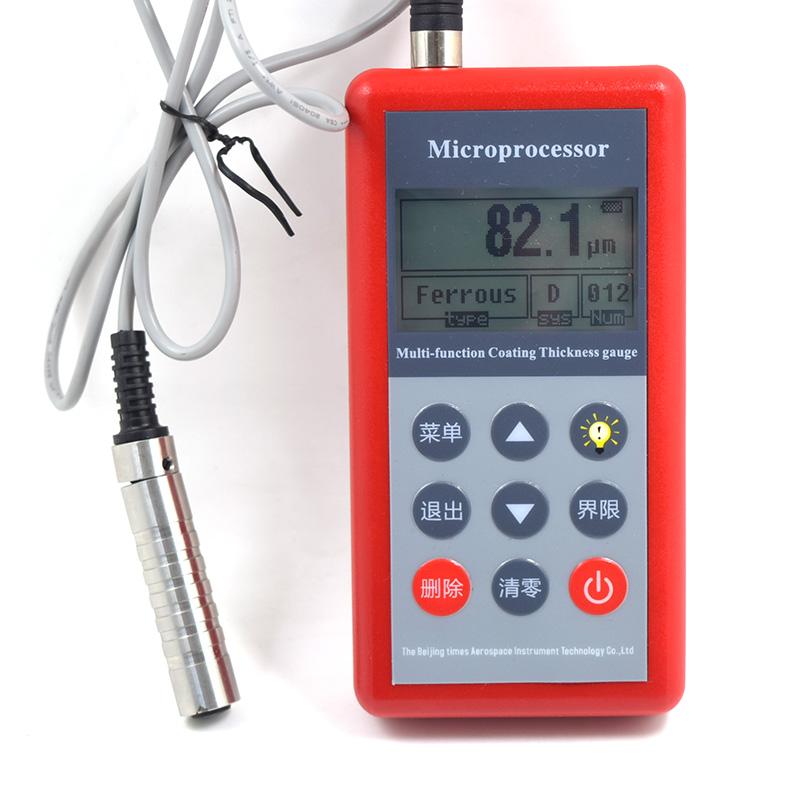
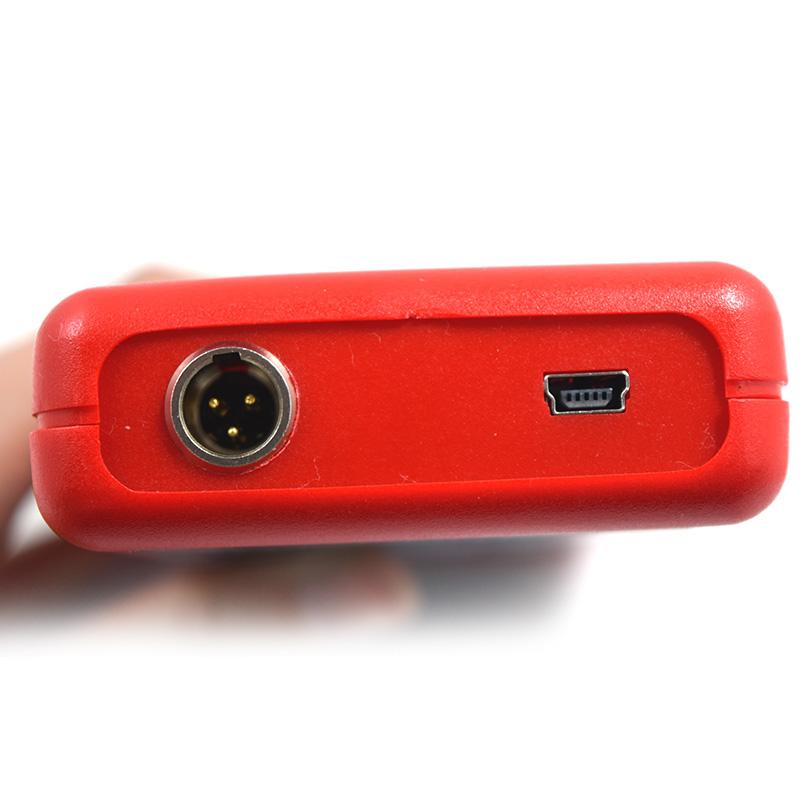
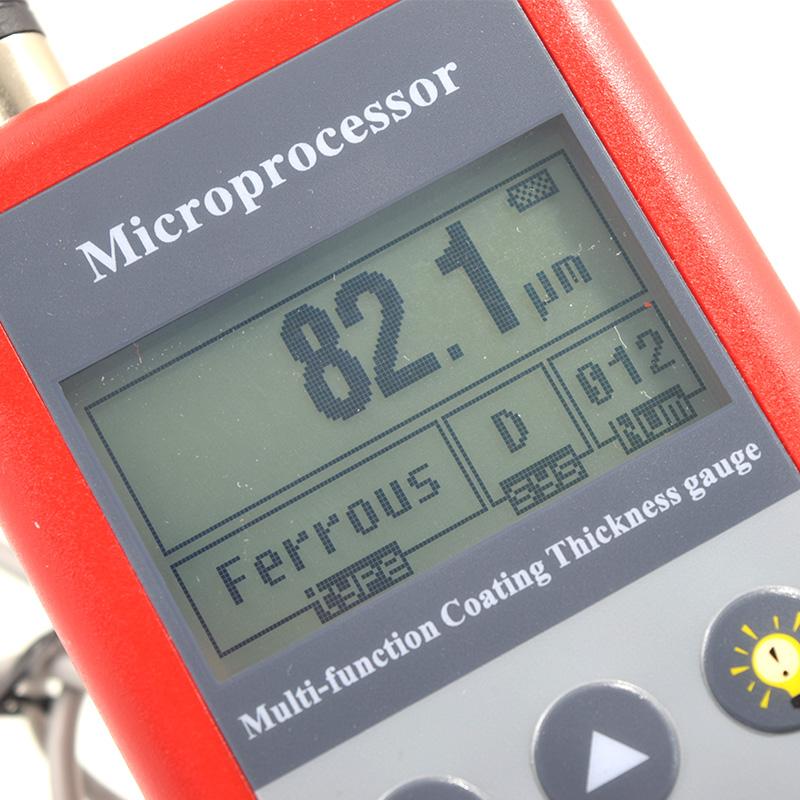

TIMES TT260 platings Thickness Gauge with optional probe F1 or N1
 TT260
TT260

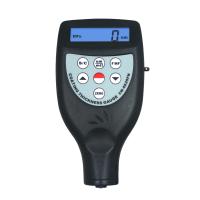
TIMES TT260 Coated platings Thickness GaugeSPEC
TIMES TT260 Coated platings Thickness GaugeDetails
TIMES TT260 Coated platings Thickness GaugePacking list

- SKU
- NB013327
- Measurement principle
- Magnetic Induction + eddy Current
- margin of error
- One point calibrate (μm): F 1 : +/- [ 3% H + 10], N 1 : +/- [ 3% H + 1.5]; two point calibrate (μm): F 1 : +/- [( 1~ 3) % H + 10], N 1 : +/- [( 1~ 3) % H + 1.5]
- resolution
- 0.1μm
- Minimum measurement surface
- F:Ф7mm 、N:Φ5mm
- Minimum radius of curvature
- F1: convex 1.5mm; N1:3mm
- thinnest substrate
- 0.5mm(F);0.3mm(N)
- probe
- F1 and N1
- statistical function
- Single measurement, continuous measurement
- statistical function
- Measurement times, MAX Maximum, MIN Minimum, Average, Standard deviation
- Data storage
- 495 Measured values
- Voltage
- 3.0V
- Operating temperature
- 0~40℃
- Relative Humidity
- 20~90%RH
- Operating Mode
- Direct mode (DIRECT) and group mode (Appl)
- Weight
- 530g
- Dimension
- 270*86*47mm
- shutdown mode
- Manual/Automatic
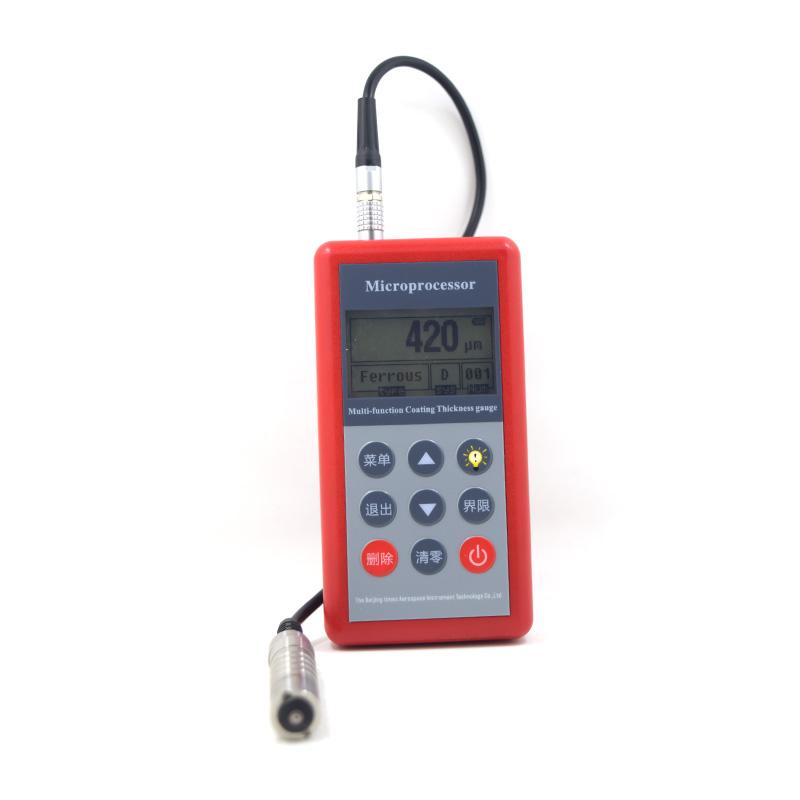
Introduction
TT260 Cladding Thickness Gauge This instrument is a portable measuring instrument, which can quickly, damageless, and precise measurement of coating and plating thickness. It can be used both in the laboratory and in the engineering field. By using different probes, a wide range of measurement needs can also be met. This instrument complies with the following standards: GB/T 4956─1985 Measurement of thickness of non-magnetic overlay on magnetic metal substrate -- Magnetic method GB/T 4957─1985 Thickness measurement of non-conductive overlay on non-magnetic metal substrate -- Eddy current method JB/T 8393─1996 Magnetic and eddy current cladding Thickness Gauge JJG 889─95 Magnetoresistive Thickness Gauge JJG 818─93 Eddy current Thickness Gauge
Features
●This instrument adopts two methods of magnetic and eddy current thickness measurement, which can nondestructively measure the thickness of the non-magnetic covering layer (such as zinc, aluminum, chromium, copper, rubber, paint, etc.) on the magnetic metal matrix (such as steel, iron, alloy and hard magnetic steel, etc.) and the thickness of the non-conductive covering layer (such as rubber, paint, plastic, anodized film, etc.) on the non-magnetic metal matrix (such as copper, aluminum, zinc, tin, etc.).
●7 probes (F400, F1, F1/90°, F10, CN02, N1) can be used
●There are two measurement methods: continuous measurement mode (CONTINUE) and single measurement mode (SINGLE);
●There are two Operating Modes: direct (DIRECT) and group (A-B)
●There are five statistics: mean (MEAN), maximum (MAX), minimum (MIN), number of tests (NO.), standard deviation (S.DEV);
●Two methods can be used to calibrate the instrument, and the systematic error of the probe can be corrected by the basic calibration method;
●With storage function: 495 measured values can be stored;
●With deletion function: delete a single suspicious data that appears in the measurement, and also delete all the data in the storage area in order to make a new measurement;
●Set the limit: the measured value outside the limit can be automatically alarmed; A batch of measured values can be analyzed using a histogram
●With printing function: it can print measured values, statistical values, limits, and histograms;
●It has the function of communicating with the PC: the measured value and statistical value can be transmitted to the PC for further processing of the data;
●It has the function of power supply under-Voltage indication;
●There is a beep prompt during operation;
●It has the function of error prompt, which can be prompted by the screen display or beep;
●There are two shutdown modes: manual shutdown mode and automatic shutdown mode
Product Applications
This instrument can be widely used in manufacturing, metal processing industry, chemical industry, commodity inspection and other testing fields. It is an instrument required for the material protection profession.
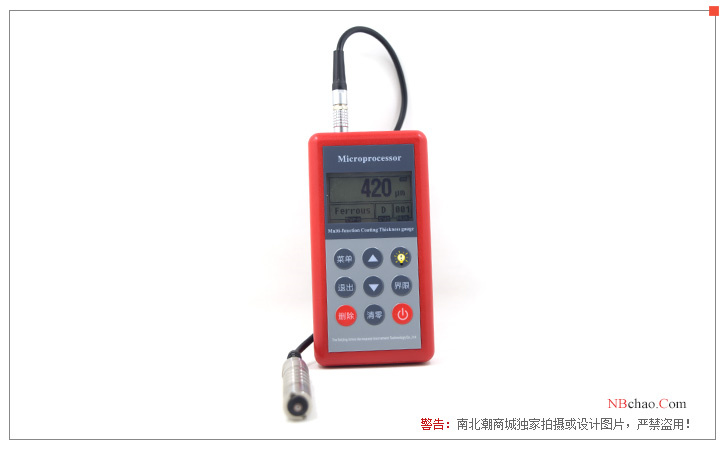
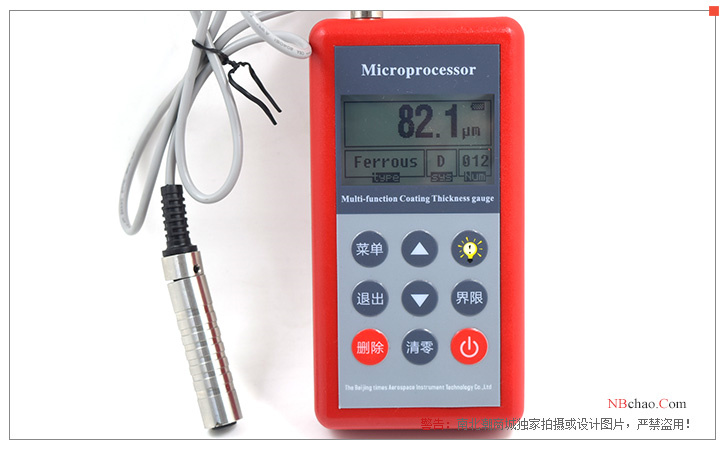
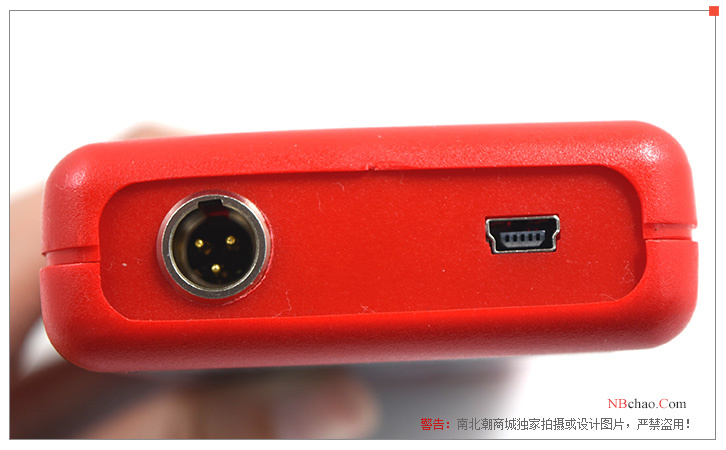
Display diagram
Probe selection
Overlay | Non-magnetic overlays such as organic materials (e.g. lacquer, lacquer, enamel, enamel, plastic, anodizing, etc.) | Non-magnetic non-ferrous metal overlays (e.g. chromium, zinc, aluminum, copper, tin, silver, etc.) | |||
The thickness of the covering layer does not exceed 100 μm | The thickness of the overburden is more than 100 μm | The thickness of the covering layer does not exceed 100 μm | The thickness of the overburden is more than 100 μm | ||
Such as iron, steel | The diameter of the measured area is greater than 30 mm | F400 probe 0~400μm | F1 probe 0~1250μm | F400 probe 0~400μm | F1 probe 0~1250μm |
The diameter of the measured area is less than 30mm | F400 probe 0~400μm | F400 probe 0~400μm | F400 probe 0~400μm | F400 probe 0~400μm | |
Such as copper, aluminum, | The diameter of the measured area is greater than 5 mm | N1 probe 0~1250μm | Only for chrome-plated N1 probe 0~40μm on copper | ||
Plastic, printed circuit non-metallic matrix | The diameter of the measured area is greater than 7 mm | - | - | CN02 probe 10~200μm | |
- 1Calibrated - Coating Thickness Gauge
- 2Coated Film thickness measurement
David Beamish
- 3Film coating thickness measurement on wires
- 4Coating Thickness Gauge of different prices where the tricky?
Air - 《南北潮商城》
- 5Mechanical protection performance and Electrochemistry protection performance of coating
- 6Why control coated Film thickness? How to measure coated Film thickness?
- 7Aluminum alloy anode oxidation Film thickness measurement
- 8Improvement of Coated Film thickness measurement
AIVARS U. FREIDENFELDS - 《Elektro-Physik》
- 9How to better maintain your Coating Thickness Gauge?
- 10Coating Thickness Gauge measurement results error analysis
- 1QJ 990.3A-2011《Inspection methods of coating.Part 3:Measurement of coating thickness》
- 2ASTM B244-2021《Standard Test Method for Measurement of Thickness of Anodic Coatings on Aluminum and of Other Nonconductive Coatings on Nonmagnetic Basis Metals with Eddy-Current Instruments》
- 3ASTM B499-2021《Standard Test Method for Measurement of Coating Thicknesses by the Magnetic Method: Nonmagnetic Coatings on Magnetic Basis Metals》
- 4 B530-2014《》
- 5ISO 2360-2017《Non-conductive coatings on non-magnetic electrically conductive base metals — Measurement of coating thickness — Amplitude-sensitive eddy-current method》
- 6ISO 2178-2016《Non-magnetic coatings on magnetic substrates — Measurement of coating thickness — Magnetic method》
- 7ASTM D7091-2022《Standard Practice for Nondestructive Measurement of Dry Film Thickness of Nonmagnetic Coatings Applied to Ferrous Metals and Nonmagnetic, Nonconductive Coatings Applied to Non-Ferrous Metals》
- 8ASTM B499-2021《Standard Test Method for Measurement of Coating Thicknesses by the Magnetic Method: Nonmagnetic Coatings on Magnetic Basis Metals》
- 9ISO 19840-2012《Paints and varnishes Corrosion protection of steel structures by protective paint systems》
- 10GB/T 1740-2007《Determination of resistance to heat and humidity of paint films》