
LABO LB-K100 Sizing Paper Cobb Absorbency Tester
SE LB-K100


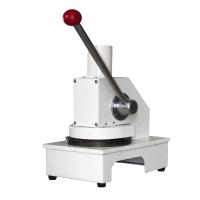
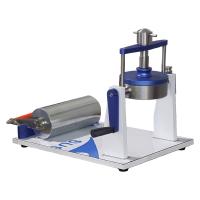
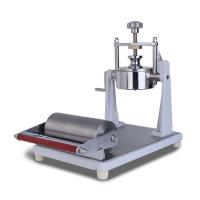
Labo LB-K100 Cobb absorptivity meterSPEC
Labo LB-K100 Cobb absorptivity meterDetails
Labo LB-K100 Cobb absorptivity meterPacking list
- SKU
- NB013524
- test area
- (100±0.2)cm²
- Test water consumption
- 100±5ml
- Roller length
- 200±0.5mm
- Roller Mass
- 10±0.5kg
- Dimensions
- 458*317*395mm
- Net Weight
- 27kg
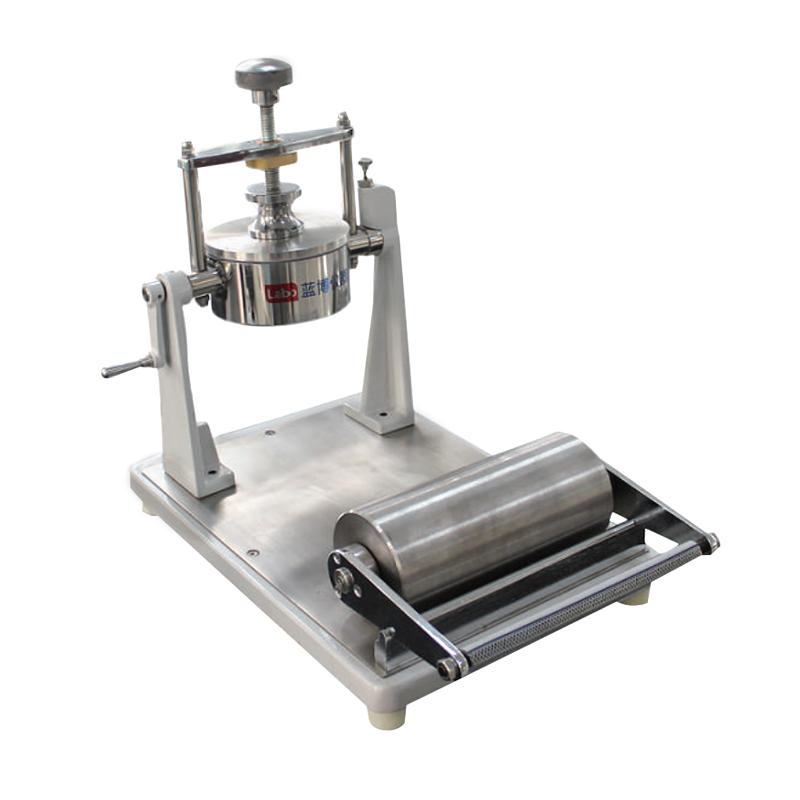
Introduction
The water absorption performance of sized paper not only has a direct impact on the writing effect and printing effect, but also is very important to the appearance of the material after treatment. Now this simple and convenient test method is used all over the world to test the water absorption performance of sized paper. The time from the beginning of water contact with the sample to the end of water absorption can be selected according to the different water absorption capabilities of paper and cardboard, and the time can be shortened or extended if necessary. Weigh the sample before the test. After the water contact reaches the specified time, the excess water on the sample is blotted and weighed immediately, and the result is expressed as the mass increase of the sample per unit area, and the unit is g/m2.
Features
Seat type reversible structure, convenient and safe to use. The main components are processed by stainless steel materials.
product display
Test description
Use the sampling equipment to uniformly cut the standard sample (125±5mm square or Φ125±5mm round shape) from the sample, use a measuring cylinder to take 100ml of water and pour it into the cylinder, and place the test sample on the circular surface of the cylinder with the test side facing down , the cover is clamped and fixed together with the cylinder, then the cylinder is turned over 180°, and the stopwatch is turned on at the same time, 10s~15s before the end of water absorption, the cylinder is turned upright, the cover is loosened and the sample is taken off, and when it reaches At the moment when the water absorption time is specified, place the absorbent side down on the laid absorbent paper, and then put a piece of absorbent paper on the sample, and immediately press the metal roller back and forth within 4 seconds without applying force, and press the sample The remaining water on the surface was blotted dry and weighed. Measure the arithmetic mean of 5 measurement results on the front and back sides respectively.
Note: The cylinder surface and the rubber pad in contact with the sample should be dry, and the hands should not touch the test area. During the test, the cylinder seeps or the non-test area touches water, and the sample should be discarded.
Applicable standard
GB/T1540
ISO535
QB/T1668
TAPPI T441