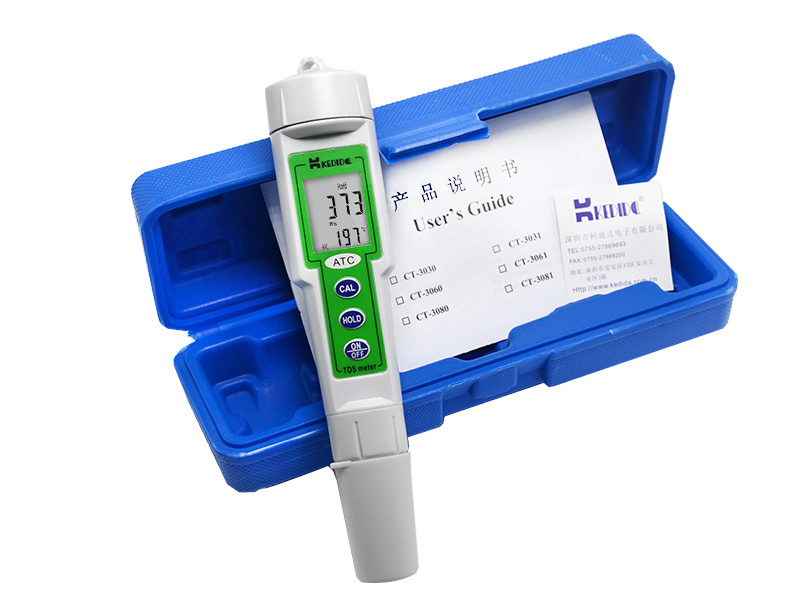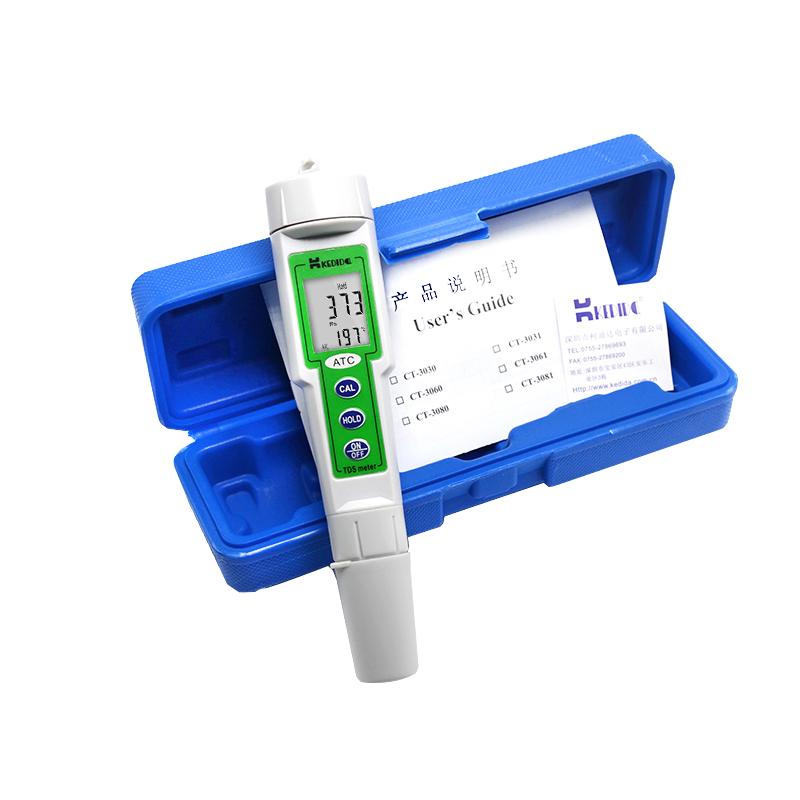
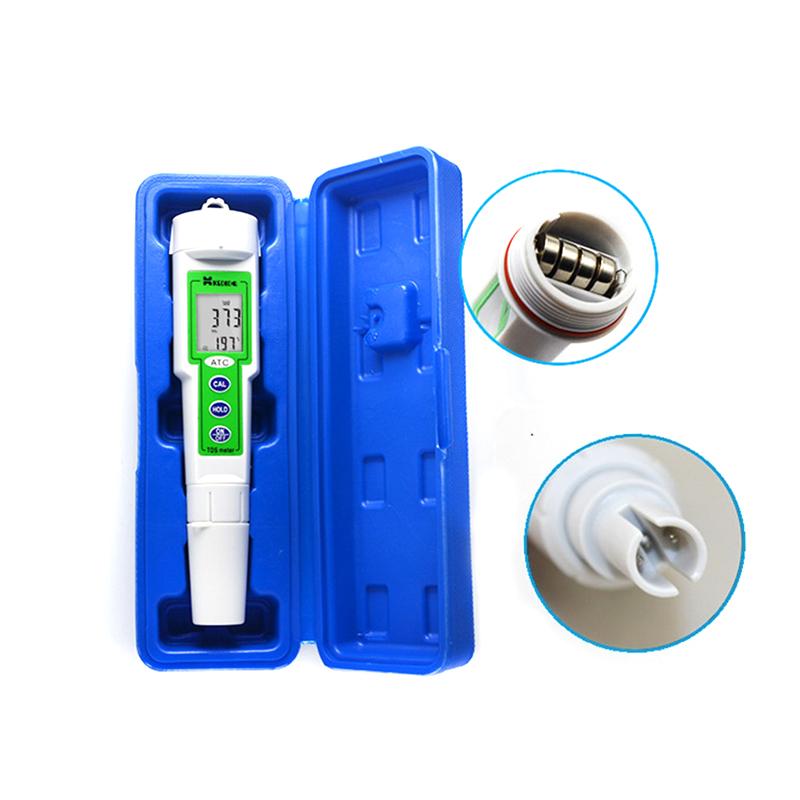

KeDiDa CT-3060 TDS pen, built-in electrode TDS Range: 0~999PPM
SE CT-3060


kedida CT-3060 TDS penSPEC
kedida CT-3060 TDS penDetails
kedida CT-3060 TDS penPacking list
- SKU
- NB013576
- Display
- LCD
- Measuring range
- 0~1000ppm
- resolution
- 1 ppm
- Accuracy
- ±2% FS
- TDS calibrated mode
- 1-Point auto-correction 706 ppm (1413us/cm)
- Temperature unit
- 0.1℃/℉
- Environment temperature
- 0~50℃(32~122℉)
- Temperature compensation range
- 0~50 ℃ automatic
- Dimensions
- *
- Weight
- 82 g (including electrodes)
- Automatic shutdown
- Yes.
- Low Voltage prompt
- Yes.
- Data retention function
- Yes.
- Display
- TDS and temperature dual display
- Power
- 6V (4 * 1.5V AG13 button battery)
Introduction
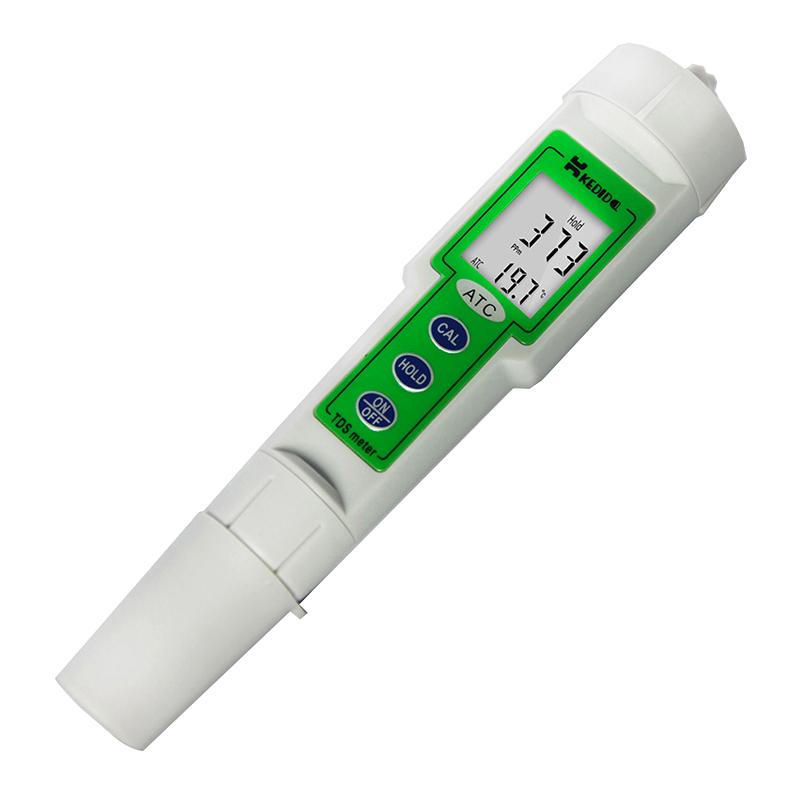
CT-3060 pen type TDS is a precision instrument for testing TDS (total dissolved solids in solution). Simultaneously display TDS measurement and temperature. It has full functions, stable performance, and easy operation. This makes it a good choice for enterprises and institutions to measure TDS values in the field and in the laboratory. Widely used in the monitoring of chemical, pharmaceutical, electronics, food and other industries. Kodida Electronics meets the needs of users from all walks of life with new technology, the lowest price and high-quality products.
Features
CT-3060 pen type TDS adopts single-chip microcomputer technology, LCD display, automatic temperature compensation and temperature display function, one-point correction. An integrated digital pen-type TDS meter including electrodes, and the electrodes can be replaced, and the casing is waterproof.
plan