

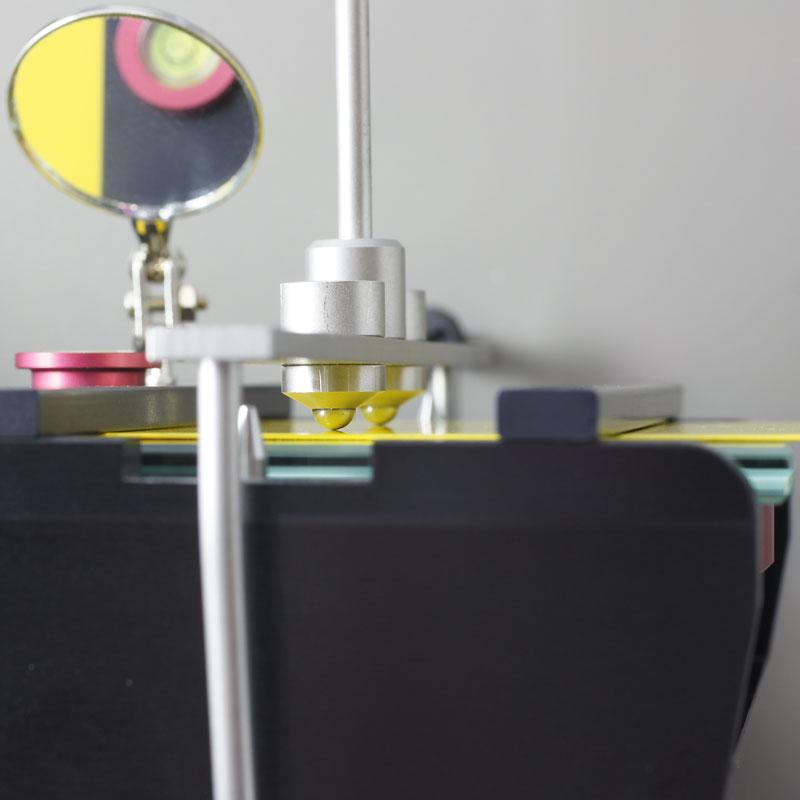

TQC SP0500 Pendulum Hardness Tester pendulum damping Hardness Tester 230VAC/50Hz
SE SP0500

TQC sheen SP0500 Pendula Hardness TesterSPEC
TQC sheen SP0500 Pendula Hardness TesterDetails
TQC sheen SP0500 Pendula Hardness TesterPacking list
- SKU
- NB014901
- Swing bar type
- Konig pendulum + Persoz pendulum
- Konig swing Mass
- 200g
- Konig swing period
- 1.4s
- Konig swing rod length
- 30mm
- Konig ball diameter
- 5mm
- Konig Glass Swing Time
- 250±10s
- Number of swings on Konig Glass
- 179±7
- Konig starting and ending swing angle
- 6°/3°
- Persoz swing Mass
- 500g
- Persoz swing cycle
- 1s
- Persoz swing rod length
- 50mm
- Persoz ball diameter
- 8mm
- Persoz Glass Swing Time
- 430±15s
- Persoz start and end swing angle
- 12°/4°
- Power supply Voltage
- 230VAC / 50Hz
- Dimensions
- 740 * 430 * 430 mm (closed lid); 960 * 430 * 650 mm (open lid)
- Host Weight
- 26kg
- Glass plate thickness
- 6mm
- material
- Stainless steel (front plate and small parts); powder lame plating steel (shell); anodic oxidation of aluminum (left panel); Perspex Organic Glass (cover)

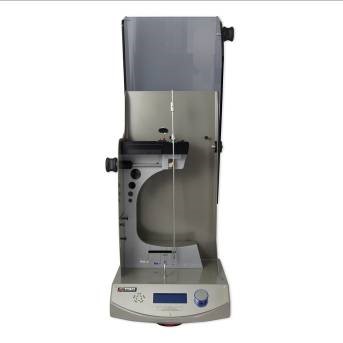
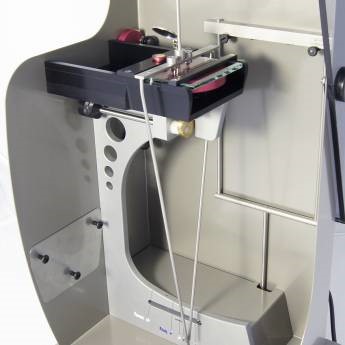
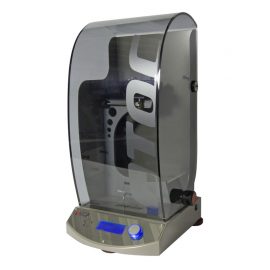
The TQC pendulum Hardness Tester has a number of unique features that make it easy to define hardness by the König and/or Persoz methods described in ISO 1522. Both methods work on the principle that the damping time of the pendulum oscillating on the sample is an indication of hardness.
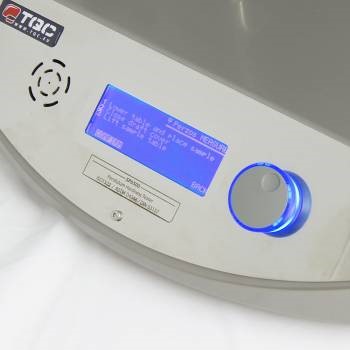
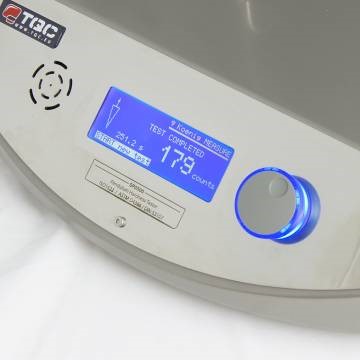
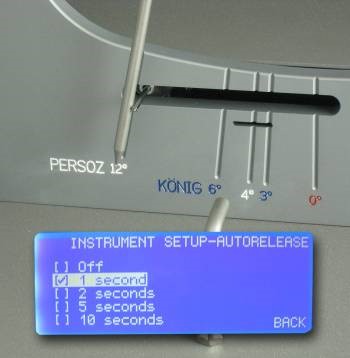
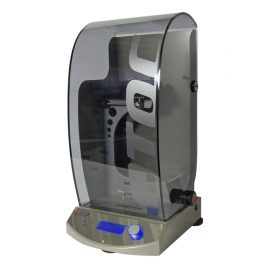
The instrument has a simple menu-driven interface and a slow-speed dial. The automatic electron counting mechanism is not affected by reflections in the surrounding area. The water level is located on the specimen, not on the base of the instrument. Once the instrument is leveled, no further calibration is required. The gas spring-supported, transparent vented lid provides easy access to all parts of the instrument.
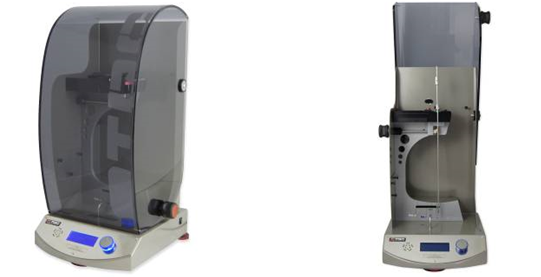
Transparent ventilated lid supported by gas springs
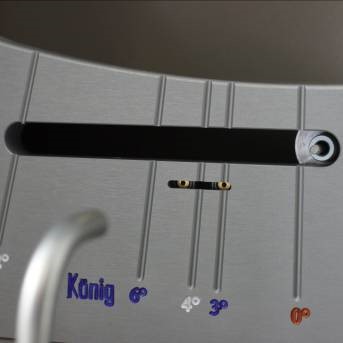
TQC's pendulum Hardness Tester is a modular system. The instrument itself can be used for both the König and Persoz methods. Both pendulums should be ordered separately. Once the correct pendulum is placed, you can switch between the two measurement methods at the touch of a button. The pendulum is positioned completely automatically by means of a stepper motor. The release of the pendulum is also achieved by an electromagnetic system. The end of the test is indicated by visual and acoustic signals.

The TQC pendulum Hardness Tester is available in 110VAC/50/60Hz and 230VAC/50Hz models.
Applications:
Laboratory, paint, paint industry, automotive industry
Criteria met:
ISO 1522 (2005), NBN T22-105, BS3900 E5.
Features
1. The pendulum Hardness Tester is suitable for Konig pendulum (Konig pendulum) and Persoz pendulum (Persaz pendulum). The instrument can switch the test method with one click. |
2. Precision electronic automatic technology, accurate counting, not affected by the reflection of the surrounding environment. |
3. Rotary push button, easy to operate |
4. The transparent cover supported by gas pressure spring is easy to observe and maintain. |
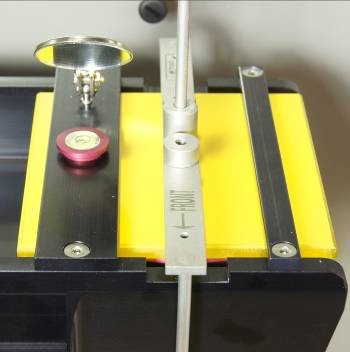
5. The level indicator is located above the test template. Once level, there is no need to recalibrate. |
6. Provide audio and video information when performing tests |
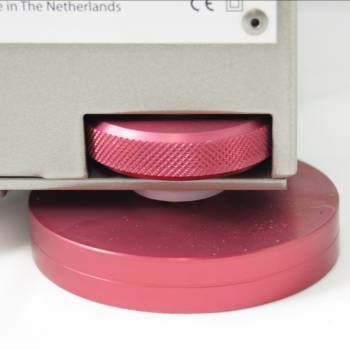
7. Adjust the horizontal foot, which is convenient and firm. |
8. The glass plate and pendulum rod are stored and integrated with the equipment |
9. The stepping motor automatically positions the pendulum. The pendulum is automatically released by the electromagnetic system to eliminate manual misoperation. |
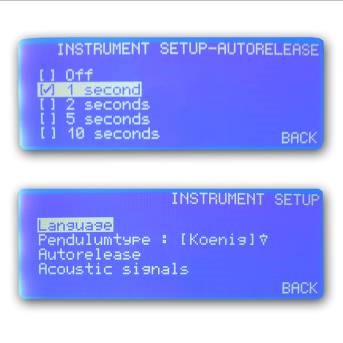
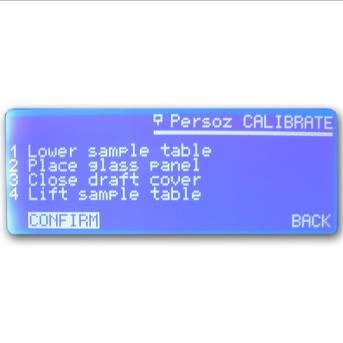
10、Menu navigationEasy alignment of Konig pendulum (Koenig pendulum) and Persoz pendulum (Persaz pendulum) |
Ordering Information
SP0501 pendulum Hardness Tester TQC Pendulum Hardness Tester 110VAC/50/60Hz, Pendulum Base Equipment, No Pendulum |
SP0500 Pendulum Hardness Tester TQC Pendulum Hardness Tester 230VAC/50Hz, Pendulum Base Equipment, No Pendulum |
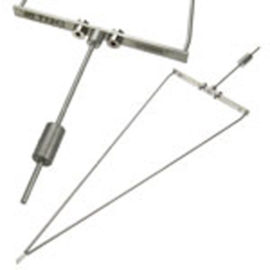
SP0505 Pendulum Bar TQCK Önig Pendulum is used for hardness testing |
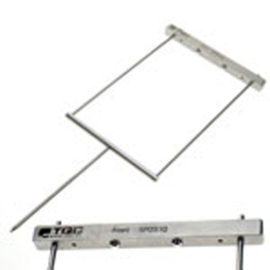
SP0510 Pendulum Bar TQC Persoz Pendulum is used for hardness testing |
The principle of pendulum hardness
The swing of the pendulum pin on different soft and hard surfaces is different, and the softer the surface swing weakens faster, and vice versa. The pendulum Hardness Tester is designed based on this principle.
There are two types of pendulum rods for the pendulum Hardness Tester, the Konig pendulum (Koenig pendulum) and the Persoz pendulum (Persaz pendulum). They work the same way, but the periodicity, amplitude and pin size of the oscillation are not the same.
- 1Pendula Hardness Tester calibrating steps
- 2How much do you know about the difference between Konig pendulum and Persoz pendulum of Pendula Hardness Tester?
- 3Pendulum damping test method for the determination of film hardness
- 4Swing bar hardness testing: a method for evaluating film hardness
- 5GB/T1730 Interpretation of Koenig and Persaz pendulum damping test
- 6Paints and varnishes Pendulum damping test method under ISO 1522
- 1ISO 《Paints and Varnishes - Pendulum Damping Test》
- 2NF 《Paints and varnishes - Pendulum damping test》
- 3EN ISO 1522-2006《Paints and varnishes - Pendulum damping test (ISO 1522:2006)》
- 4NF EN ISO 1522-2007《Paints and varnishes - Pendulum damping test.》
- 5HG/T 3369-2003《Micaceous ironoxide phenolic anticorrosive paint》
- 6HG/T 3349-2003《Various colour phenolic enamel》
- 7JB/T 9386-2017《Pendulum damping testers》
- 8ASTM D4366-2021《Standard Test Methods for Hardness of Organic Coatings by Pendulum Damping Tests》
- 9ISO 1522-2022《Paints And Varnishes - Pendulum Damping Test》
- 10GB/T 1730-2007《Paints and varnishes—Pendulum damping test》