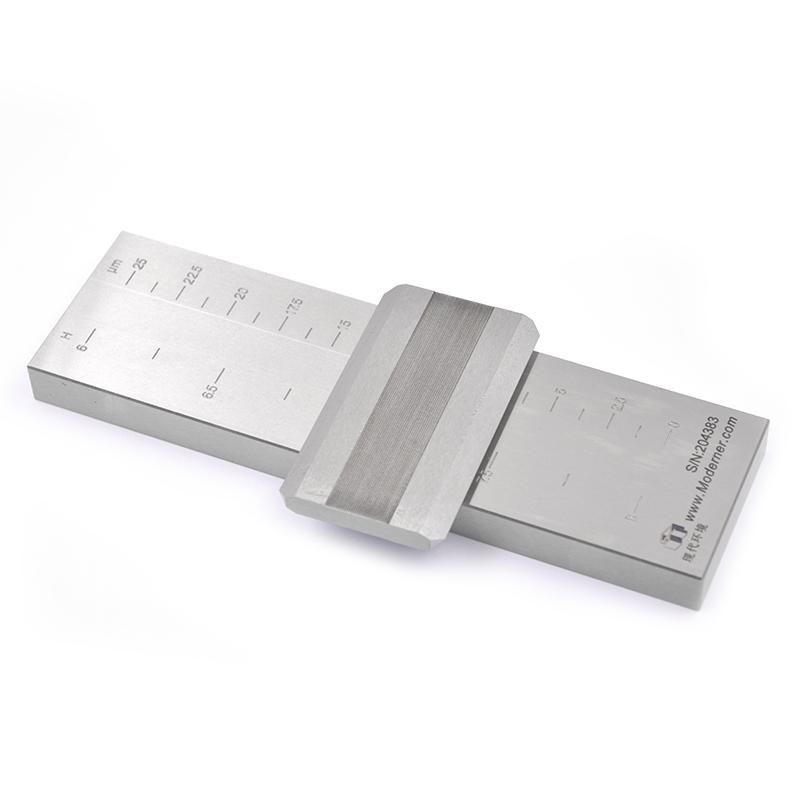
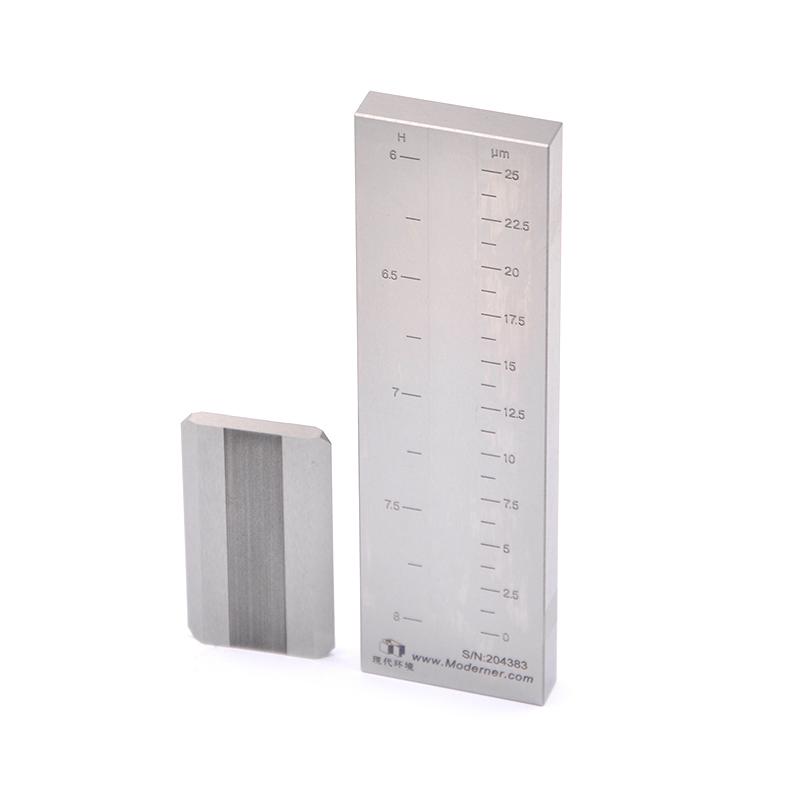
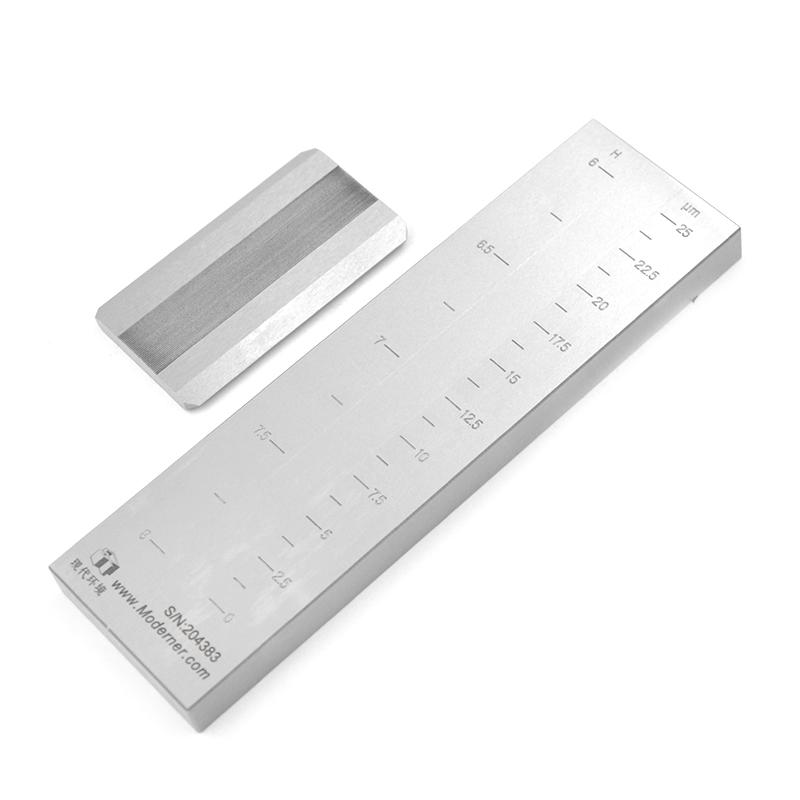
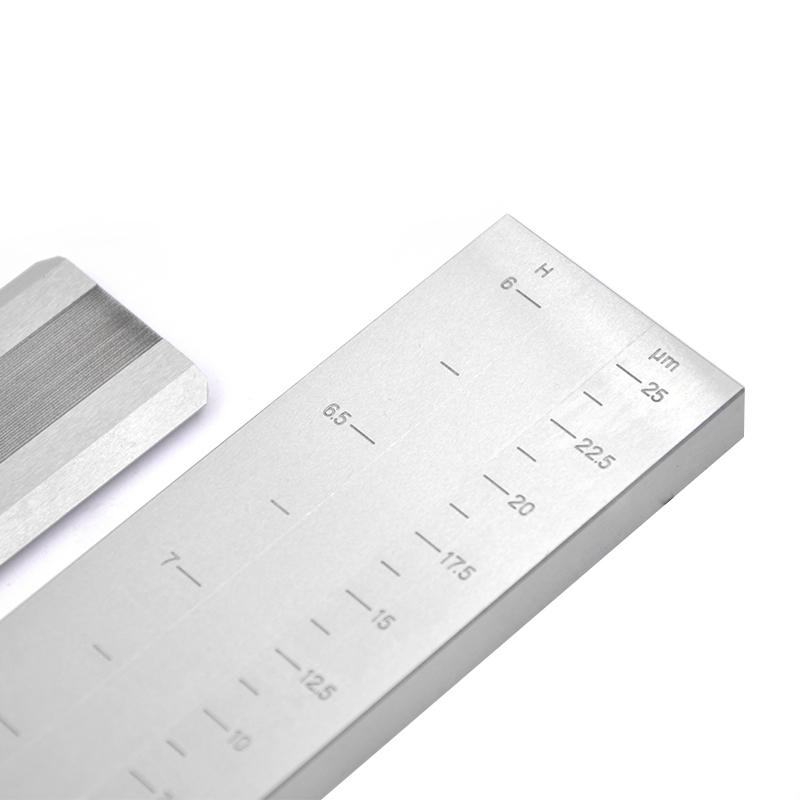
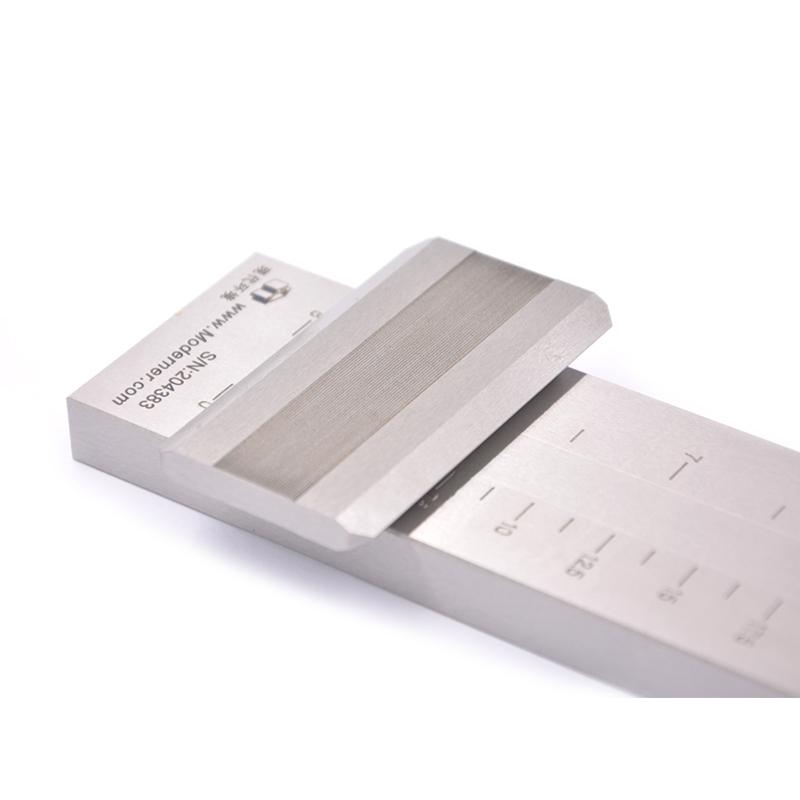

MODERNER QXD-15 single-channe Fineness gauge stainless steel material 0~15μm range
SE QXD-15 (single-channe)

-
 TRUIT TR 1201/015 single-channe Coating Fineness gauge 0~15μm$ 167.00SE
 -
 CHINA QXD-15 single-channe Grindometer Zirconia Ceramic Material 0~15μm$ 431.00SE
 -
 TQC VF2104 single-channe grinding Fineness of Grinding Gauge 0~15μm with calibrated certificate$ 1123.00SE
 -
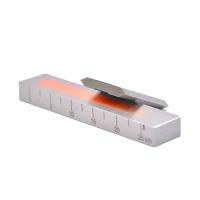 Pushen 0-15um single-channe small Fineness gauge (single-channe) detects the Fineness of Coatings, inks and other particles$ 193.00SE




Moderner QXD-15 (single-channe) Single-channe Fineness gaugeSPEC
Moderner QXD-15 (single-channe) Single-channe Fineness gaugeDetails
Moderner QXD-15 (single-channe) Single-channe Fineness gaugePacking list

- SKU
- NB016020
- Scraper type
- Single-channe
- Number of grooves
- 1
- range
- 0 ~ 15µm
- Scale unit
- mm
- Scraper material
- stainless steel
- Scraper size
- 170*50*12mm
- Groove size
- 12.7*140mm
- Scraper material
- stainless steel
- Scraper size
- 70mm
- Applicable standard
- GB/T 1724、GB/T 13217.3、ISO 1524、ASTM D1210
- Graduation
- 0.75µm
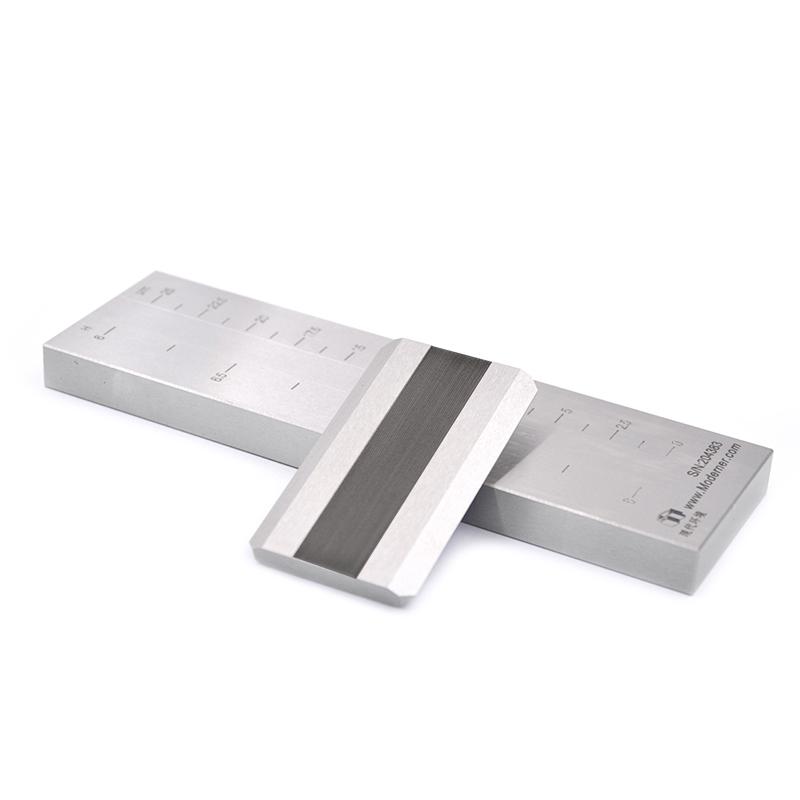
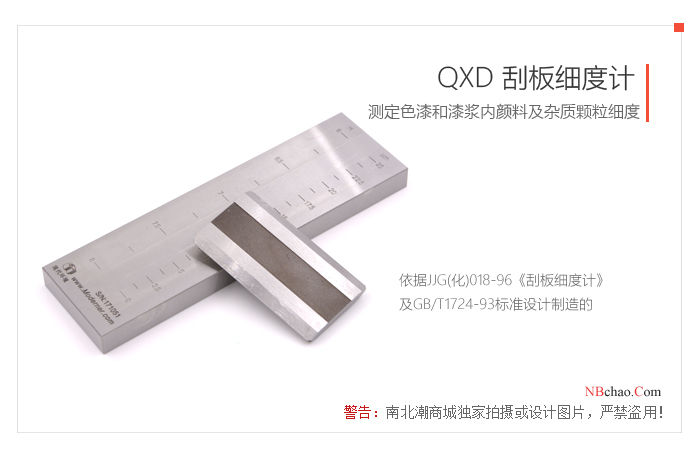
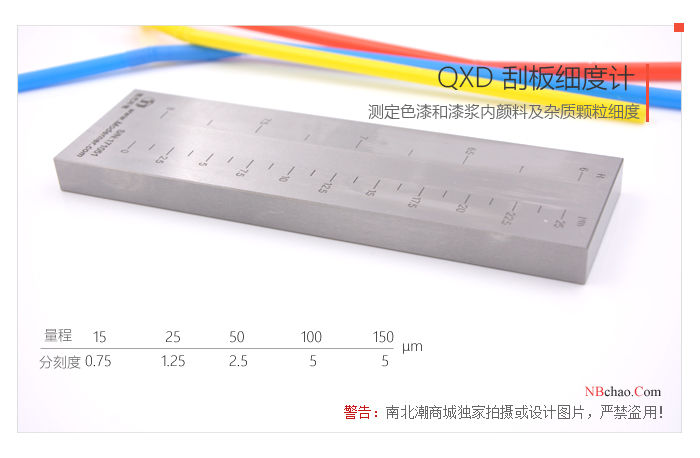
QXD-15 single groove Fineness of Grind Gauge is a small stainless steel single groove Fineness of Grind Gauge for MODERNER. QXD-15 single-slot Fineness of Grind Gauge is suitable for particle fineness detection in coatings, pigments, printing inks and other industries. It is a manual fineness detection.
Application
The Applications of QXD single-slot Fineness of Grind Gauge include paint, plastic, pigment, printing ink, paper, ceramics, medicine, food, etc.
real shot
operation method
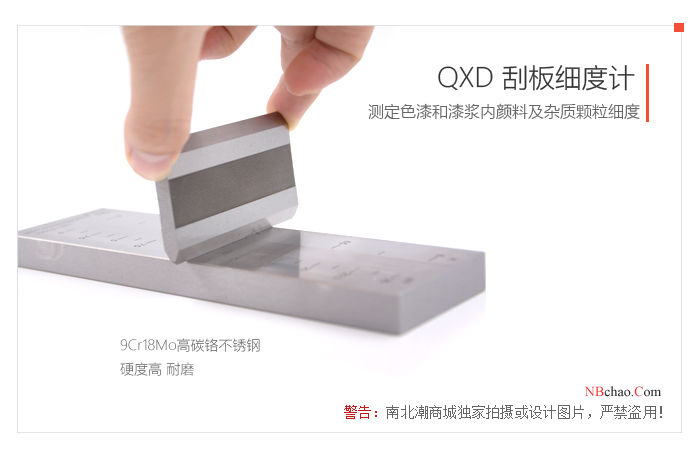
1. Before using the QXD-15 single-slot Fineness of Grind Gauge, soak the plate and bottom with a suitable solvent, and dry it with cotton yarn.
2. Fully stir the sample that meets the product standard viscosity index with an ink-adjusting knife.
3. Drop a few drops of sample solution into the deepest part of the groove of the QXD single-groove Fineness of Grind Gauge .
4. Hold the scraper with the thumb, index finger and middle finger of both hands, and place it horizontally on the upper end of the stainless steel Grindometer, so that the scraper is perpendicular to the surface of the Grindometer, and pull the scraper from the deep part of the groove to the shallow part at an appropriate speed. The paint swatch fills the grooves without leaving excess paint on the panel.
5. After scraping, immediately pinch the QXD single-groove Fineness of Grind Gauge horizontally (within 5 seconds) and tilt it so that the line of sight is 15-20 degrees from the groove plane, and observe the particle uniformity in the groove with light. and the scale value at the exposed place, the reading value is the fineness of the measured object.
Maintenance
(1) Clean it immediately after use and apply vaseline to prevent the fineness gauge from rusting.
(2) Do not scratch the surface of the QXD-15 single-slot Fineness of Grind Gauge and the scraper.
(3) When measuring the fineness, the clear oil that meets the product standard should be adjusted first, and then measured with the QXD single-slot Fineness of Grind Gauge .
(4) Regularly (one year) check the knife edge and the straightness of the fineness gauge. If unevenness or wear of the fineness gauge is found, it needs to be calibrated by the national metrology and verification agency before it can be used.
Specification list
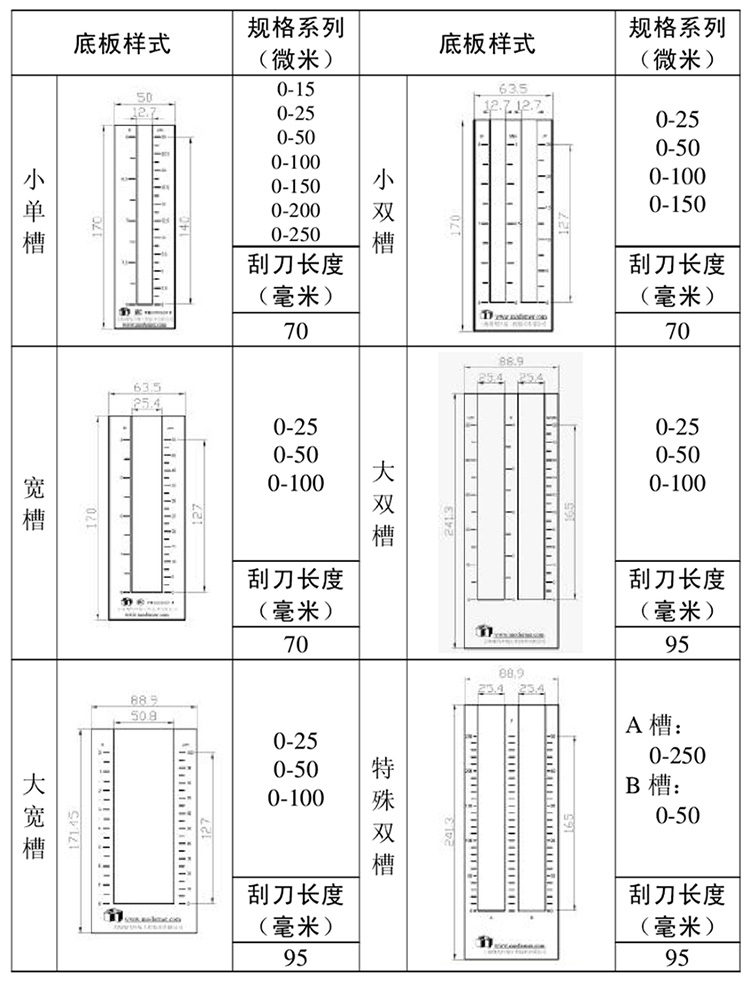
Series
| Specification | Range | Division value | Groove size | unit |
| small single slot | 0-15 | 0.75 | 12.7*140 | μm |
| 0-25 | 1.25 | Hegman/μm | ||
| 0-50 | 2.5 | |||
| 0-100 | 5 | |||
| 0-150 | 5 | μm | ||
| small double slot | 0-25 | 2.5 | Hegman/μm | |
| 0-50 | 2.5 | |||
| 0-100 | 5 | |||
| 0-150 | 5 | μm | ||
| wide slot | 0-25 | 1.25 | 25.4*127 | Hegman/μm |
| 0-50 | 2.5 | |||
| 0-100 | 5 | |||
| large wide groove | 0-25 | 2.5 | 50.8*127 | |
| 0-50 | 5 | |||
| 0-100 | 5 | |||
| Big double slot | 0-25 | 2.5 | 25.4*165 | Hegman/μm/NPIRI |
| 0-50 | 5 | |||
| 0-100 | 5 | |||
| Special double slot | 0-50 | 2 | μm | |
| 0-250 | 10 | μm |
- 1SJ/T 10454-2020《Dielelectric paste for multilayer lay out of thick film hybrid integrated circuits》
- 2HG/T 5173-2017《Waterborne primer for application on rusty substrates》
- 3GB/T 42541-2023《Coated steel pipes for gas piping》
- 4GB/T 21894-2008《A kind of photosensitive emulsion for plate making on fabric rotary screen printing》
- 5HG/T 5776-2020《Water-based coatings for surface of rubber sealing products》
- 6HG/T 5175-2017《Water-based decorative coating for glass and ceramic products》
- 7QB/T 5477-2020《Water-based printing ink for decorating paper》
- 8ASTM D1210-05-2022《Standard Test Method for Fineness of Dispersion of Pigment-Vehicle Systems by Hegman-Type Gage》
- 9JB/T 9385-2017《Scraper fineness gauges》
- 10ASTM D1316-2020《Standard Test Method for Fineness of Grind of Printing Inks By the NPIRI Grindometer》