

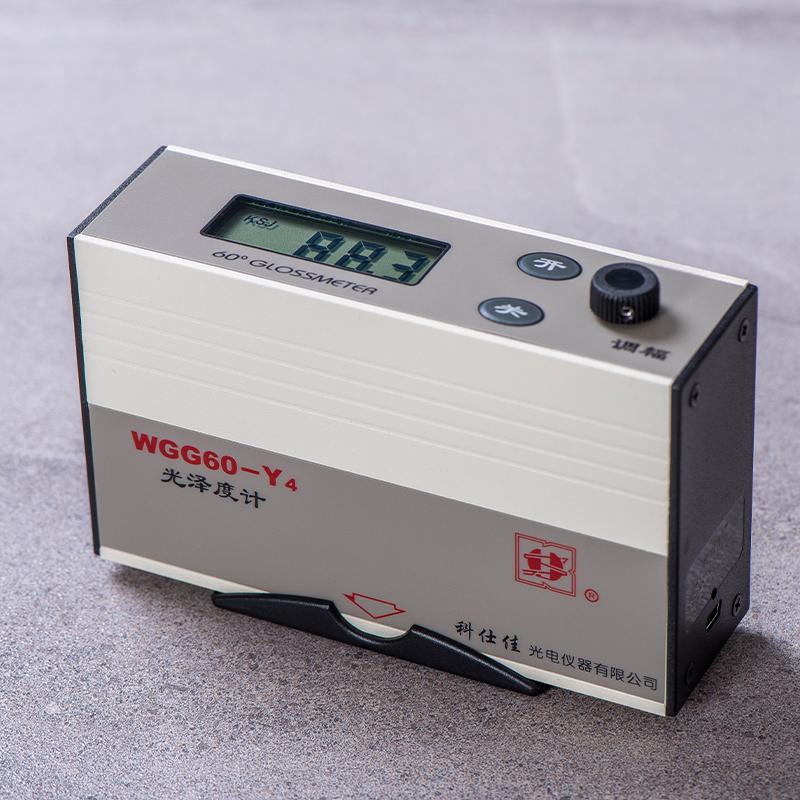
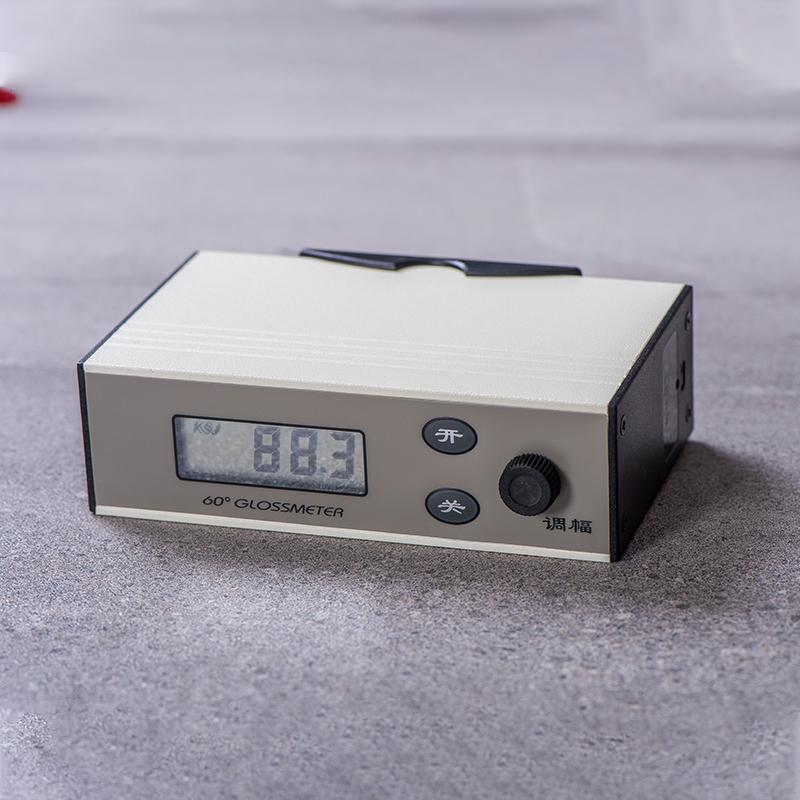
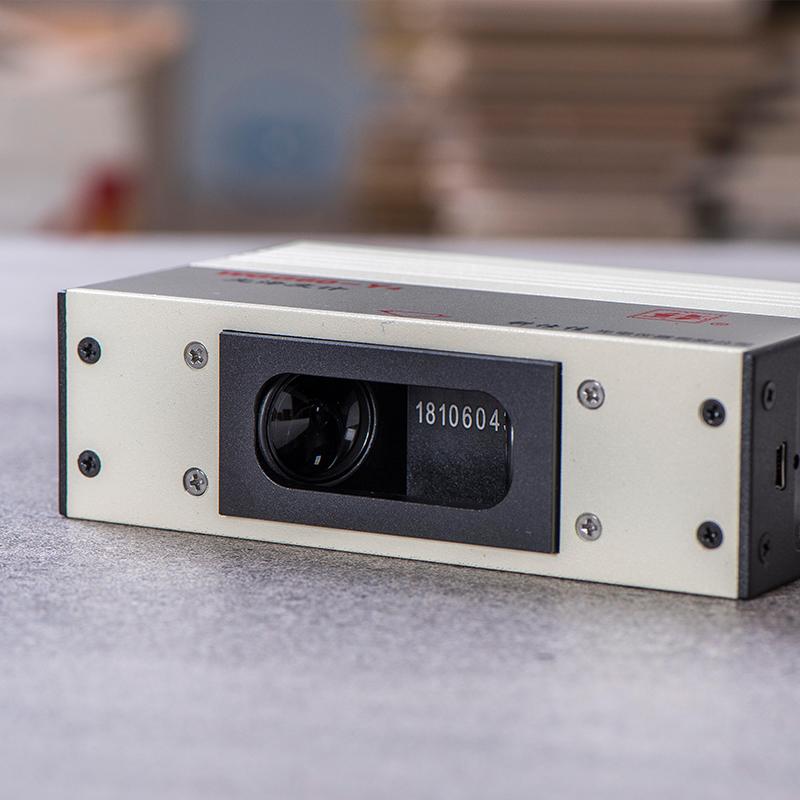

KSJ WGG60-Y4 high-precision Glossiness Meter, special for thin film industry, built-in lithium battery
SE WGG60-Y4

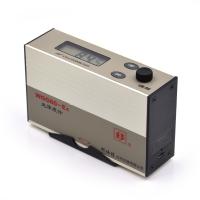

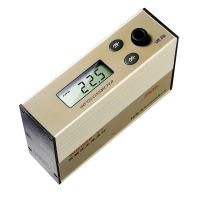
KSJ WGG60-Y4 Glossiness MeterSPEC
KSJ WGG60-Y4 Glossiness MeterDetails
KSJ WGG60-Y4 Glossiness MeterPacking list

- SKU
- NB016925
- Geometry
- 60°
- Measurement range
- 0~199.9GU
- Measuring Areas
- 18*36mm
- Error of indication
- ±1.2GU
- Division Value
- 0.1GU
- Standards
- ISO2813、GB9754、ASTM D2457、ASTM D523、GB/T13891、GB7706、GB8807、JJG696-2002
- Display
- 31/2 digit digital display
- Dimensions
- 130*40*80mm
- Weight
- 430g
- Power
- Built-in Ni-MH battery pack 4x1.2V
- Measurement port size
- 20*50mm
- Reading range
- 0~199.9GU
- Zero Error
- 0.2GU
- Stability
- 0.4GU
- Operating Time
- Power-on continuous use time > 48h
- Charging time
- 14~16h
- Charger
- AC 187~ 242 (50Hz)
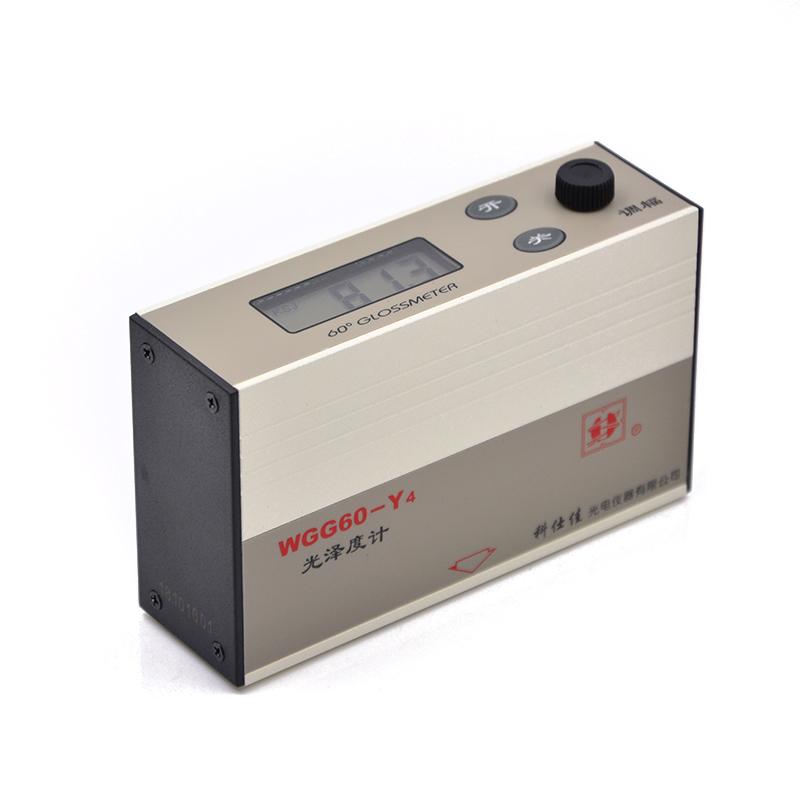
product description
KSJ WGG60-Y4 gloss meter is a portable gloss meter with a spot size of 36x18mm and a projection angle of 60°. The WGG60-Y4 gloss meter is suitable for surface gloss measurement of paints, baking varnishes, coatings, inks, etc., with a range of 0.0~199.9 GU.
Palm size, easy to carry.
Built-in rechargeable battery pack. It can be used continuously for more than 24 hours on a full charge.
Application
★ Surface gloss measurement of paint, baking varnish, paint, ink and so on.
★Building decoration materials: surface gloss measurement of marble, granite, vitrified polished tiles, ceramic tiles, etc.
★Surface gloss measurement of plastic, paper, bamboo and wood etc.
★Measuring the surface gloss of various other non-metallic and metallic materials.
structure diagram


Standards
WGG60-Y4 gloss meter conforms to the standard ISO2813, GB9754, ASTM D2457, ASTM D523, GB/T13891, GB7706, GB8807, JJG696-2002 "Mirror Gloss Meter and Gloss Board" measurement verification regulations of the primary and secondary working machines Require. The gloss value of the WGG60-Y4 gloss meter can be traced back to the international glossiness benchmark of Shanghai Institute of Metrology and Testing Technology (SIMT).
plan


- 1Cause Analysis and Treatment of Poor Film Surface Glossiness
- 2Tide review: Gloss meter YG268
- 3Cotton gloss test of gloss meter application case
宋钧才 - 《《棉花的光泽及其测定》》
- 4How to measure gloss? (principle analysis)
- 5Gloss Meter - Coating Inspection Instrument Guide
- 6Briefly describe the selection skills of Gloss meter
- 7Measurement suggestion and application of 75ºgloss meter
- 8What gloss meter does the automotive, furniture, plastics and other industries choose?
- 9Have you ever seen a gloss meter that can measure haze and reflectivity at the same time?
- 10How does the gloss meter measure the gloss of small objects? [Including video explanation]
- 1GB/T 9754-2025《Paints and varnishes—Determination of gloss value at 20°、60°and 85°》
- 2GB/T 23454-2025《Stone plate for vanity and countertop and windowsill》
- 3GB/T 13217.2-2024《Test method for gloss of ink》
- 4SY/T 4106-2016《Specification of solvent - free polyurethane coatings for steel pipelines and tanks》
- 5 002-2017《Water based polyurethane coatings》
- 6FZ/T 01097-2006《Textile fabrics.Test method of gloss》
- 7GB/T 11420-1989《Measurement of specular gloss of vitreous and porcelain enamels》
- 8GB/T 13448-2019《Test methods for prepainted steel sheet and strip》
- 9GB/T 35464-2017《Agglomerated stone test methods—Determination of resistance to ageing by salt mist》
- 10HG/T 2006-2006《Thermosetting powder coatings》