
PUSHEN Zahn-5 #Zahn Cup Zahn Cup
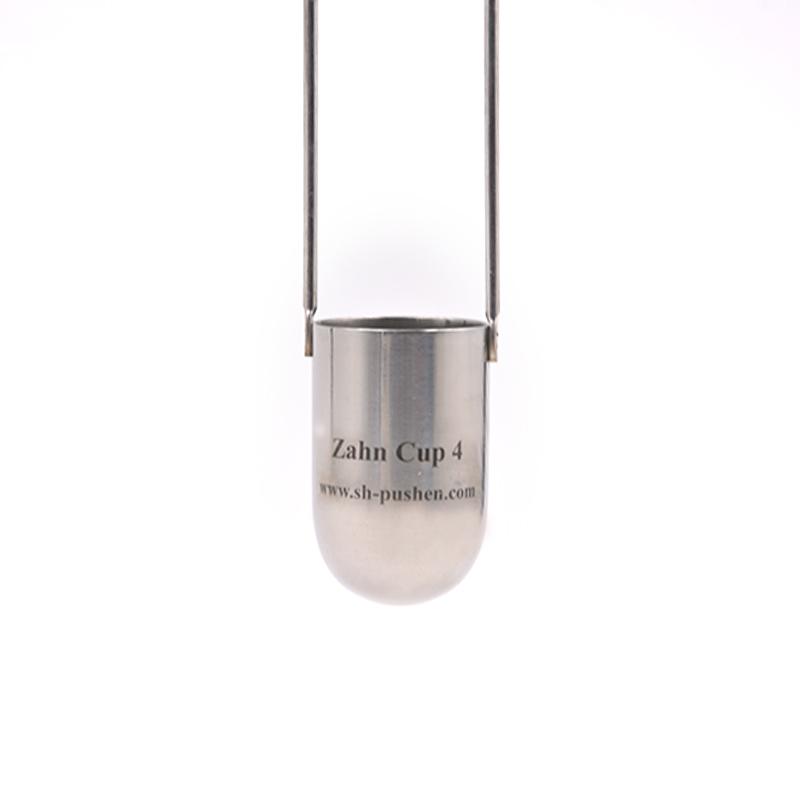
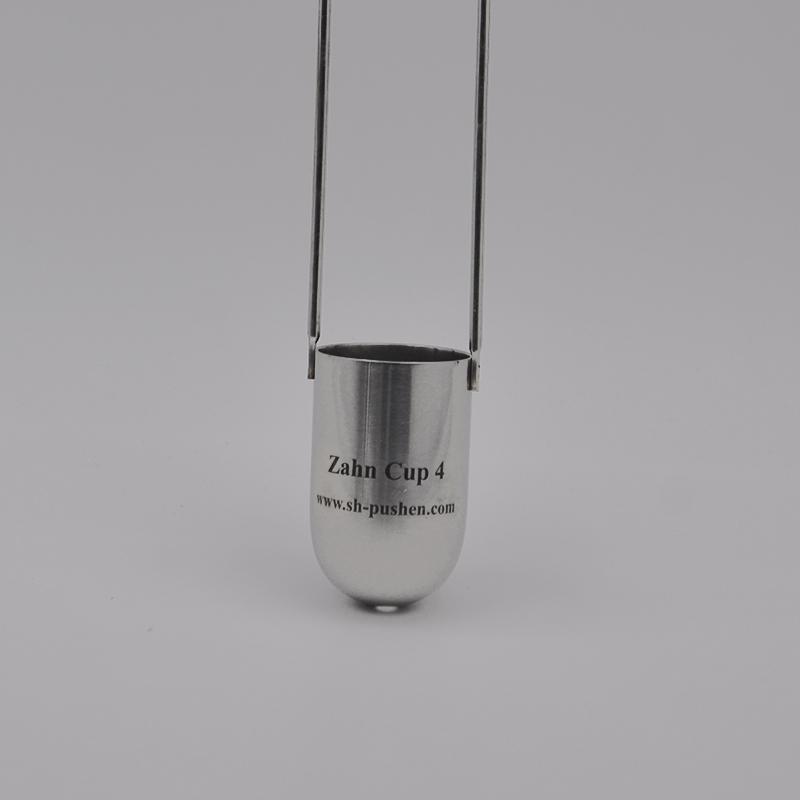
SEViscosity range 400-1800cSt; nozzle diameter 5.3mm; portable; stainless steel; meets ASTM D4212 standard.
Model:
 Zahn-5#

Similar products
-
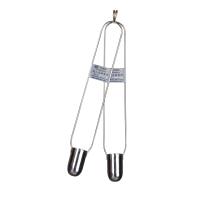 MODERNER CNDB-5 Zahn Viscosity Cup (zahn cup) 5.3mm newtonian fluid Viscosity Cup
 -
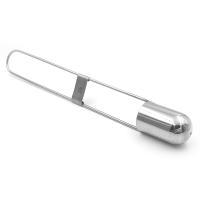 JINGKELIAN ZND-1 No. 5, Zion Viscometer 400~1800 cis Viscosity 5.28mm Diameter$ 131.00SE
 -
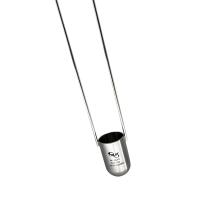 CHINA TR 1001/5 Zahn Cup No. 5 Portable Viscosity Cup 5.28mm$ 112.00SE
 -
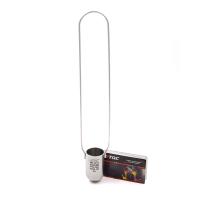 TQC VF2230 Zahn Cup No. 5 Zahn Viscosity Cup /5.3mm$ 470.00SE
 -
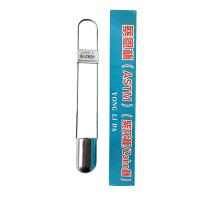 CSB Zahn Cup YONGLIDA No. 5 Zahn Cup$ 128.00SE





Pushen Zahn-5# Zahn CupSPEC
Pushen Zahn-5# Zahn CupDetails
Pushen Zahn-5# Zahn CupPacking list

- SKU
- NB018125
- Viscosity range
- 400~1800cSt
- outflow time
- 20~80s
- Flow hole diameter
- 5.3mm
- Cup body material
- stainless steel
- Filter material
- stainless steel
- Handle material
- stainless steel
- Applicable standard
- ASTM D4212
- Environment temperature
- 25℃±0.2℃
- Certificate
- without
Zahn-5#
Zahn Cup
Viscosity range 400-1800cSt; nozzle diameter 5.3mm; portable; stainless steel; meets ASTM D4212 standard.

Zahn Cup
It can be used anywhere in factories, workshops and laboratories to quickly check the viscosity of fluids.
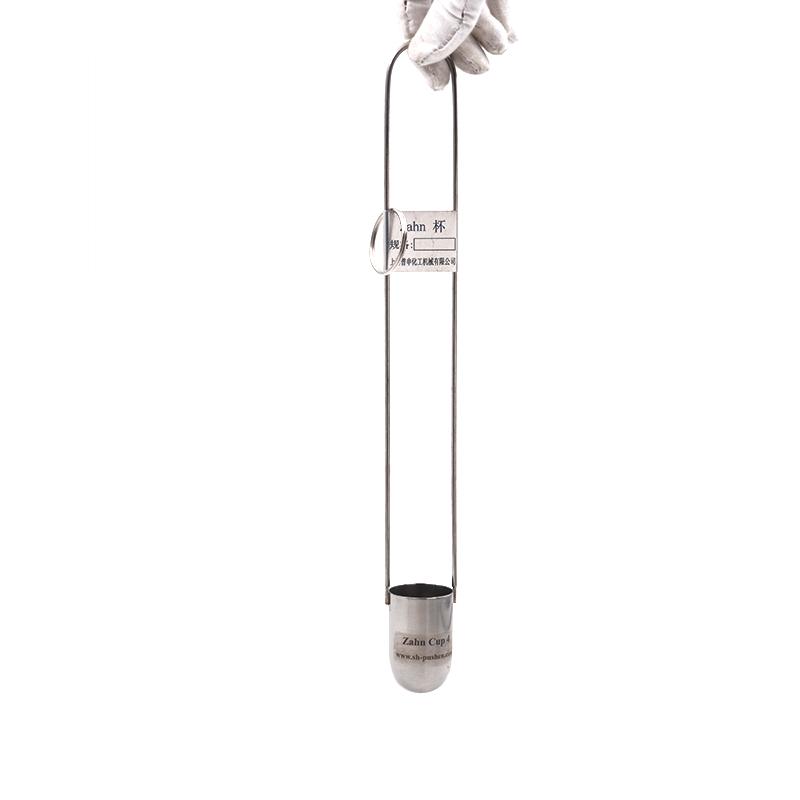
Each cup has a 30 cm long ring handle that can be held by hand to submerge the cup in the liquid.
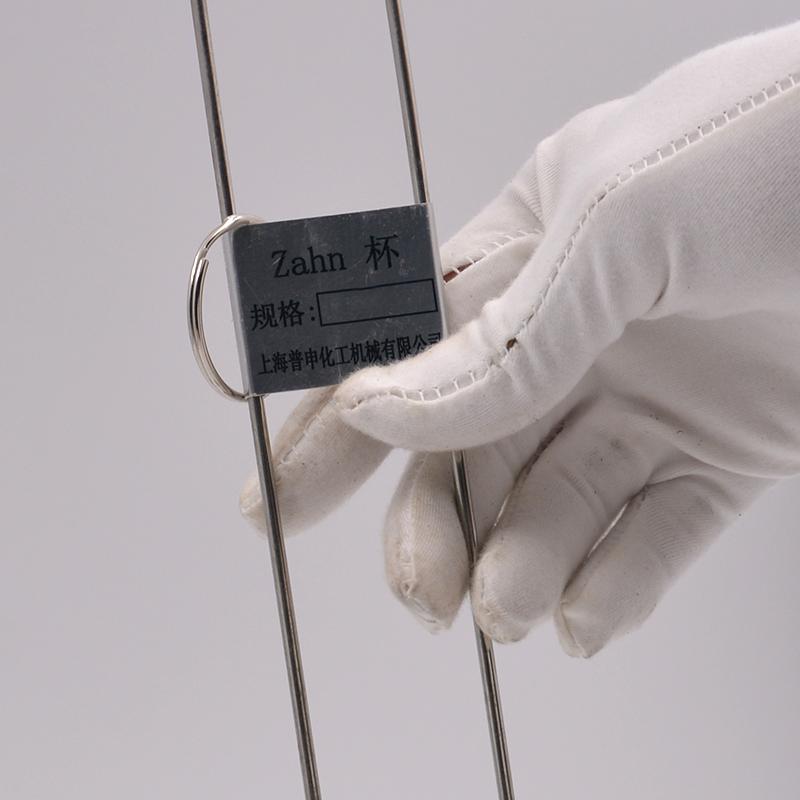
There is a ring in the center of the handle to keep the cup vertical during the test.


Standards
ASTM D 4212
Comparison of parameters of PS ZAHN Cup series
| model | cup number | outflow aperture | Measuring range | outflow time |
| PS 1024/1 | number 1 | 2 | 5-60 | 35-80 |
| PS 1024/2 | number 2 | 2.7 | 20-250 | 20-80 |
| PS 1024/3 | number 3 | 3.8 | 100-800 | 20-80 |
| PS 1024/4 | No 4 | 4.3 | 200-1200 | 20-80 |
| PS 1024/5 | Number 5 | 5.3 | 400-1800 | 20-80 |
| Unit: mm, cSt, s | ||||
| Other parameters | ||||
| Standards | ASTM D 4212 | |||
| material | Stainless steel | |||
FAQ
QWhat is the capacity of this viscosity cup?
A
44ml
QDo you have the Zahn Cup required by the ASTMD1084 standard?
A
This Zahn-5 #Zahn Cup will do.
QCoating viscosity measured by flow cup method, must be at the specified temperature? If not according to the specified viscosity will have any impact?
A
Viscosity cup measurement generally has 3 variables, viscosity, outflow time and temperature. Temperature is specified in many viscosity measurement standards because temperature has a large impact on viscosity, and the change of viscosity with temperature may not be dominant, and any diluted material used to adjust viscosity may also change the rate of this change.
Knowledge
Standard
- 1ASTM 《Standard Test Method for Viscosity by Dip-Type Viscosity Cups》
- 2 0009-2021《Viscometer calibrated Zane Cup》
- 3GB/T 13217.4-2020《Test method for viscosity of ink》
- 4ASTM D1084-2021《Standard Test Methods for Viscosity of Adhesives》
- 5JJG 743-2018《Flow Cup Viscometers》
- 6ASTM D4212-2016《Determination of viscosity by immersion viscosity cup》
- 7JJG 743-1991《Viscometer Flow Cup verification》
- 8GB/T 13217.4-2008《Liquid ink viscosity inspection method》