
JFL QDK type, automatic dynamic anti-cracking Tester
SE QDK
QDK

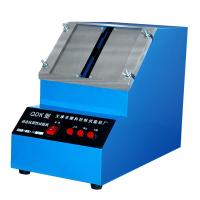
JFL QDK Automatic dynamic anti-cracking TesterSPEC
JFL QDK Automatic dynamic anti-cracking TesterDetails
JFL QDK Automatic dynamic anti-cracking TesterPacking list

- SKU
- NB019014
- Edge length
- 150mm
- Edge angle
- 30°
- Maximum lift
- 20mm
- Rise rate
- 3mm/min
- Frame Specifications
- 200*150*2mm
- Standards
- JG/T 157-2004
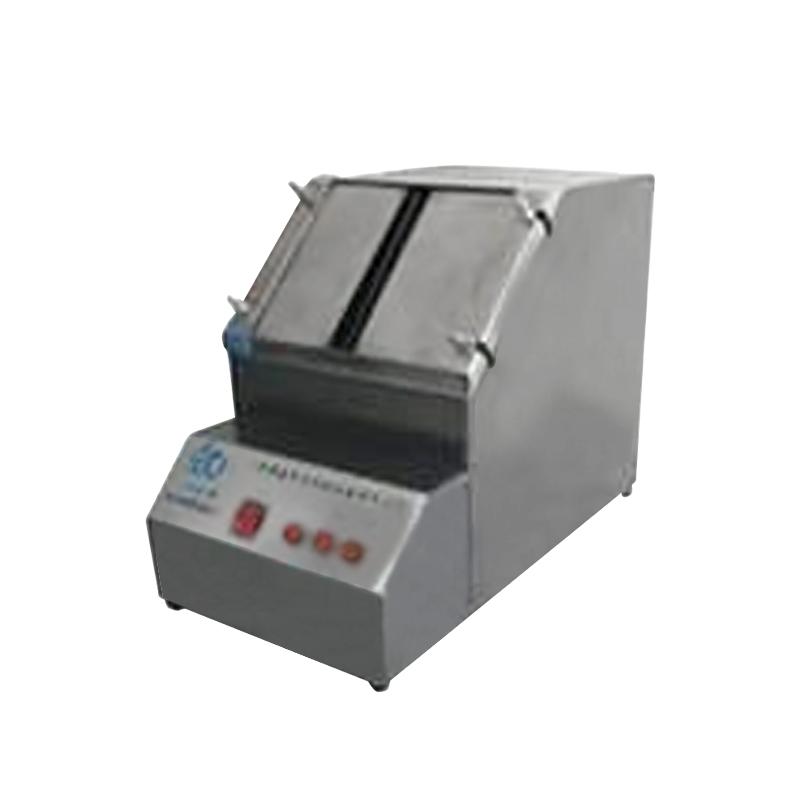
Introduction
Application
Due to uneven dry and wet changes of buildings, thermal expansion and contraction, structural settlement and incomplete design and construction, almost all buildings have surface capillary cracks, surface through cracks, and structural cracks to varying degrees.
Cracks in the exterior wall not only greatly reduce the protective effect on the exterior wall of the building, but also have a certain impact on the aesthetics of the painted surface. In order to make up for the above defects, before painting the exterior wall latex paint, a layer of exterior wall putty must be scraped on the wall; the quality of the exterior wall putty is the key.
The QDK automatic dynamic crack resistance Tester designed and manufactured according to the JG/T157-2004 standard is suitable for testing cement, polymer powder, synthetic resin emulsion or other materials as the main binder, together with fillers, additives, etc. External wall leveling putty.

Principle
After the motor is decelerated by the gear, it drags the ejector rod to move up, and the cutting edge generates an upward force, so that the asbestos cement board gradually produces fine cracks in the specified area and controls the slow expansion of the cracks. Observe the cracking of the putty layer to characterize the putty. The ability to resist crack propagation in the base material.
Use test method
1. Place the frame on a 200×150 (mm) asbestos cement board. Apply the prepared putty to the frame.
2. Remove the frame, and the asbestos cement board that has been coated and scratched should be cured in a standard environment for 7 days. For each sample, three test panels shall be prepared at the same time.
3. Fix the cured test plate on the working table of the instrument. Start the rising switch after starting the power switch, and the cutting edge rises slowly at this time.
4. The edge continued to rise slowly. At this time, pay attention to observe the blank area of the asbestos board. When cracks are found, use a vertical reading microscope to observe and record the crack width at any time until the putty layer cracks. After the stop switch is activated, the cutting edge no longer rises.
5. Record the maximum width of cracks in the asbestos cement board before the putty layer cracks. Accurate to 0.02 mm.
6. Start the drop switch to return the cutting edge to its original position.
7. Loosen the fastening nut and pressure plate of the test plate, and remove the test plate. Put another test plate, repeat the above test steps.
Result judgment
Among the three test panels, the arithmetic mean of the test results of each test panel with the closer numerical value is taken as the final result.
Precautions for use
1. When the putty is applied and scraped, the surface should be smooth and free of bubbles.
2. When the frame is removed, attention should be paid to the edge of the putty layer, and there should be no cracking or damage.
3. When reading with a reading microscope, the cutting edge should not retreat to prevent the asbestos cement board from retracting.
<Note> If you need an illuminated reading microscope, please purchase it separately.