
RONGJIDA SYD-265E asphalt kinematic viscosity meter
 SYD-265E

RongJiDa SYD-265E Asphalt kinematic viscosity MeterSPEC
RongJiDa SYD-265E Asphalt kinematic viscosity MeterDetails
RongJiDa SYD-265E Asphalt kinematic viscosity MeterPacking list

- SKU
- NB019096
- Power supply Voltage
- AC 220V±10%,50Hz±5%
- Operating Environment
- Environmental temperature -10 ℃~ 35 ℃, Relative Humidity < 85%
- Dimensions
- 500x500x800mm
- Instrument Weight
- 30KG
- Heating power
- Two gears, 1000W 650W
- Stirring motor
- Power 6W; Rotation speed 1200r/min
- Temperature Measurement Range
- Room temperature~ 100 ℃
- Temperature control Accuracy
- ±0.1℃
- Thermostatic bath
- Capacity, 20L; form, inner and outer two-layer cylinder (double cylinder)
- Temperature sensor
- Industrial platinum resistors, their division number is Pt10.
- Power consumption of the whole machine
- Not more than 1800W
- Capillary Viscometer
- A group of 7 sticks with inner diameters of 0.6, 0.8, 1.0, 1.2, 1.5, 2.0 and 2.5 mm respectively
Introduction
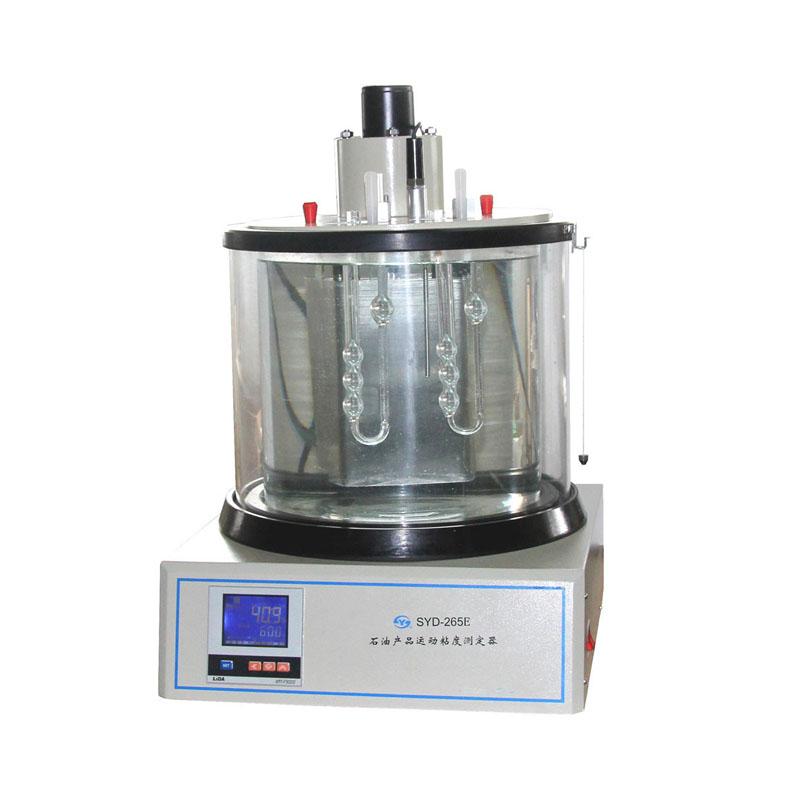
SYD-265E Asphalt Kinematic Viscometer is a professional testing instrument, which is suitable for vacuum decompression capillary viscometer to determine the dynamic viscosity of viscous petroleum asphalt. Unless specified, the test temperature is 60°C and the vacuum is 40kPa.
Purpose and scope of application
It is designed and manufactured according to the requirements specified in the industry standard T0619 of the People's Republic of CHINA "Asphalt Kinematic Viscosity Test (Capillary Method)", and is used to determine the kinematic viscosity of asphalt samples at the specified temperature according to the requirements specified in the T0619 standard. The experimental results of this instrument meet the requirements of the Ministry of Communications of the People's Republic of CHINA JTJ052 "Test Regulations for Asphalt Mixture for Highway Engineering".
Structure and circuit principle
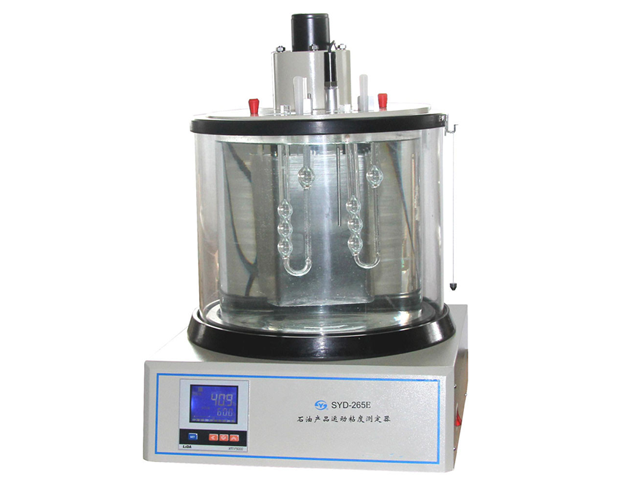
The instrument is composed of capillary viscometer, mercury thermometer, electric stirring device, electric heating device, temperature controller, double-layer thermostatic bath and lighting lamp.
Features
1. The intelligent temperature controller is adopted, the temperature control is fast, the response is fast, the overshoot is small, and the temperature control accuracy is ±0.1°C.
2. Rigid glass cylinder and thermal insulation jacket cylinder (called double cylinder) are adopted, with good thermal insulation performance and clear sample observation.
3. Adopt desktop and all-in-one design, the instrument is integral, easy to use.
4. The electric stirring device is adopted, and the temperature in the bathtub is uniform.
- 1In-depth understanding of kinematic viscosity and dynamic viscosity
- 2Viscometer vs Rheo-meter: What's the difference?
- 3Basic concepts, principles and measurement methods of viscosity
- 4Application of High Temperature Viscometer in Bitumen Viscosity measurement
- 5The importance of viscosity measurement in food production and processing
- 6The basic knowledge of viscometer is enough to read this article
- 1ASTM D445-2023《Standard Test Method for Kinematic Viscosity of Transparent and Opaque Liquids (and Calculation of Dynamic Viscosity)》
- 2ISO 3104-2020《Petroleum Products - Transparent And Opaque Liquids - Determination Of Kinematic Viscosity And Calculation Of Dynamic Viscosity (ISO 3104:2020); German Version EN ISO 3104:2020》