
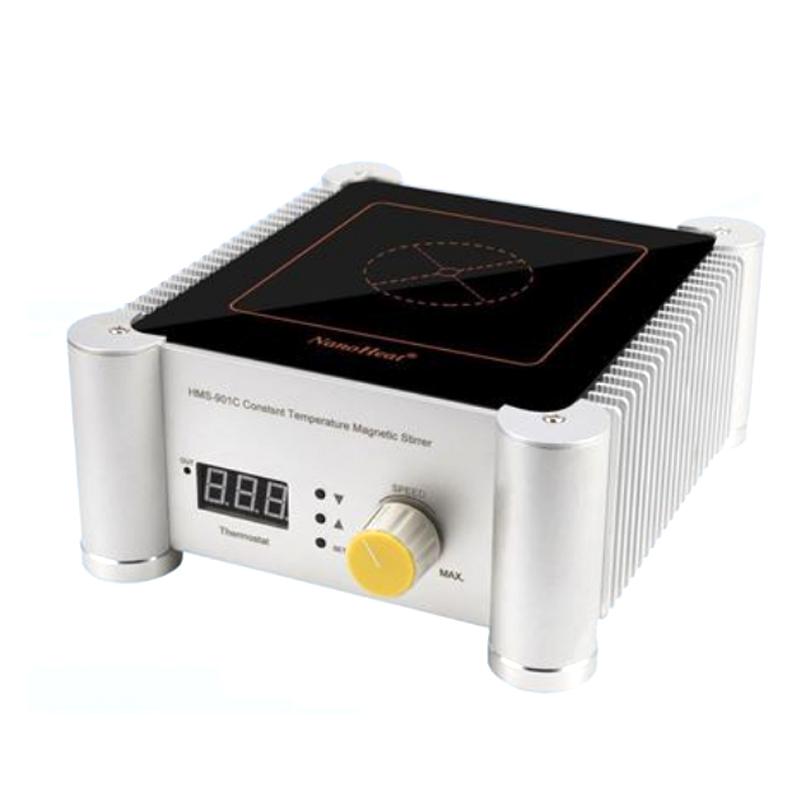
BDJK HMS-901C heating Magnetic Stirrer
SE HMS-901C

bdjk HMS-901C Heating Magnetic StirrerSPEC
bdjk HMS-901C Heating Magnetic StirrerDetails
bdjk HMS-901C Heating Magnetic StirrerPacking list
- SKU
- NB021695
- Max. Capacity of stirring
- 3L
- Stirring speed
- 0~1250rpm
- Speed regulation mode
- stepless speed regulation
- Temperature range
- RT+~450℃
- Temperature control Accuracy
- ±1℃
- Pan size
- 120*120mm
- Dimensions
- 260*200*70mm
- Stirrer drive
- ND servo motor
- output power
- 9W
Introduction
1. Heating function: Generally, heating magnetic stirrers are equipped with a heating device on the chassis. In addition, corresponding devices will be set up to monitor the heating. The working disk will be equipped with a temperature sensor (thermal coupling), and the instrument will not heat the medium. The temperature can be adjusted according to experimental requirements.
2. Stirring function: The magnetic stirrer is driven by a *magnet located under the working plate. The *magnet can penetrate the working plate surface, and the magnet is directly fixed on the rotating shaft of the motor. The actual rotation speed of the instrument depends on the actual load and Voltage. Fluctuations in the Voltage within the allowable range and changes in the viscosity of the medium being processed will cause fluctuations in the rotation speed. The speed of the motor can be adjusted according to the requirements of the experiment.
Features
Driven by Nanoheatt's world-class thermal energy technology, it has no mechanical heating components, can be dry-fired, has no electromagnetic field interference and hazards, and can quickly heat up to 400 degrees in just 4 minutes. The micro-chang ceramic plate and precision aluminum alloy shell are well integrated, beautiful and fashionable. Corrosion resistant and easy to clean
When using the heating magnetic stirrer, you should pay attention to the following matters:
1. Do not use the heated magnetic stirrer to stir explosive substances in dangerous environments or operate underwater.
2. It should be ensured that only personnel with relevant training can use the heating magnetic stirrer.
3. Be careful to avoid the power cord of the instrument touching the chassis.
4. Wear appropriate protective equipment according to the type of media being processed.
5. The instrument cannot be used indoors to handle media with explosive hazards. The instrument should be placed on a non-combustible or fire-proof table.
6. Pay attention to the magnetic field! When using, the impact of the magnetic field on the surrounding environment, such as data storage and cardiac pacemakers, must be considered.
7. Be careful of high temperatures! When the instrument is working, the temperature of the panel can reach up to several hundred degrees Celsius. Be careful of burns when touching the instrument shell and panel. Also pay attention to the residual heat after the instrument is turned off.
8. When heating and cooling, a slight sound may be made due to the expansion of the material.

- 1GB/T 5541-2017《Disperse dyes—Determination of stability of dispersion at high temperature—Filter test of double filter papers》
- 2GB/T 6368-2008《Surface active agents - Determination of pH of aqueous solution - Potentiometric method》
- 3GB/T 33546-2017《General technica standard of electromagnetic stirrer》