TQC VF6500 GYZJ-934-1 Pap Hardness Tester
SE VF6500

TQC sheen VF6500 Pap Hardness TesterSPEC
TQC sheen VF6500 Pap Hardness TesterDetails
TQC sheen VF6500 Pap Hardness TesterPacking list
- SKU
- NB022275
- application
- Soft materials such as metals and hard plastics
- meet the standard
- ASTM D2583
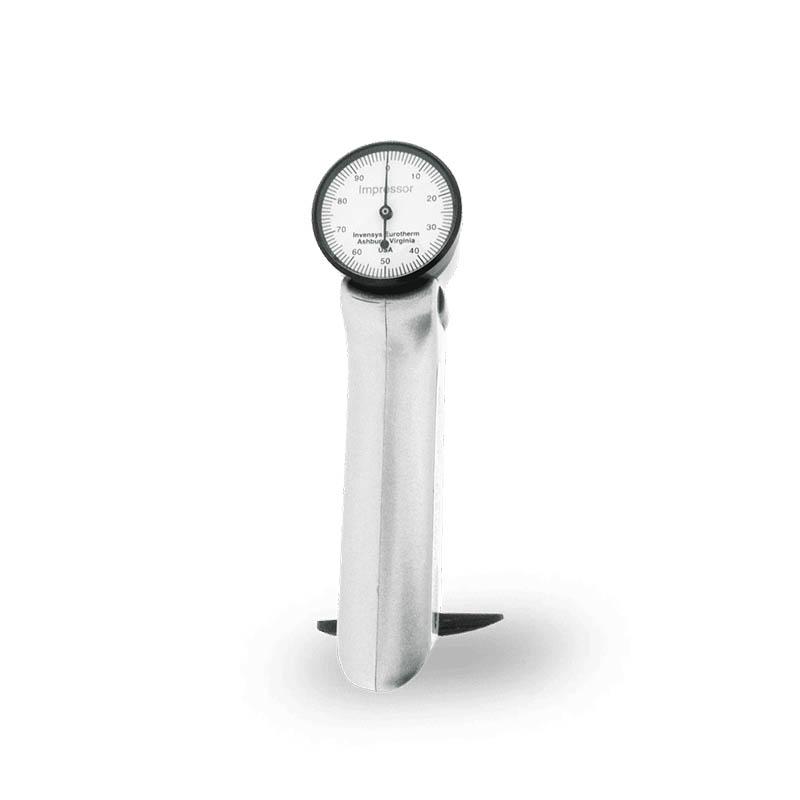
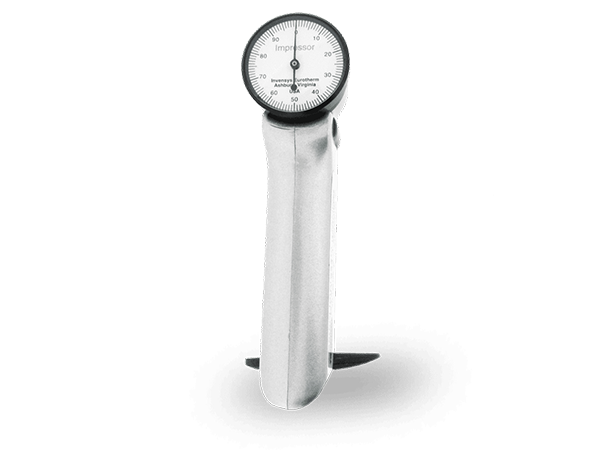
Simple, portable instrument for testing the hardness of materials. Complies with ASTM D2583. Originally known as the Barber-Colman Impressor, the Barcol impressor was developed by Walter Colman as a hand-held, portable means of assessing the hardness of materials during World War II. The U.S. Army Aviation Corps needed a handheld method to check the hardness of rivets because there was concern that the aircraft could fail during flight by replacing regular rivets with soft lead or regular rivets. The indentation works when the tip is pressed against the material in question. The hardness of the material determines the distance of the tip indentation and is read on the dial by means of a tension spring and a lever.
The Barcol hardness test is often used on soft materials, such as rigid plastics. It measures hardness based on an indentation with a sharp point with a flat tip. The test is performed using a similar method and indentation device used to measure Shore D hardness, but the Shore D indenter has a rounded tip. Barcol hardness is not a valid hardness measurement for curved surfaces.
When pressure is applied to the device, a point penetrates the material, and the hardness is displayed on the dial, which is scaled from 0 to 100.
Applications
The official scale of the Barcol Hardness Tester for testing:
Aluminum alloy
Soft metals
plastics
fiberglass panels, tanks, surfaces
Fire department ladders
Composites
rubber or leather
shelves
lead
portable
Hardness Testers are handy tools for testing the hardness of aluminum, aluminum alloys, copper, brass, and other materials, including plastics and fiberglass. The instrument is designed to manufacture parts and components as well as raw materials.
Easy to use
No experience; It can be used in any location and in any space where the operator is allowed. The hardness reading on the dial is immediately displayed and is divided into 100 scales. No need to wait, preload, or measure individually.
Lightweight
sclerometerWeighs only 1 pound 2 ounces. The entire Impressor package comes with a carrying case, an adjustment wrench and two spare indenters. Impressor + case = 2 lb.8 oz. Shipping Weight = 4 lbs, Box = 12 x 11 x 6 inches, Dimensional Weight 5 lbs. (1.8 kg, box = 21 x 28 x 16 cm, dimensions weight 2.5 kg)
sclerometerSuitable for testing homogeneous materials. Due to the small diameter of the indenter point, the material with a grainy, fibrous or rough structure will produce a large variation in the hardness reading.
In order to obtain accurate readings, the material should be at least 1/32" thick and have a minimum distance of 1/8" in any direction from the indenter point to the edge of the sample. The test area should be smooth and free of mechanical damage.
Simply apply more pressure to the instrument, i.e., drive the spring-loaded indenter point into the material. The indenter point needs to be perpendicular to the surface being measured. On very soft metals, the highest reading should be used, as the cold flow allows the spring-loaded indenter point to continue penetrating.
Note: The physical properties of very soft materials make it impossible to establish a uniform correlation between different hardness measurement systems. We recommend testing to determine the Impressor hardness limit for each material.
Product display