
JINGQI JY1002 Electronic Balance
 JY1002

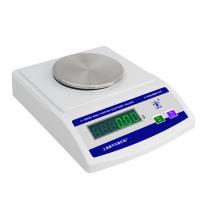
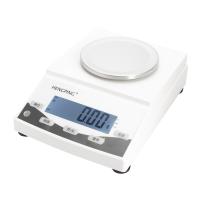
JingQi JY1002 Electronic BalanceSPEC
JingQi JY1002 Electronic BalanceDetails
JingQi JY1002 Electronic BalancePacking list

- SKU
- NB023053
- Weighing range
- 0~100g
- Readability
- 10mg
- Pan Size
- Φ125mm
- Net Weight
- 6.8kg
- Power supply Voltage
- 220V/50Hz±1Hz
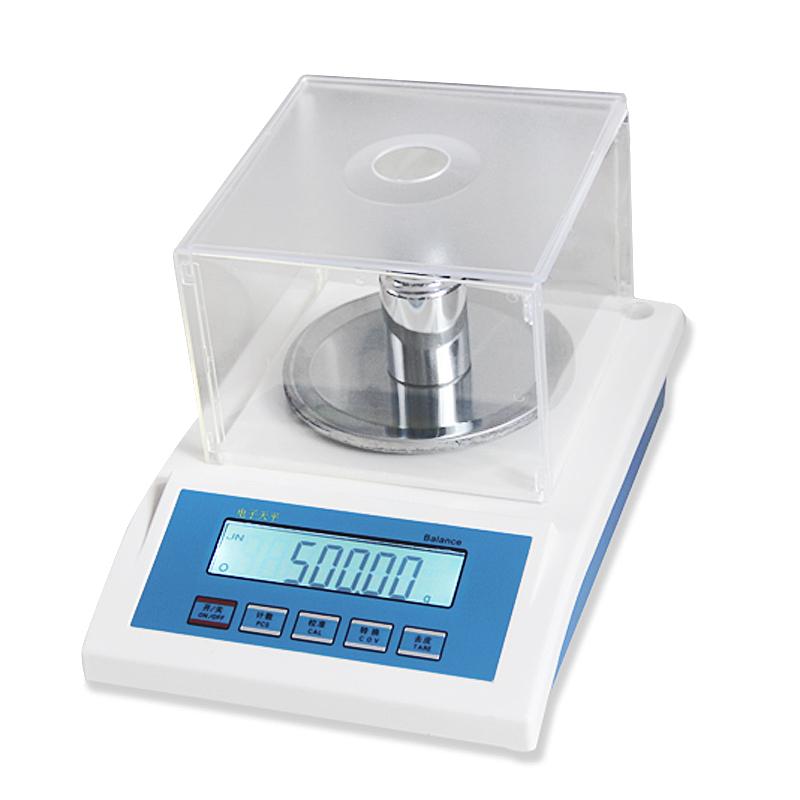
An electronic balance for weighing the mass of an object. Electronic Balances generally use strain gauge sensors, capacitive sensors, and electromagnetic balance sensors. Strain gauge transducer has a simple structure and low cost, but its accuracy is limited.
ApplicationIt is suitable for scientific research institutions, colleges and universities, biology, industrial and mining enterprises and other fields as accurate weighing and quality analysis, and is a satisfactory instrument for quality measurement and analysis.
Performance characteristics:
The use of high-stability strain gauge sensors, each sensor has undergone high-low temperature aging treatment, to ensure that it can still be accurately weighed under the condition of intersection;
The limit protection device is used to ensure that the sensor is not damaged when overloaded;
The software system can achieve intelligent matching for different sensors to ensure product consistency;
Specially developed linear and eccentric error compensation system can eliminate human-caused weighing errors;
STN high-contrast LCD display is adopted, and the display is clear and sharp;
It can be powered by a 9V dry cell battery.
*Fully transparent design *Larger Weighing range *External power supply *Backlight intelligent control, clear reading *LCD large font display
function
Full weighing and tare * Basic weighing * Automatic back to zero * Counting function, and the number of counted samples can be adjusted * Multiple unit conversions, including g (gram), kg (kilogram), ct (carat), oz (ounce), lb (pound) * Automatic detection at boot * Automatic calibration (external calibration) * Linear calibration (need to configure a set of weights) * Equipped with RS232 interface, can be connected to a computer or micro printer * Two printout methods * Automatic alarm for failure