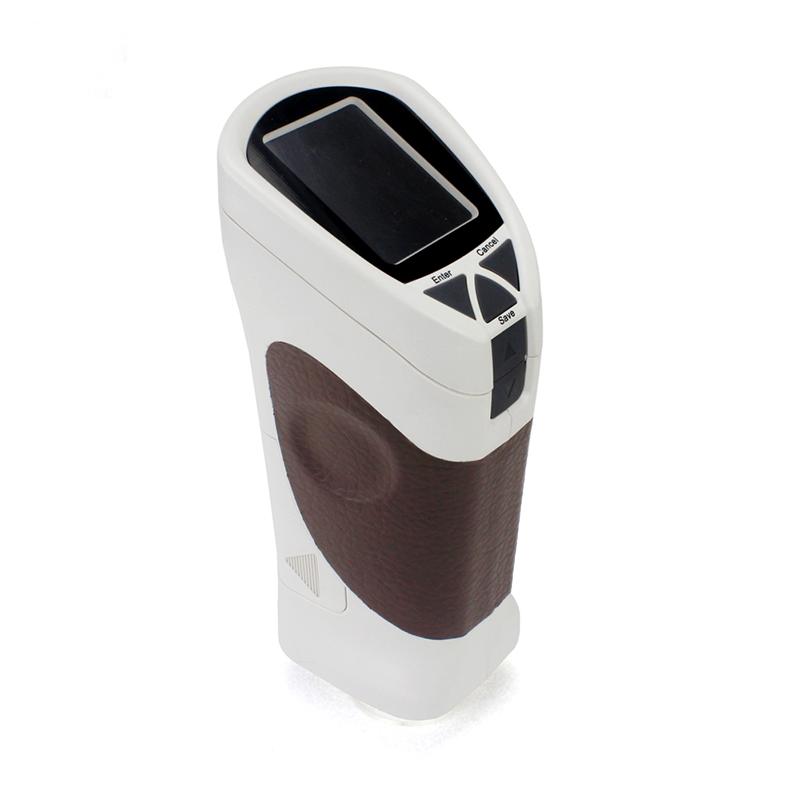
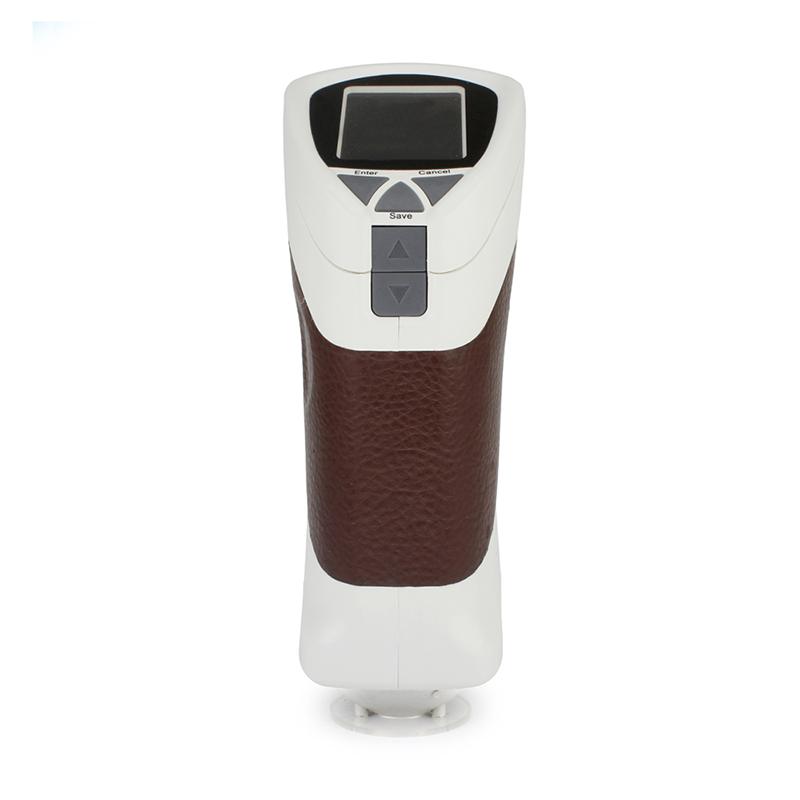
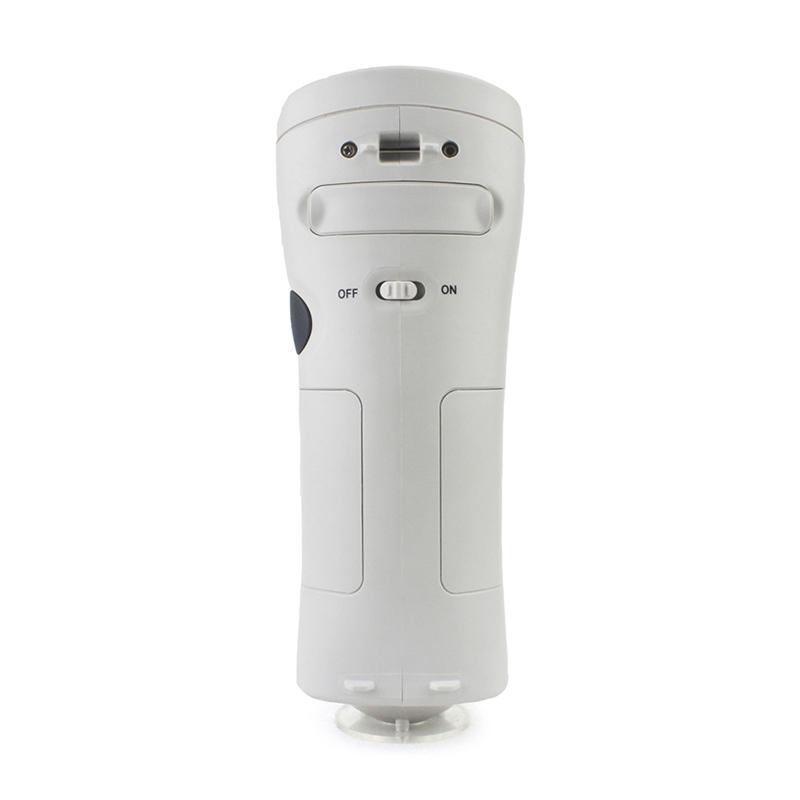
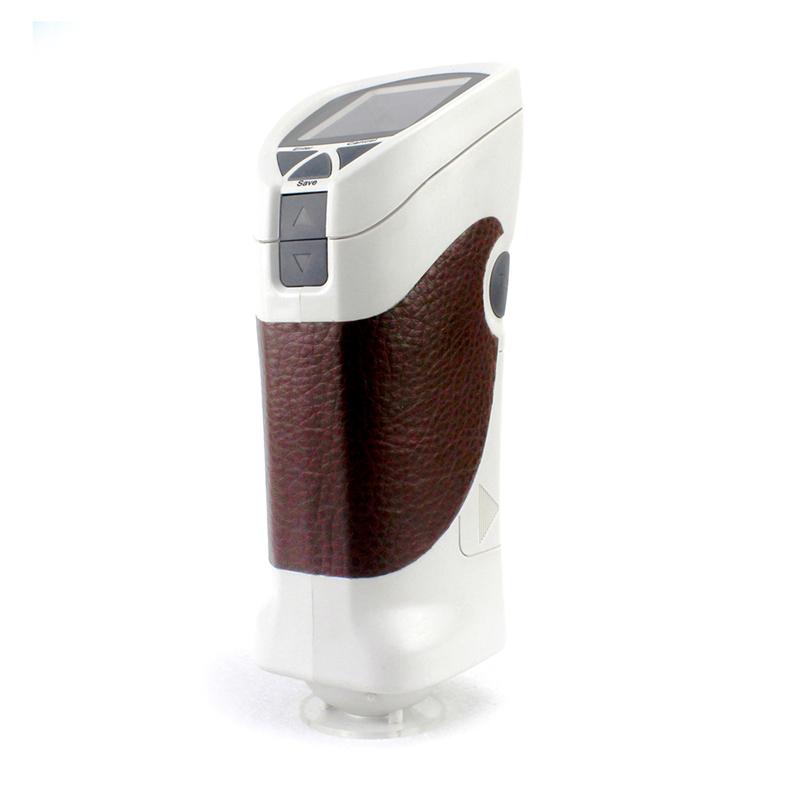
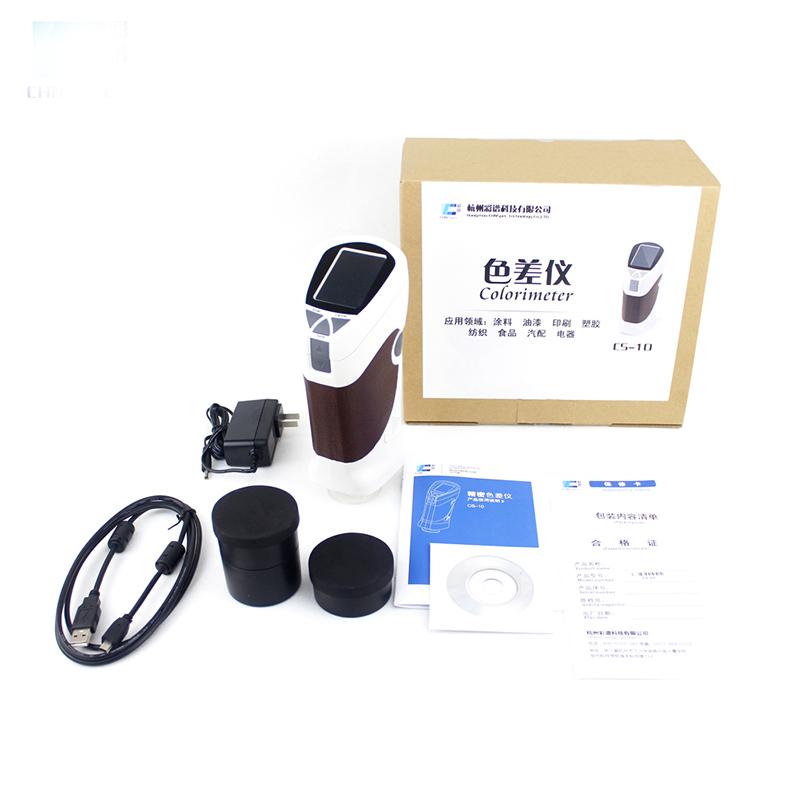

CHNSPEC CS-10 portable Colorimeter 8mm caliber, economy version
 CS-10
CS-10


CHNSpec CS-10 Color difference MeterSPEC
CHNSpec CS-10 Color difference MeterDetails
CHNSpec CS-10 Color difference MeterPacking list
- SKU
- NB000233
- Lighting method
- 8°/d
- Measurement range
- L*: 1~100
- Measurement light source
- CIE D65
- Measurement time
- About 0.5s
- Measurement caliber
- Φ8mm
- Repeatability
- Standard deviation Delta E * ab *, within 0.08
- Operating language
- Chinese, English
- Interface
- USB2.0 printer
- Viewing Angle
- CIE 10°
- Lighting source
- LED Light source
- Color difference formula
- Δ( L*a*b*),Δ( L*C* h)
- data storage
- 10 groups of standard samples, 100 groups of test groups under each group of standard samples
- Power supply Voltage
- 4 AA1.5V alkaline batteries or nickel-metal hydride batteries, special adapter DC5V
- display mode
- Chromatic value: L * a * b, L * C * h, Delta E * ab, XYZ, relative RGB value, colour fastness, discoloration fastness; color difference value: delta (L * a * b), delta (L * C * h);
- Operating environment
- 0 ℃~ 45 ℃ Relative Humidity 80% or less (35 ℃) condensation
- Dimensions
- 77*86*210mm
- Weight
- 550g

Introduction
Color spectrum CS-10The portable Colorimeter is a precision Colorimeter with a handheld vertical structure design, with a large LCD screen, which can clearly and intuitively display the measurement data, and a bilingual operation interface in Chinese and English, which has a wider applicability. This portable Colorimeter adopts imported high-quality parts, which makes it have higher measurement stability. The measuring diameter is 8mm, which is a relatively versatile measuring aperture.
Features and advantages
1. Cost-effective
● The performance is very stable
● Switch between Chinese and English
● The height satisfies the Luther condition, and the display accuracy is 0.01
● The repeatability △E standard deviation value is 0.08
● The black and white calibration function can improve the accuracy of the test
● CS-10Portable ColorimeterFully compliant with CIE (International Commission on Illumination) standards and national standards
2. Professional design and powerful functions
●Ergonomic design, the waist of the Colorimeter conforms to the curvature of the human palm and is designed with a high-hand leather
● Support displayMulti-mode color values
●PC software, computer data management
●I haveUSB interface, which can be connected to output data
●CS-10 Portable ColorimeterProvides accurate test time settings
●It is suitable for internal and external color evaluation and data control of enterprises

Examples of product applications
According to the manufacturer's case, the CS-10 portable Colorimeter has two typical application examples
1. Measure the color difference of plastic parts
2. Detect color difference in the injection molding industry
Chromatic aberration test procedure
The CS-10 portable Colorimeter is tested by pressing it vertically and smoothly against a flat object.
Step 1: Black calibration test
Step 2: White calibration test
Step 3: Test the standard
Step 4: Test the specimen

Step 5:After the test is completed, the CS-10 portable Colorimeter will automatically calculate and display the chromaticity and chromaticity values on the screen
Note: 1) Chromaticity value: L*a*b*, L*c*h*, ΔE*ab, XYZ, relative RGB value
2) Color difference: Δ(L*a*b*), Δ(L*c*h*)
Actual picture of the product


CS-10 Portable Colorimeter Accessories Diagram

- 1GB/T 13448-2019《Test methods for prepainted steel sheet and strip》
- 2ISO 11664-5-2016《Colorimetry - Part 5: CIE 1976 L*U*V* Colour Space And U, V Uniform Chromaticity Scale Diagram》
- 3ISO 11664-4-2019《Colorimetry - Part 4: CIE 1976 L*A*B* Colour Space》
- 4ISO 11664-3-2019《Colorimetry - Part 3: CIE Tristimulus Values》
- 5GB/T 2374-2017《Dyestuffs—General rules for dyeing test》
- 6GB/T 28197-2011《Methods for characterising tristimulus Colorimeters for measuring the colour of light》
- 7HG/T 4767.3-2014《Pigment and extenders.Testing of colour stability to heat during processing in plastics.Part 3: By oven test》
- 8GB/T 6688-2008《Dyestuffs - Determination of relative strength and color difference - Instrumental method》
- 9JJG (轻工)48-2000《Reflectometer》
- 10GB/T 1766-2008《Paints and varnishes - Rating schemes of degradation of coats》