
TEELEN 4XC Trinocular Inverted Metallurgical Microscopy
SE 4XC
4XC

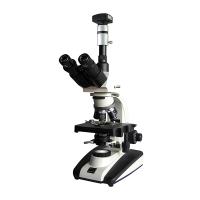
Teelen 4XC Metallurgical MicroscopySPEC
Teelen 4XC Metallurgical MicroscopyDetails
Teelen 4XC Metallurgical MicroscopyPacking list

- SKU
- NB025486
- Flat field eyepiece
- WF10X/Φ18、WF12.5X/Φ15
- reticle eyepiece
- WF10X/φ 18, 0.1mm scale cross reticle, adjustable focus
- Flat field color difference objective
- 10X/0.25, 20X/0.45, 40X/0.65 (spring), 100X/1.25 (oil, spring)
- Total Magnification
- 100X~1250X
- Trinocular observation head
- Hinged 30 ° tilt
- converter
- four holes
- Coarse fine-tuning focusing range
- 25Mm fretting grid value: 2um coarse fretting coaxial focusing
- stage
- Double-decked mechanical, size 180x150mm
- Stage movement range
- Moving range 15X15mm φ 10/20mm, one piece each, vernier grid value 0.1mm
- pupil distance
- 55-75mm
- Mechanical barrel length
- 160mm
- lighting system
- Adjustable luminance, with variable light bar, halogen tungsten bulb 6V20W
- Weight
- 8.5kg
- Dimensions
- 20*56*35cm
- Packaging Dimensions
- 29*43*59cm
- Gross Weight
- 10.0kg

use
4XC metallographic microscope is mainly used to identify and analyze the internal structure of metals. It is an important instrument for metallographic research and a key equipment for industrial departments to identify product quality. It is mainly used to identify and analyze the structure of various metals and alloys. , used in factories or laboratories for quality appraisal of castings, inspection of raw materials or research and analysis of the metallographic structure of materials after processing.
Functions and Features
1. Traditional model with stable quality and clear imaging.
2. The planetary coaxial coarse and fine focus adjustment device is adopted, and the focus is comfortable and stable.
3. Adopt flat-field objective lens and flat-field eyepiece, with flat field of view and high definition.
4. Two optical path outputs, one for observation and one for connecting camera.
5. It adopts a double-layer mechanical stage with a scale and an epi-illumination device, with a variable light bar, and the brightness is evenly adjustable.


- 1GB/T 44293-2024《Image measurement method for numerical aperture of microscopic objective》
- 2GB/T 43846.1-2024《Microscopes—Designation of microscope objectives—Part 1: Flatness of field/Plan》
- 3GB/T 43846.2-2024《Microscopes—Designation of microscope objectives—Part 2: Chromatic correction》
- 4GB/T 43846.3-2024《Microscopes—Designation of microscope objectives—Part 3: Spectral transmittance》
- 5JJF 1914-2011《Calibration Specification for Metallurgical Microscopes》
- 6GB/T 13777-2024《Test method for maturity of cotton fibers—Microscopic method》
- 7JB/T 8230.1-1999《Light microscope Vocabulary》
- 8GB/T 42659-2023《Surface chemical analysis—Scanning probe microscopy—Determination of geometric quantities using SPM: Calibration of measuring systems》
- 9GB/T 42886-2023《Microscopes—Microscopes with digital imaging displays—Information provided to the user regarding imaging performance》
- 10GB/T 9246-2008《Microscopes - Oculars(eyepieces)》