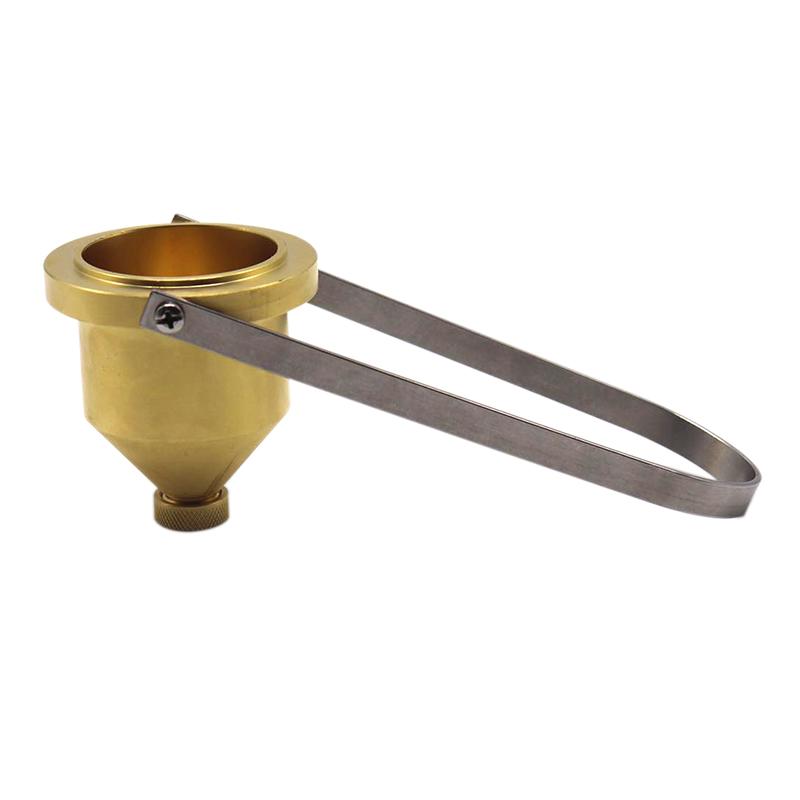

QIWEI BNT-4T Portable Coated-4 Viscometer Pure Copper/4mm
 BNT-4T

-
 TRUIT TR 1010/2 Portable Coat - 4 cups, Coat 4 Viscometer$ 146.00SE
 -
 Ander LND-1 Coating-4 Cup, Aperture 4mm Suitable for 150S Coating Viscosity Determination$ 121.00SE
 -
 JINGKELIAN QND-4C Viscosity Cup measurement Coatings, paints and other viscosity Measurement range 10-150s viscosity$ 137.00SE
 -
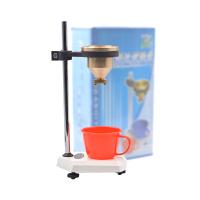 QND-4C coating 4 cups YONGLIDA laboratory brass coating 4 cups$ 126.00SE




QiWei BNT-4T Tu -4 ViscoMeterSPEC
QiWei BNT-4T Tu -4 ViscoMeterDetails
QiWei BNT-4T Tu -4 ViscoMeterPacking list

- SKU
- NB025829
- outflow time
- 0~150s
- flow hole diameter
- 4mm
- Capacity
- 100ml
- Cup body material
- pure copper
- Applicable standard
- GB/T 1723
- Correction factor
- K=1±0.03
Principles and calculations
The viscosity measured by the COAT-4 viscometer is the conditional viscosity, that is, the time for a certain amount of sample to flow out of the hole with a specified pore size at a certain temperature, expressed in seconds. The resulting specimen elution time (s) is converted into kinematic viscosity values (mm²/s) using the following formula:
At t<23s, t=0.154μ+11
At 23s≤t≤150s, t=0.223μ+6.0
where:
t— outflow time, s;
μ – kinematic viscosity, mm²/s.
Main technical characteristics:
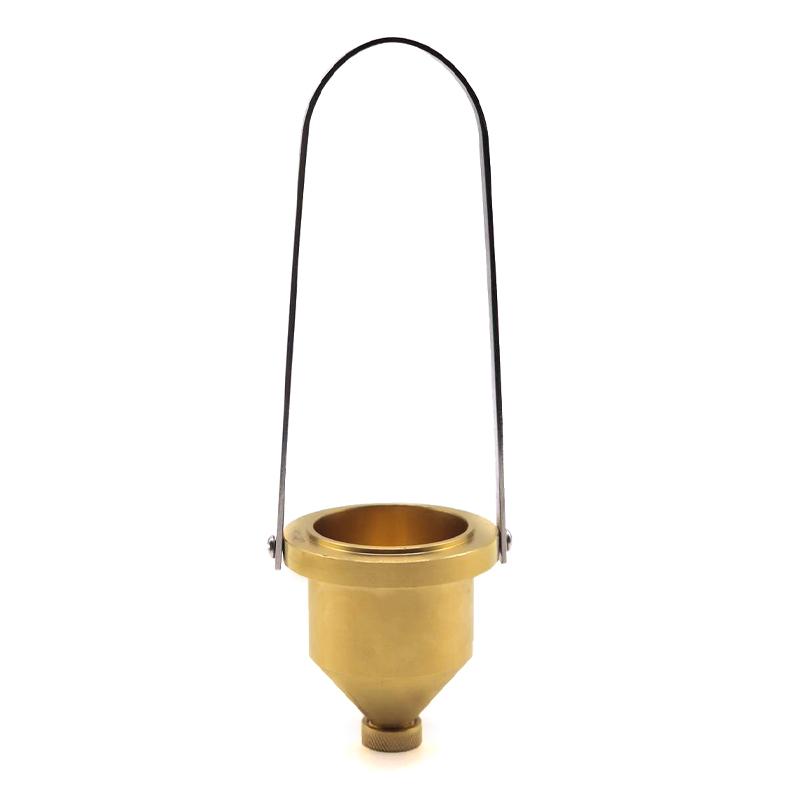
1. The Tu-4 viscometer is made of brass, with a capacity of about 100 ml, and its geometric size and inner wall roughness conform to the provisions of GB/T 1723 Coating Viscosity Determination Method, and its bottom is an outflow hole of stainless steel.
2. Correction coefficient K: multiply the viscosity measured by the corrected viscometer by the K value, which is the conditional viscosity measured by the viscometer. The correction factor K should be in the range of 1±0.03, otherwise the viscometer should be replaced. The viscometer should be calibrated regularly according to the frequency of its use.
3. The difference between the measured value and the calculated value of the standard viscosity liquid with known kinematic viscosity from the Tu-4 viscometer should be within ±3% of the calculated value.
- 1JB/T 3078-2015《Varnishes used for electrical insulation.Silicone impregnating varnishes》
- 2QB/T 5477-2020《Water-based printing ink for decorating paper》
- 3JT/T 821.4-2011《Anti-corrosive coatings for concrete brid ge surface》
- 4JT/T 821.3-2011《Anti-corrosive coatings for concrete bridge surface.Part 3:Flexible coatings》
- 5JT/T 821.2-2011《Anti-corrosive coatings for concrete bridge surface.Part 2:Wet-surface tolerant coatings》
- 6JJG 743-2018《Flow Cup Viscometers》
- 7HG/T 3830-2006《Coil coatings》
- 8GB/T 13217.4-2008《Test method for viscosity of liquid ink》
- 9QB/T 1046-2012《Gravure surface ink for plastic film》
- 10GB/T 1723-1993《Coating viscosity measurement》