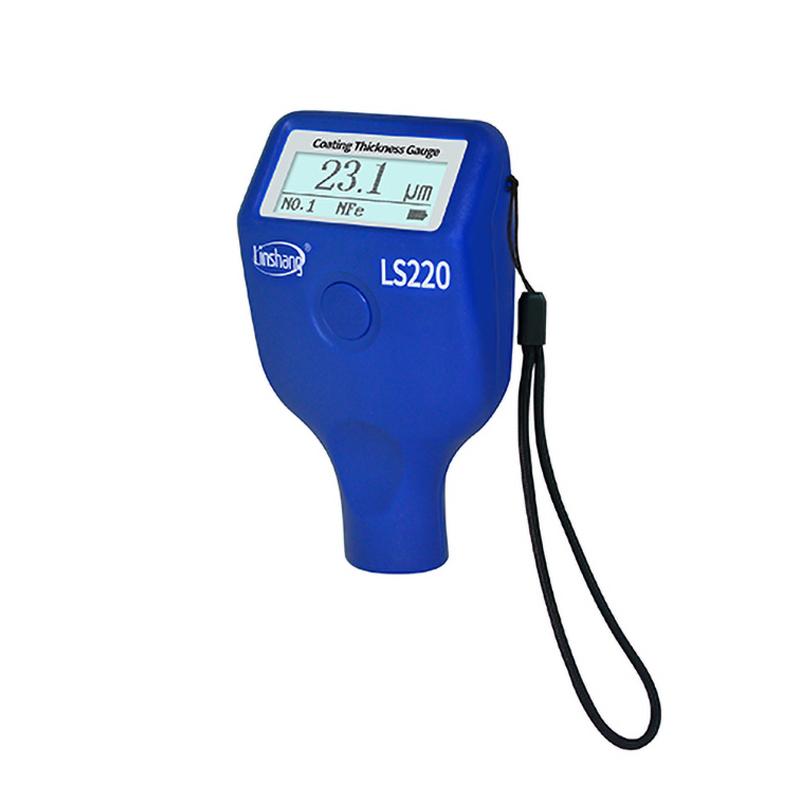
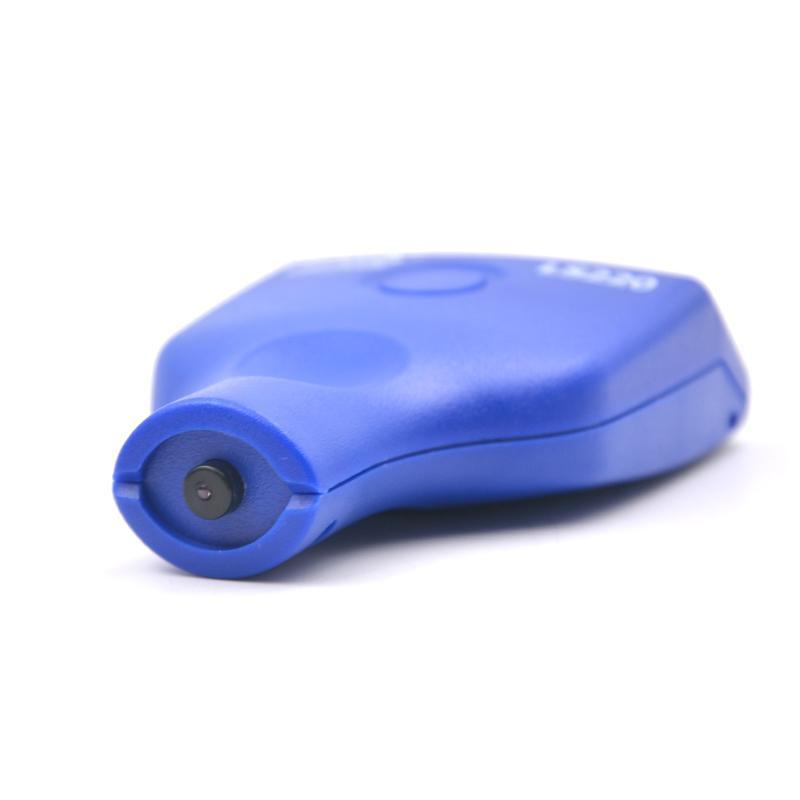
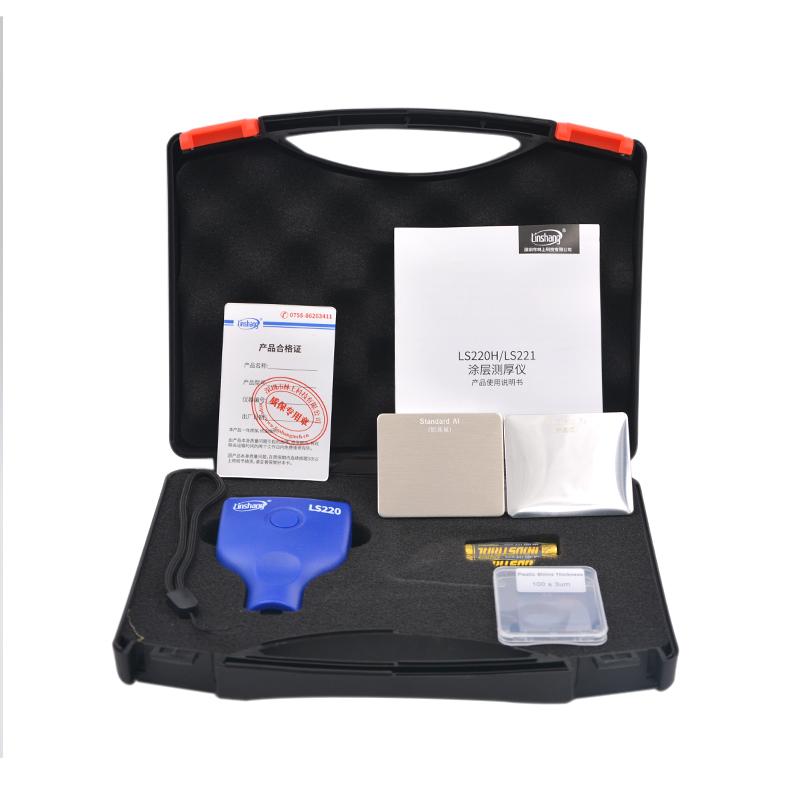
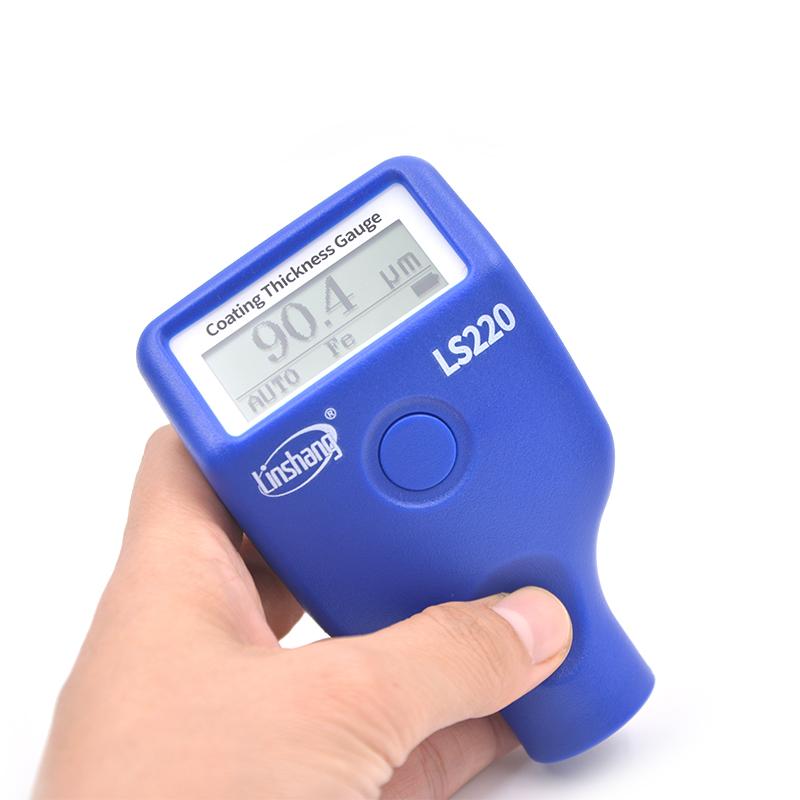
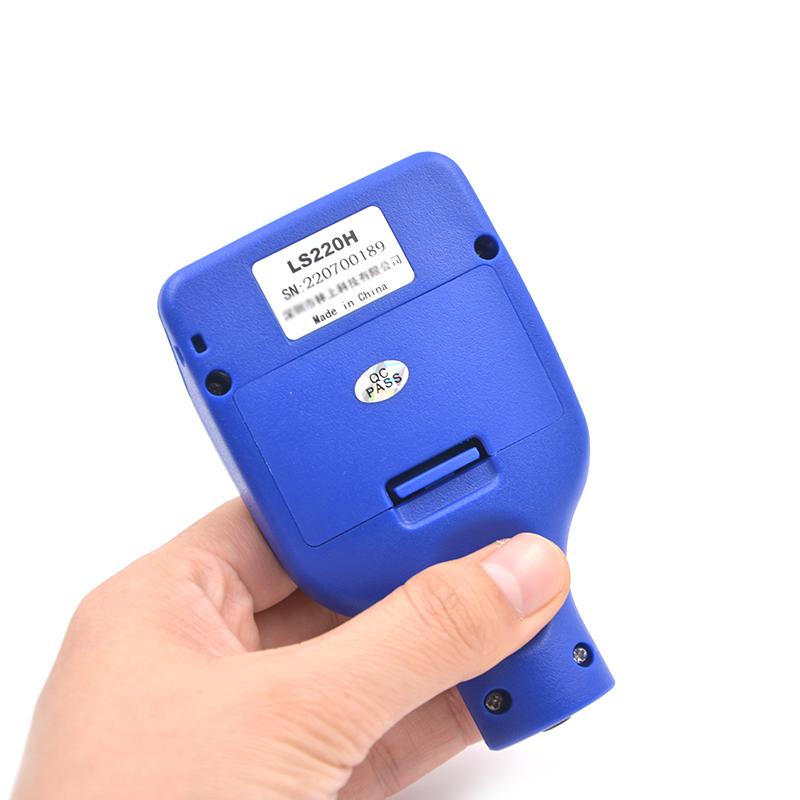

Linshang LS220H Coating Thickness Gauge
SE LS220H

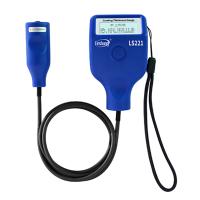
LinShang LS220H Coating Thickness GaugeSPEC
LinShang LS220H Coating Thickness GaugeDetails
LinShang LS220H Coating Thickness GaugePacking list

- SKU
- NB026421
- Probe tip
- Ruby fixing
- Measurement principle
- Magnetic induction + eddy current
- Probe Type
- Built-in integrated
- Measuring range
- 0.0 ~ 2000m
- resolution
- 0.1μ m | 1μ m | 0.01mm
- margin of error
- ±3%
- Unit display
- μm / mil
- Measurement interval
- 0.5s
- Minimum measurement surface
- F25mm
- Minimum radius of curvature
- Convex: 5mm/Concave: 25mm
- thinnest matrix
- 0.2mm(F);0.05mm(N)
- Display screen
- 128 × 48 dot matrix LCD
- Power Supply
- 2 1.5V AAA alkalinity batteries
- Operating Temperature
- 0℃-50℃
- Storage temperature
- -20℃-60℃
- Host size
- 101*62*28 mm
- Probe size
- 71*26*22 mm
- Weight (with battery)
- 79g
Introduction
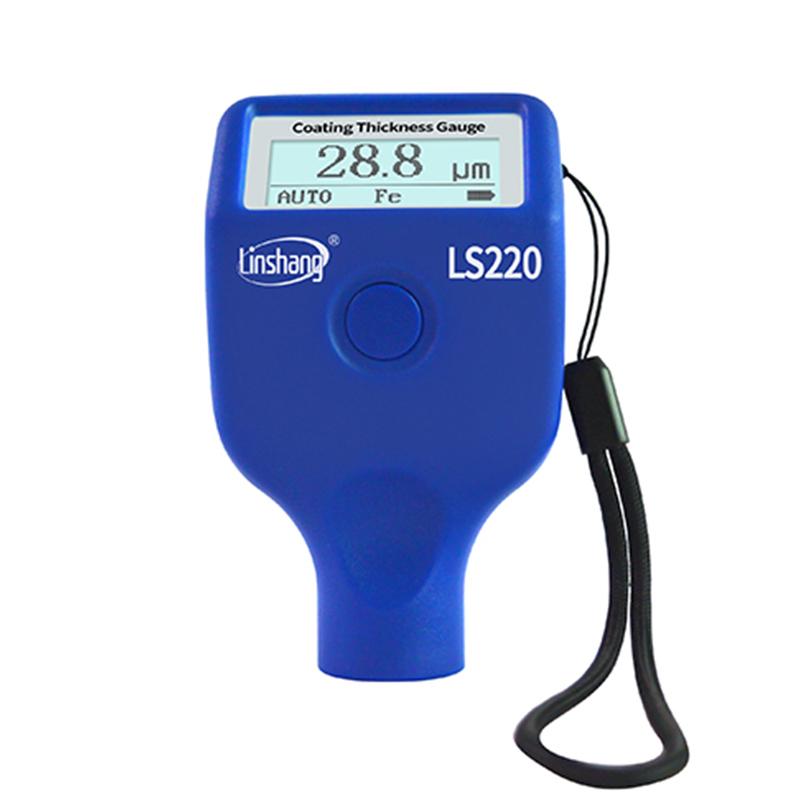
LS220H is a professional instrument for testing the coating thickness on the surface of materials. It is more suitable for commodity inspection, manufacturers and other places. The instrument adopts the magnetic measurement method and the eddy current measurement method, which can detect the thickness of the non-magnetic coating on the ferromagnetic metal substrate and the thickness of the non-conductive coating on the non-magnetic metal substrate, and has an automatic identification function. The instrument can automatically display and Measure the substrate.
LS220H Coating Thickness Gauge complies with various national standards and can ensure that it passes the inspection of the National Metrology Institute:
1. GB/T 4956-2003 Thickness measurement of non-magnetic coating on magnetic substrate - magnetic method.
2. GB/T 4957-2003 Thickness measurement of non-conductive coating on non-magnetic base metal - eddy current method.
3. DIN EN ISO 2808 Determination of film thickness of paints and varnishes.
4. JJG-818-2005 Verification Regulations for Magnetic and Eddy Current Overlay Thickness Measuring Instruments.
Features
1. The measurement is fast, the pressure is measured immediately, and the operation is simple and convenient. It only takes 0.5s to complete a test.
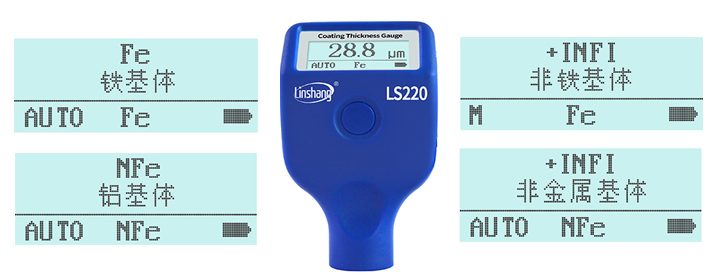
2. Iron-aluminum dual-purpose probe, using the Hall effect and eddy current effect, can measure the thickness of the non-magnetic coating layer on the magnetic metal substrate such as iron and steel, and the non-conductive coating layer on the non-magnetic metal substrate such as copper and aluminum. thickness. And it can automatically identify the measurement substrate and prompt to switch the measurement mode.
3. It complies with a number of national standards and can ensure that it passes the inspection of the National Institute of Metrology.
4. With temperature compensation function, the test data is stable, and the accuracy is not affected by temperature.
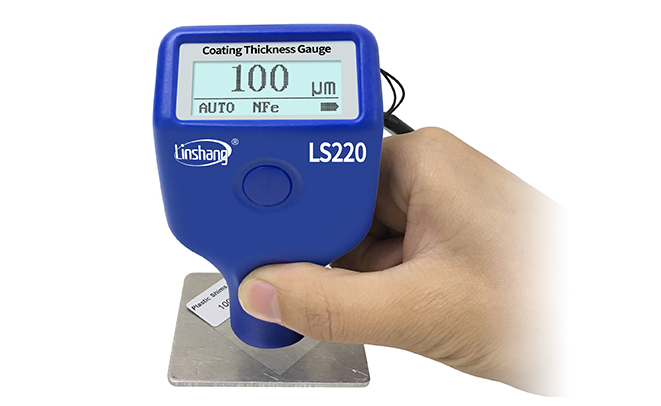
5. The coating Thickness Gauge does not need cumbersome calibration, it only needs a simple zero adjustment, and the test is more accurate after zero adjustment.
- 1GB/T 44757-2024《Anodizing coating on titanium and titanium alloys》
- 2CB/T 3718-2016《Inspection requirement of coating film thickness for ship》
- 3QJ 990.3A-2011《Inspection methods of coating.Part 3:Measurement of coating thickness》
- 4NF EN ISO 2808-2007《Paints and varnishes - Determination of film thickness.》
- 5 901-2021《Technical specification for the application of fireproof coatings for tunnels》
- 6 10254-2022《Green building materials evaluation fire retardant coating》
- 7GB 15442.1-1995《Classification and test methods for fire retardancy of finishing fire retardant paints--Classification for fire retardancy》
- 8GB 28375-2012《Fireproof coatings for concrete structure》
- 9GB 12441-2018《Finishing fire resistant coating》
- 10GB 14907-2018《Fire resistive coating for steel structure》