
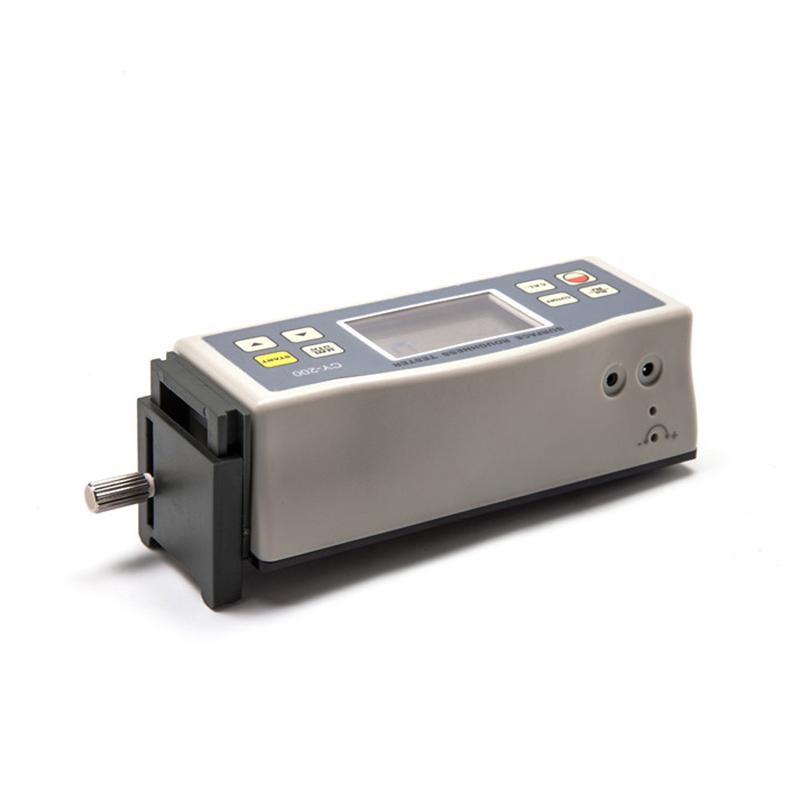
Roughness Gauge CY-200 Hypertherm surface roughness Detector
SE CY-200

HBO CY-200 Roughness GaugeSPEC
HBO CY-200 Roughness GaugeDetails
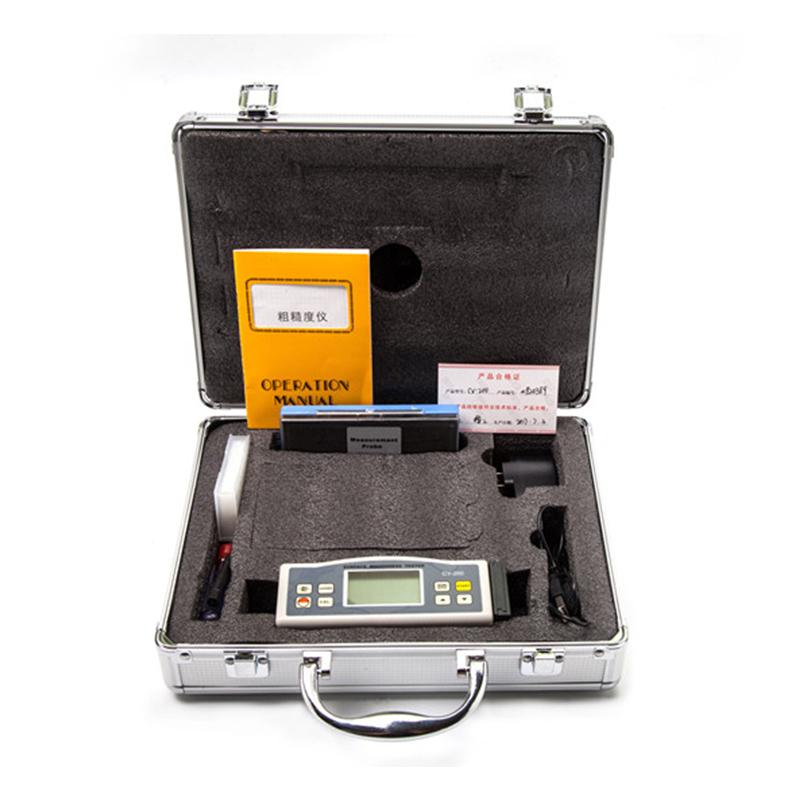
HBO CY-200 Roughness GaugePacking list
- SKU
- NB027424
- Display mode
- Blue backlight, 4-digit display, 10 mm LCD
- Measurement parameter
- Ra、Rz
- Measurement range
- Ra:0.05~10.00μm/1.000~400.0uinch; Rz:0.020~100.0μm/0.780~4000uinch
- resolution
- 0.001 um Measured value < 10 um, 0.01 um Measured value 10 um ≤ Measured value ≤ 100 um, 0.1 um Measured value ≥ 100 um
- error of indication
- Not more than +/- 10%
- Indication variability
- Not more than 6%
- Sampling length
- 0.25 mm,0.8 mm,2.5 mm
- evaluation length
- 1~ 5 L optional
- Sensors - Radius
- 10 um
- Sensors - Materials
- diamond
- Sensors - Force Measurement
- 16 mN(1.6 gf)
- Sensors - Angle
- 90°
- Sensors - Measurement principles
- Inductance
- Sensors - Longitudinal Radius
- 48 mm
- stroke length
- 17.5 mm / 0.7 inch
- Drive speed - when returning
- Vt = 1 mm/s
- Power Supply
- Built-in ion rechargeable battery
- Dimension
- 140*52*48mm
- Product Weight
- 420 g
- Operating Conditions
- Temperature: 0~50 ℃ Humidity: < 80% RH
Applications
It can be widely applied to the production site, and can measure the surface roughness of various machined parts, calculate the corresponding parameters according to the selected measurement conditions, and clearly display all the measurement parameters on the liquid crystal display.
Overview
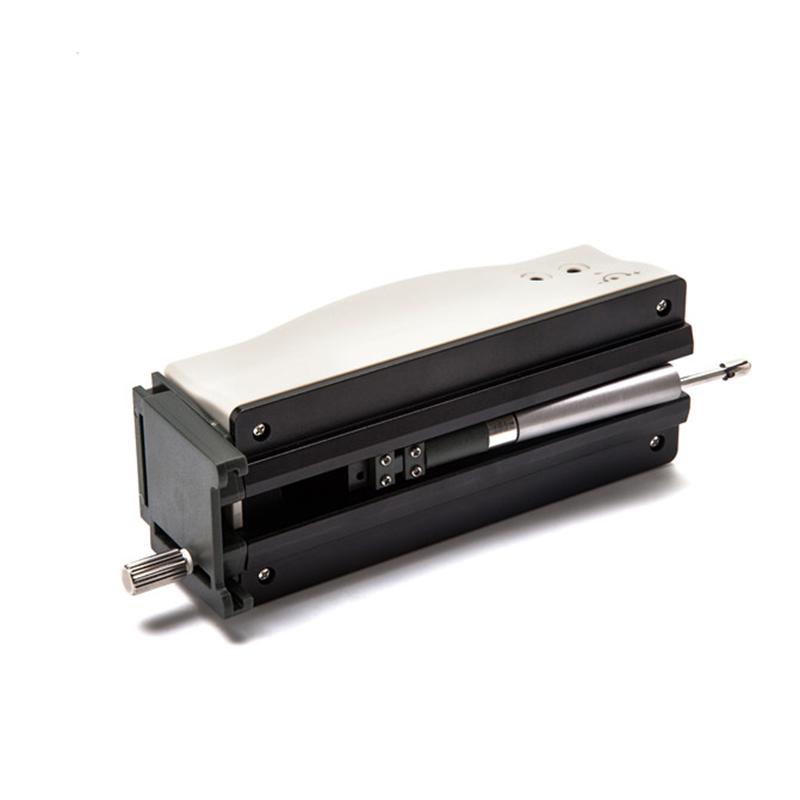
* Using computer technology, in line with national standard GB/T 6062 and four standards of ISO, DIN, ANSI and JIS. When measuring the surface roughness of the workpiece, the sensor is placed on the surface of the workpiece to be measured, and the driving mechanism inside the instrument drives the sensor to slide along the measured surface at a constant speed. The sensor feels the roughness of the measured surface through the built-in sharp stylus. At this time The roughness of the measured surface of the workpiece causes the displacement of the stylus, and the displacement changes the inductance of the inductive coil of the sensor, so that an analog signal proportional to the roughness of the measured surface is generated at the output of the phase-sensitive rectifier. After amplification and level conversion, it enters the data acquisition system. The DSP chip performs digital filtering and parameter calculation on the collected data, and the measurement results are displayed on the liquid crystal display. At the same time, it can communicate with the PC to realize data analysis and printing.
* Multi-parameter measurement: Ra.Rz.
* High precision inductive sensor.
* Built-in lithium-ion rechargeable battery and charging control circuit, high capacity.
* Mechanical and electrical integration design, small size, light weight, easy to use.
* With automatic power off function.
* With metric and imperial conversion function.
* Use "USB data line output" and "RS-232 data line output" to communicate with PC.
* Provide Bluetooth data output
- 1JJF 1105-2018《Calibration Specification for Contact(Stylus)Instruments of Surface Roughness Measurement by Profile Method》
- 2JJG 2018-1989《Measuring Instruments for Surface Roughness》
- 3GB/T 28210-2024《Thermal-sensitive paper》
- 4HB 6172-1988《General surface roughness》
- 5GB/T 42671-2023《Test method for surface roughness of carbon materials》
- 6JJG (轻工) 52-2000《Verification Regulation of Roughness Tester for Paper and Board》
- 7QB/T 2693-2005《QB/T 2693-2005》
- 8GB/T 13288.2-2011《Preparation of steel substrates before application of paints and related products - Surface roughness characteristics of blast-cleaned substrates - Part 2: Method for the grading of surface profile of abrasive blast-cleaned steel - Comparator procedure》
- 9GB/T 6060.5-1988《Metal asperity comparison specimens, shot throwing (spraying), sand blasting machined surfaces (neq ISO 3632-II: 1985)》