
SUNDOO LXB-D Rubber and Plastic Shore Durometer Dual Pointer Type D Shore Durometer
SE LXB-D
LXB-D

-
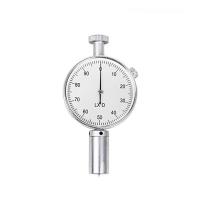 LEEB LX-D Shore Durometer Measurement range 20~90HD$ 198.00
 -
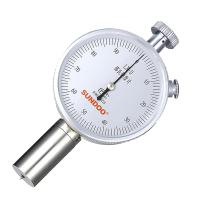 SUNDOO LX-D Shore Durometer vulcanized rubber and plastic products hardness testing$ 171.00SE
 -
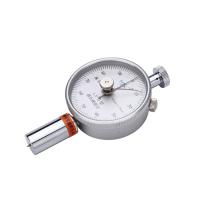 Plastic Shore Durometer LX-D-2 Hypertherm Plastic Shore D Hardness Gauge Plastic product hardness testing$ 163.00SE
 -
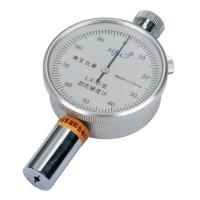 Pointer Shore Durometer LX-D Hypertherm Type D Shore Durometer High Hardness Pointer$ 159.00SE




SUNDOO LXB-D Shore Shore DuroMeterSPEC
SUNDOO LXB-D Shore Shore DuroMeterDetails
SUNDOO LXB-D Shore Shore DuroMeterPacking list
- SKU
- NB002888
- Crimping needle stroke range
- 0~2.5mm
- Measuring range
- 0~100HD
- Measuring range
- 20~90HD
- Measurement error
- ±1HD
- Dimensions
- 115*60*25mm
- Weight
- 0.16kg
- Needle head size
- SR0.1mm
- Pin end pressure
- F = 445HD (mN), HD is the Shaw D Sclerometer reading

Introduction of LXB-D Rubber Shore Hardness Tester
SUNDOO Instruments LXB-D Rubber and Plastic Shore Hardness Tester is a double-pointer D-type Shore Hardness Tester designed according to GB/T531 and JJG1039-2008 standards, which is specially used for testing the hardness of vulcanized rubber and plastic products. The LXB-D rubber and plastic Shore durometer can not only be equipped with a bracket for testing, but the measurement is relatively stable, and it can also be hand-held to directly test the surface hardness of rubber or sponge on the device.
The double pointers of the LXB-D rubber and plastic Shore Hardness Tester are tracking pointer (black) and peak pointer (silver).
Application Standard of LXB-D Rubber Shore Hardness Tester
1) GB/T531.12008 "Vulcanized rubber or thermoplastic rubber indentation hardness test method Part I: Shore durometer method (Shore hardness)"
2) ISO 7619-1:2004 "Vulcanized rubber or thermoplastic rubber indentation hardness test method Part 1: Shore durometer method (Shore hardness)"
3) JJG1039-2008 "Verification Regulations for Type D Shore Hardness Tester"
LXB-D Rubber Shore Hardness Tester Indenter Size Chart

LXB-D rubber and plastic Shore Hardness Tester display

Sample requirements
1. Rubber samples and experimental temperature requirements (GB/T531.1-2008)
1) The thickness of the rubber sample is not less than 6mm, the width is not less than 25mm, and the length is not less than 50mm. If the sample thickness is less than 6mm, it can be measured by overlapping the same film with no more than 3 layers, and the film is required to be parallel up and down.
2) The room temperature during the test is 23°C±5°C, and the Hardness Tester should be stored at this temperature for at least 1 hour before the test.
2. Requirements for plastic samples (GB2411-80)
1) The plastic sample is a square with a side length of 50mm and a thickness of not less than 5mm.
3. The surface of rubber and sponge samples should be smooth and flat, and there should be no defects such as mechanical damage and impurities.
- 1DIN 《Shore A and Shore D hardness testing of rubber》
- 2ASTM -2022《Standard Test Method for Indentation Hardness of Elastomeric-Type Sealants by Means of a Durometer》
- 3JJG 2006-1996《Measuring Instruments of Hardness Testing on Shore Scale D》
- 4JJF 2075-2023《 Calibration Specification for International Rubber Hardness Degrees Testers(Scales N,H,L)》
- 5JJF 2074-2023《Calibration Specification for International Rubber Hardness Degrees Reference Blocks(Scales N,H,L)》
- 6JC/T 2570-2020《Color sand flooring materials》
- 7JB/T 8284-1999《Specifications for D - type Shore hardness testers》
- 8KS MISO 868-2001《Plastics and Ebonite - Determination of Indentation Hardness by Means of a Durometer (Shore Hardness)》
- 9GB/T 603-2023《Chemical reagent—Preparations of reagent solutions for use in test methods》
- 10GB/T 18173.3-2014《Polymer water-proof materials―Part 3:Hydrophilic expasion rubber》