
PORUIKE CJE-12/220 Magnetic Particle Flaw Detector AC + DC
 CJE-12/220

PoRuiKe CJE-12/220 Magnetic Particle Flaw DetectorSPEC
PoRuiKe CJE-12/220 Magnetic Particle Flaw DetectorDetails
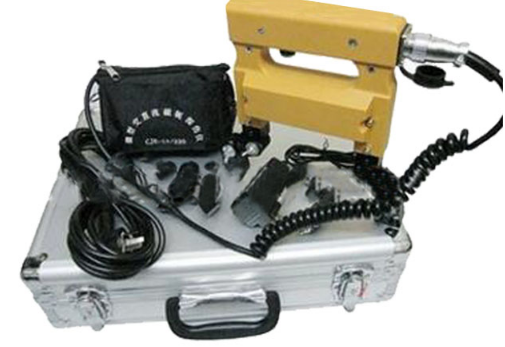
PoRuiKe CJE-12/220 Magnetic Particle Flaw DetectorPacking list

- SKU
- NB029795
- Environmental temperature
- -10~40℃
- Storage temperature
- -20~70℃
- Relative Humidity
- ≤80%
- Power Supply
- AC:~ 220V50Hz; DC: -12V
- Power Supply
- 220V50Hz
- Power Supply
- MF12-7.2H
- Operating current
- AC1.4A,DC1.7A
- Charging time
- 8~15h
- Battery life
- More than 6 hours
- Interval time
- 2 minutes on 2 minutes off
- magnetization pole distance
- 50~200mm
- Lifting Power-AC
- >5.5kg
- Lifting Power-DC
- >25kg
- Lifting Force - Probe
- 3.2kg
- Battery pack Weight
- 2.9kg
- Probe size
- 208x52x146mm
- Battery pack size
- 160x100x70mm
- Charger size
- 80x60x40mm
Overview
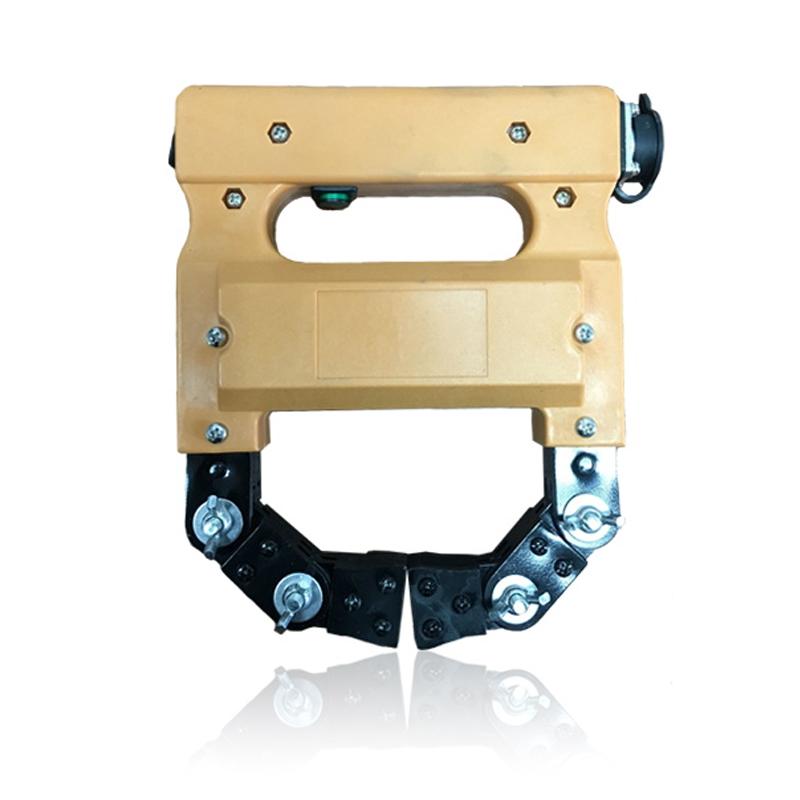
CJE series miniature yoke flaw Detector is a portable miniature magnetic particle flaw detection equipment that uses a yoke to magnetize workpieces made of ferromagnetic materials, which can magnetize various parts, and is suitable for surface and near-surface defects caused by forging, quenching, welding, fatigue, etc., such as chain rods, crankshafts, bearings, high-strength bolts, springs, forgings, valves, blades, gears, Flaw detection of geometrically complex workpieces such as rolls and welds. The instrument does not need to be matched by other instruments, and is easy to operate and carry, so the instrument is widely used.
Features
1. Charging(Charger, battery for CJE-12/220, CJE-12 magnetic particle flaw Detector)
Connect the ~220V power supply to the charger, dock the charger with the plug of the battery box, when charging, the charger light-emitting diode emits a red light, indicating that the battery is in the "fast charging" state, and when the light-emitting tube turns to green light, the battery reaches more than 14 volts at this time. If the battery is not consumed much and then it is charged, it may be charged for a period of time before turning from red to green and in a state of "slow charging". Enter the rechargeable charger to continue charging the battery, but the total charging time should not exceed 15 hours.
Note: Instructions for improved chargers.
2. a battery
The battery is the power supply of the probe, after starting to work, due to the continuous discharge of the battery, when the underVoltage is underloaded, the lifting force has a significant decrease (after 6 hours), and the battery needs to be charged.
3. Flaw detection
A : DC flaw detection (used in CJE-12/220, CJE-12 magnetic particle flaw Detector)
1) Connect the plug of the probe wire with the battery plug, at this time, the red light on the plug of the probe wire is on, and the battery will supply power to the probe.
2) When detecting flaws, place the opening surface of the probe joint on the workpiece to be inspected and maintain good contact.
3) Press the probe switch, spray magnetic powder or magnetic suspension to the inspected area at the same time, and hold for 2~3s.
4) Release the probe switch, remove the probe, and observe the workpiece.
5) Move the probe to another inspection area and repeat 3 or 4 work.
B: AC flaw detection (used in CJE-12/220, CJE-220 magnetic particle flaw Detector)
1) Insert the power input plug into the socket with the grounding wire to ensure that the ground wire is in good contact.
2) When detecting flaws, refer to DC flaw detection 3, 4 and 5.
Main uses:
Aircraft manufacturing, boilers and pressure vessels, electric power, oil fields, shipbuilding, steam turbine and internal combustion engine parts, coal mines, machinery, standard parts, oil pump nozzles, auto parts, bridge-making, chemical industry, railways, large mechanical parts, steel structure equipment and other industry products;
Surface and near-surface defects caused by forging, quenching, welding, fatigue, etc., such as chain rods, crankshafts, bearings, high-strength bolts, springs, forgings, petrochemical pipe fittings, valves, blades, gears, anchor chains, welds and other workpieces with complex geometric shapes.
Operating Conditions
Ambient temperature: operating temperature -10°C~+40°C
Storage temperature: -20°C~+70°C
Relative Humidity: ≤80%
There is no strong vibration, no strong magnetic field, no corrosive medium and no serious dust in the surrounding environment
- 1 Detailed explanation of magnetic particle detection equipment magnetic particle flaw Detector
- 2The working principle and application of eddy current Flaw Detector
- 3Basic Principle Characteristics and Application Analysis of Flaw Detector for Casting