
PORUIKE W-20B Webster Hardness Tester
 W-20B
W-20B

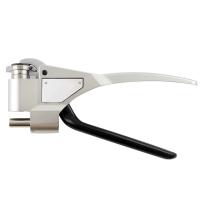
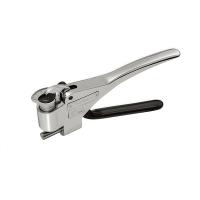
PoRuiKe W-20B Wechsler Hardness TesterSPEC
PoRuiKe W-20B Wechsler Hardness TesterDetails
PoRuiKe W-20B Wechsler Hardness TesterPacking list
- SKU
- NB029803
- Working principle
- Indentation
- Standard specimen calibrated
- test standard block
- Full scale calibrated
- Manual calibration
- Display mode
- machinery
- Measurement mode
- manual
- Measurement material
- aluminum alloy
- Measurement range
- 25~110HRE,58~131HV
- Measurement range
- 5~18HW
- Accuracy
- 0.5HW
- range
- 0~20HW
- Specimen size
- The thin tube type is suitable for profiles, plates with a thickness of less than 8mm and pipes with an inner diameter of more than 6mm
- Net Weight
- 0.5Kg
- Packaging Dimensions
- 280×230×80mm
product description
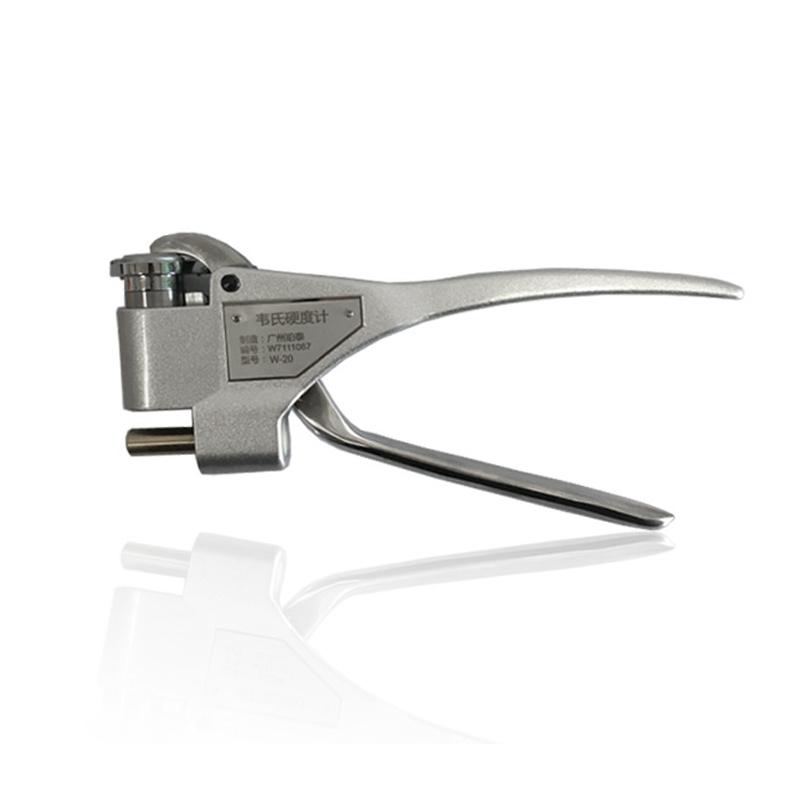
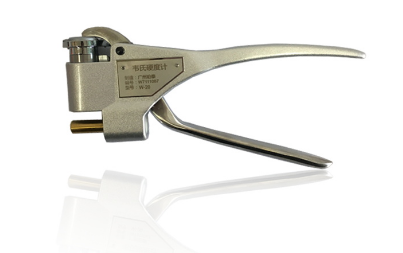
The W-20 series Webster Hardness Tester is divided into three models: W-20, W-20a, and W-20b. It is a small portable instrument based on the mechanical intrusion measurement principle and is suitable for quickly and conveniently measuring the hardness of aluminum profiles. Shapes that the instrument cannot or is inconvenient to measure, such as extruded aluminum profiles, pipes, plates, etc. It does not require sampling during the measurement and testing process, and there is no operation requirement for difficult skills. This series of products has a variety of models, which can meet the testing needs of most production quality control and qualification determination. It can test batches of products piece by piece. It is widely used in the aluminum profile industry and many door, window and curtain wall companies, engineering quality inspection and technology Supervision department.
Features
The indenter is made of new materials and new processes, with high hardness, long life and good interchangeability.
The high-strength pointer is not easy to bend or deform after long-term use or incorrect operation.
High strength and high toughness watch window glass is not easy to break after being impacted.
Forged aluminum alloy material, anodized upper handle, beautiful, wear-resistant and pollution-resistant.
The standard Webster hardness block verified by the standard hardness machine is accompanied by a test report.
Small portable instrument, small in size, light in weight, can be operated with one hand, and can quickly measure the hardness of aluminum alloy and other materials.
There is no need to take samples during the testing process, and the material hardness can be tested non-destructively. It is especially suitable for rapid hardness testing of materials at the production site.
There are no strict restrictions on the shape of the material to be tested, and it can be applied to detect aluminum profiles of different shapes.
Equipped with a calibration sleeve to solve the problem of calibration errors due to multiple full-scale calibrations.
The operation is simple and operation skills have no impact on the readings.
It is easy to learn and requires no difficult operation skills. Human operation has little impact on the measurement results.
It is easy to read and can be easily converted to other hardness values. The measuring range is mainly used to measure aluminum profiles and aluminum alloy materials, and can also measure copper alloy materials. Its measurement range is equivalent to: aluminum profile: 24~110HRE copper alloy: 60~90HRF.
The main purpose
Evaluate whether the aluminum alloy material has been heat treated, check the heat treatment effect, and determine whether the mechanical properties of the material are qualified.
Evaluate whether aluminum alloy materials are processed from inappropriate alloys and determine whether the alloy composition of the materials is qualified.
Through comparative experiments on the Webster Hardness Tester, desktop Hardness Tester and Tensile Testing Machine, determine the Webster hardness qualification value of a certain product, and use the measured data to control the production process and product factory acceptance inspection
On-site inspection of workpieces or assemblies that are too long or too heavy to be sampled or sent to the laboratory
Used in most domestic (CN) aluminum profile industries, many door, window and curtain wall companies, engineering quality inspection and technical supervision departments
Operating Conditions
The instrument should be used in a clean, vibration-free environment, and there should be no corrosive media around it.