
YANTE YT-YM20 Ink absorbency Tester GBT12911 standard
SEAn instrument designed to measure the absorption performance of paper and Cardboard to standard inks. This instrument provides an accurate measurement of paper's absorption performance over a specified time and area, evaluating paper's acceptance of inks and its absorption capacity to vehicles.
$4214.00/set
PromotionLoading...
Coupon
Model:
 YT-YM20

Similar products

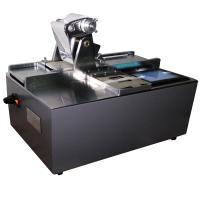
YanTe YT-YM20 Ink absorbency TesterSPEC
YanTe YT-YM20 Ink absorbency TesterDetails
YanTe YT-YM20 Ink absorbency TesterPacking list
- SKU
- NB029845
- ink wiping speed
- 15.5±25px/min
- Opening area of ink-coated platen
- 20±10px2
- Inked platen thickness
- 0.1mm
- ink absorption time
- 120±5s
- Human Machine Interface
- 4.3 Color touch screen control
- Environmental temperature
- 20±10℃
- Environmental humidity
- ≤85%
- Power Supply
- 220V±10% 50Hz
- power consumption
- 90W
- Dimensions
- 535*308*280mm
- Weight
- ≤33kg
YT-YM20
Ink absorbency Tester
An instrument designed to measure the absorption performance of paper and Cardboard to standard inks. This instrument provides an accurate measurement of paper's absorption performance over a specified time and area, evaluating paper's acceptance of inks and its absorption capacity to vehicles.
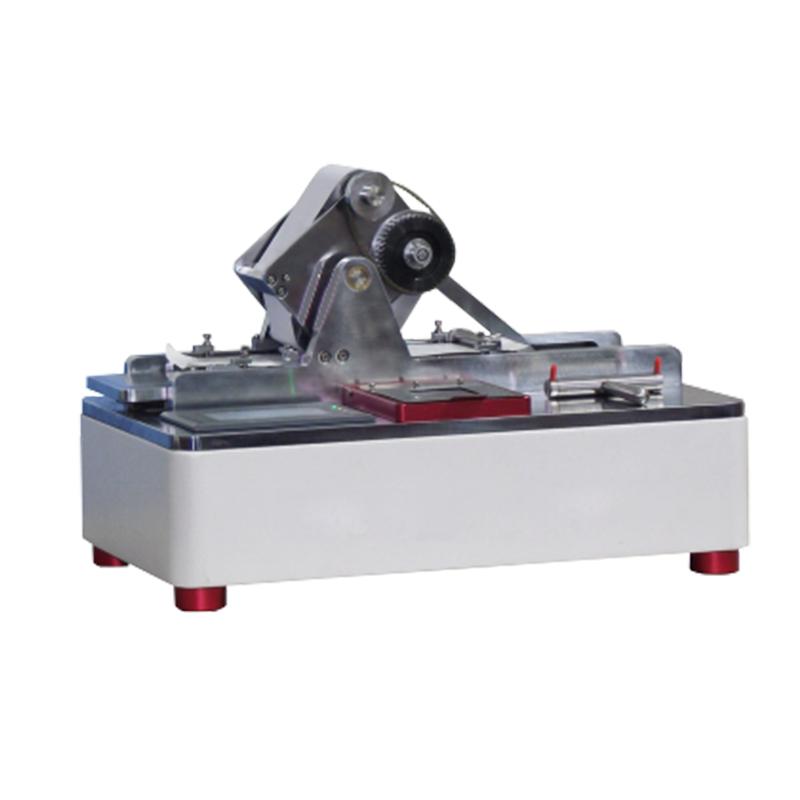
The ink absorption Tester is used to measure the performance of paper or cardboard to absorb standard ink in a certain time and area. This instrument is mainly used to measure the ink absorption performance of the paper board in a certain area within a specified time. The ink absorption of paper and cardboard refers to the paper's acceptance of ink and its ability to absorb the binder in ink, which directly affects the penetration of ink on paper and conjunctiva, or reflects the penetration of ink on paper. , occurs when the ink is in contact with the paper surface and completely cured on the paper surface for a long time, and affects the drying of the ink film on the paper surface and the surface properties of the ink film.
FAQ
QHow thick is the platen of this Ink absorbency tester?
A
Hello, Film thickness is 0.1mm.
QAre all Ink absorbency testers available for testing in the GB/T10335.5 standard?
A
Not necessarily, but this YT-YM20 Ink absorbency tester can be considered.
Knowledge
- 1Ink absorbency tester core knowledge
- 2How to do a good job in food packaging?
- 3How to measure the ink absorbency of paper and cardboard?
- 4Application of Printing ink absorbency Tester
- 5Characteristics and Applications of Synthetic Paper
Standard
- 1GB/T 12911-2025《Paper and board—Determination of the ink absorbency》
- 2QB/T 2636-2004《Paper and board - Tester of ink absorbency》
- 3GB/T 34688-2017《Printability of digital printing paper and test methods》
- 4JJG (轻工) 68-2000《Verification Regulation of Ink Absorbeny Tester for Paper snd Board》
- 5QB/T 2249-1996《Gravure printing paper》
- 6HG/T 4009-2008《Flexographic Printing Plates applied in corrugated board》
- 7GB/T 10335.5-2008《Coated paper and board - Coated linerboard》
- 8GB/T 12911-1991《Paper and board--Determination of the ink absor-bency》
- 9GB/T 10335.2-2005《Spreader Paper and Cardboard Lightweight Spreader Paper》
- 10GB/T 10335.3-2004《Spreader Paper and Cardboard Spreader White Cardboard》