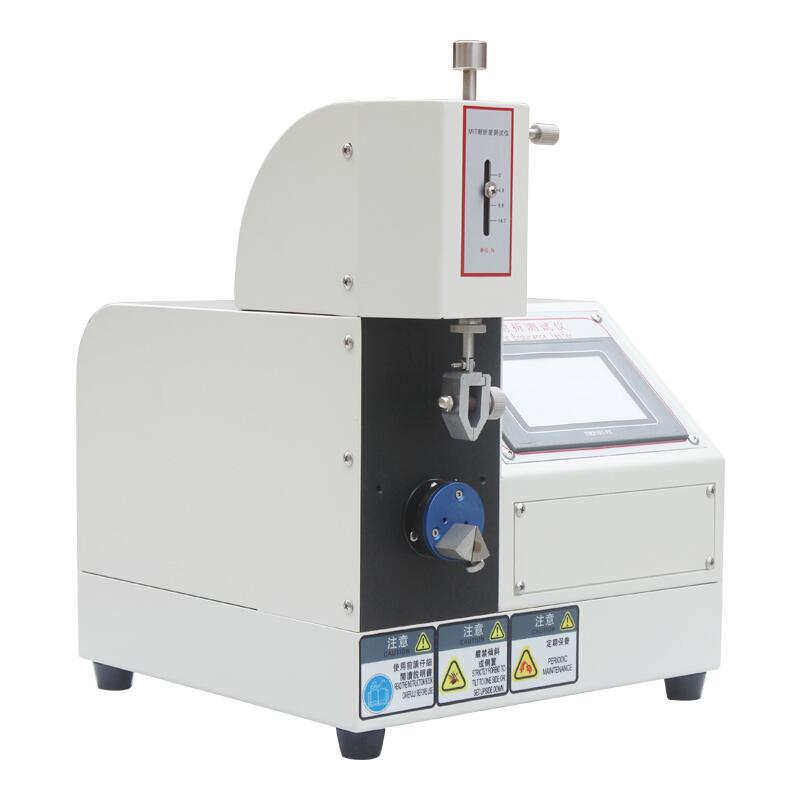
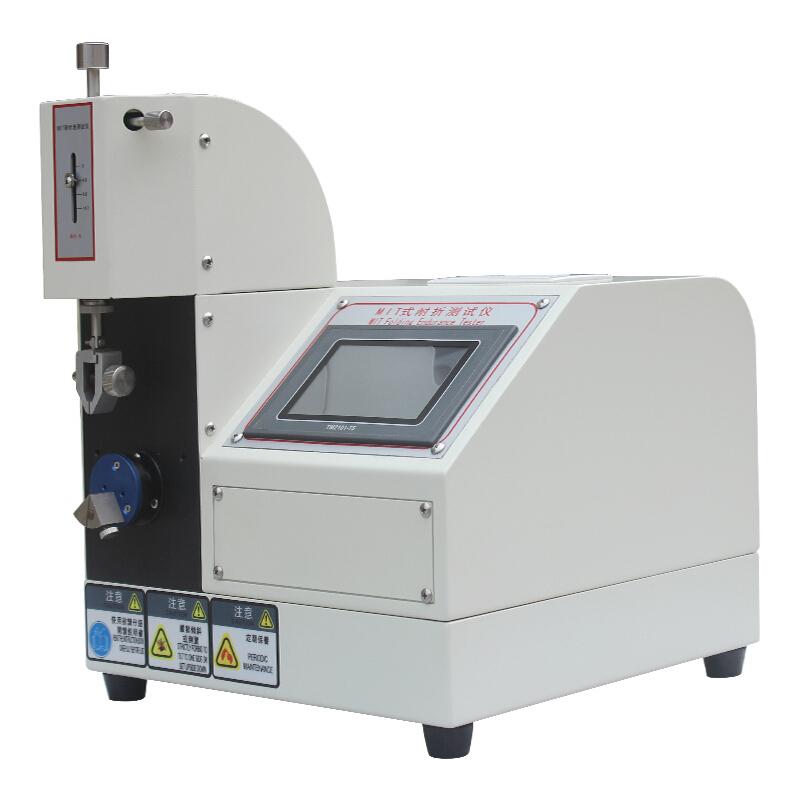

CHINA ASR-5637 MIT Paper Folding Endurance Tester
 ASR-5637

-
 JINGWEN JW107C2 paper MIT folding resistance Tester$ 1360.00SE
 -
 JINGWEN JW107C MIT Paper Folding Endurance Tester$ 1457.00SE
 -
 CHINA NBC-5637 MIT Paper Folding Endurance Tester$ 1340.00SE
 -
 Taichang TC-NZ135A Touch Screen MIT Folding Tester 0.25mm$ 1497.00SE
 -
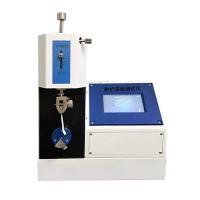 Essence LD-NZ-02 Folding Strength Tester, Folding Strength Tester, Touch Screen$ 1597.00SE





AISRY ASR-5637 MIT Paper Folding Endurance TesterSPEC
AISRY ASR-5637 MIT Paper Folding Endurance TesterDetails
AISRY ASR-5637 MIT Paper Folding Endurance TesterPacking list

- SKU
- NB031312
- Measuring range
- 1~ 60000 times
- folding logarithm
- 0~4.78
- spring tension
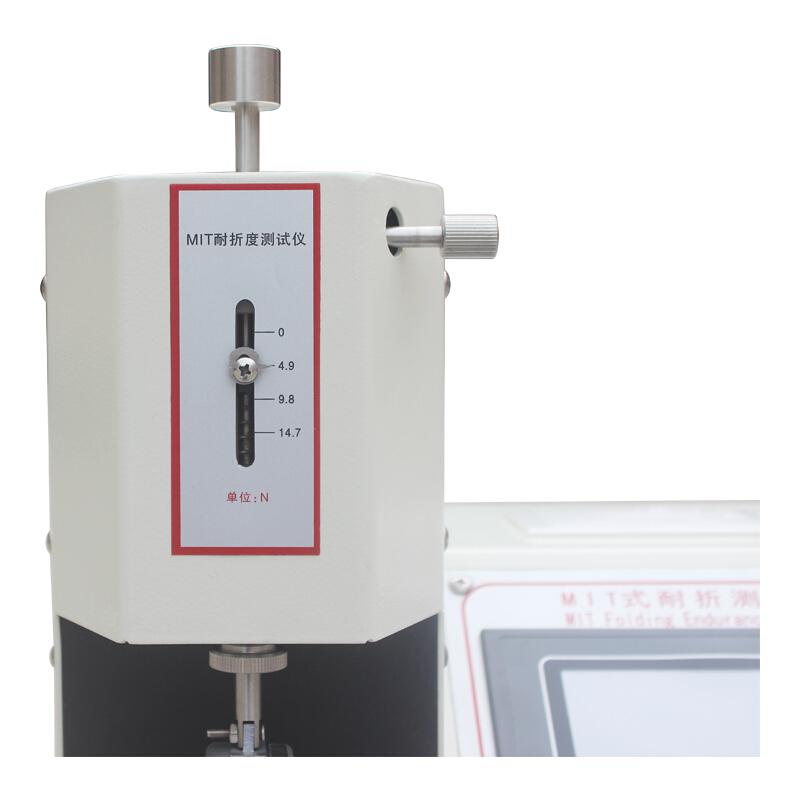
- 4.9~14.7N
- folding angle
- 135±2°
- folding speed
- 175±10CPM
- Folding mouth gap distance
- 0.50mm, 0.75mm (randomly equipped), 0.25m, 1.00mm
- Power
- AC220V, 50HZ
- Dimensions
- 330*250*400mm
- Mass
- About 37Kg

Introduction
MIT folding endurance is a new type of instrument researched and developed according to the national standard GB/T 2679.5-1995 (determination of folding endurance of paper and cardboard). The instrument has various parameter testing, conversion, adjustment, display, memory, and printing included in the standard, and has data processing functions, and can directly obtain the statistical results of various data. The instrument is compact in structure, small in size, light in weight, full in function, placed on a table, easy to operate, and stable in performance. It is suitable for the determination of the folding strength of various cardboards.
Standards
The parameters and functions of this instrument conform to the national standard: GB/T2679.5-1995 Determination of the folding endurance of paper and cardboard (MIT folding endurance Tester method)
Instrument structure
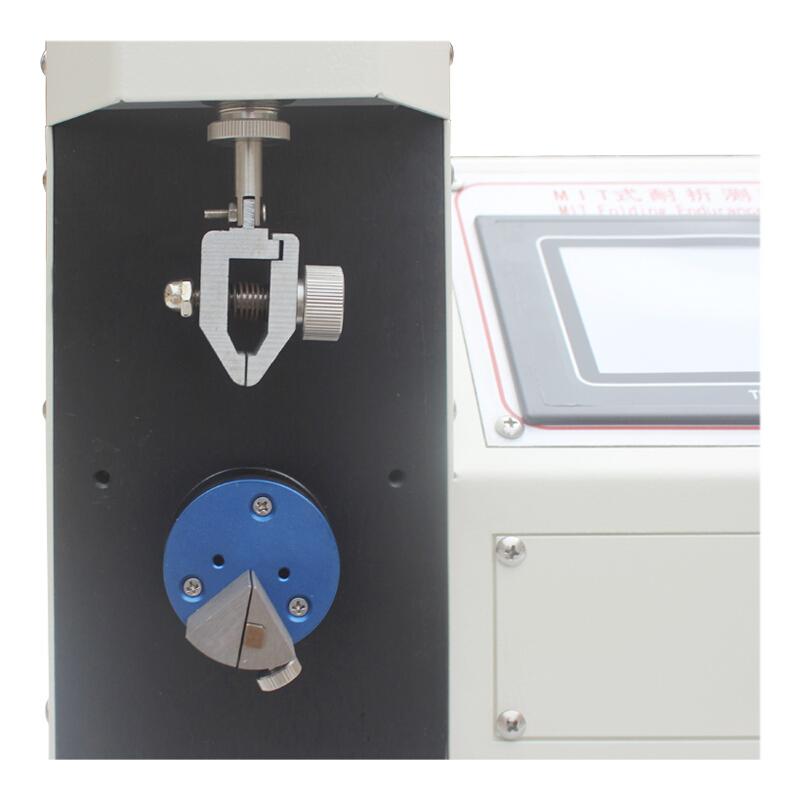
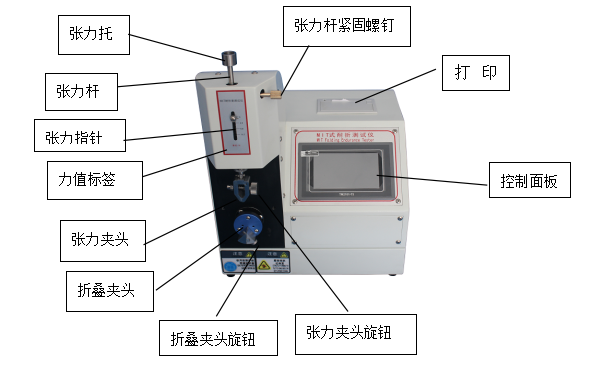
The MIT Paper Folding Endurance Tester is an opto-mechanical-electrical integration structure. The mechanical part includes the motor transmission part and the tension mechanism part. In terms of mechanical transmission, the motor drives the crank slider mechanism to realize the back and forth translation of the rack, and then drives the folding chuck to rotate back and forth 135° through the transmission of the rack and pinion. The transmission of this transmission mechanism is relatively stable, and after years of practice tests, it is a relatively reliable transmission method. The tension mechanism deforms the tension spring by pressing down the tension rod, and the formed spring force exerts force on the paper sample to be tested. (The force on the tested paper sample is adjusted by the deformation generated by the spring.)
The instrument can count the number of double folds of the tested paper sample through the detection of the photoelectric circuit, and can make the motor stop automatically after the sample is tested. At the same time, the instrument also realizes the automatic homing of the folding chuck through the detection of the photoelectric circuit.
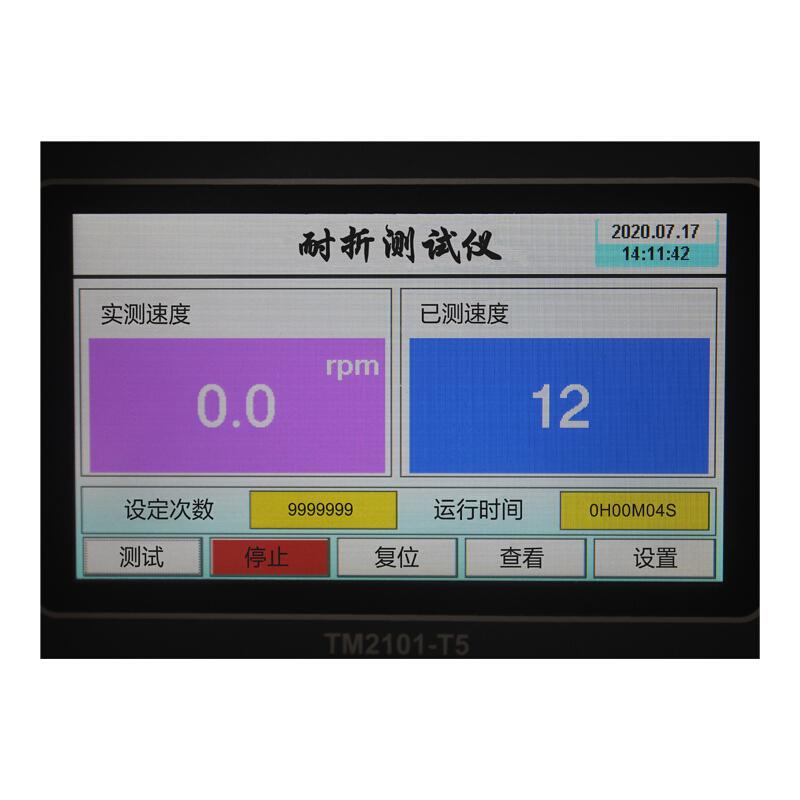
In addition to parameter setting and measurement display, the electrical part also controls the action of the whole machine according to the detection of the photoelectric circuit. In addition, the experimental data of multiple samples in the same group can be counted: maximum value, minimum value, average value and coefficient of variation, and these statistical data can be printed. The electrical part is mainly composed of main board, power board, display panel and printer.
- 1QB/T 1049-2004《Paper and board-Tester of folding endurance》
- 2JJG (轻工)59-2000《MIT Type Folding Endurance Tester》
- 3GB/T 2679.5-1995《Paper and board-Determination of folding endurance (MIT tester)》
- 4GB/T 1539-2007《Paperboard - Determination of bursting strength》
- 5QB/T 3524-1999《Relief printing paper》
- 6QB/T 2693-2005《QB/T 2693-2005》
- 7QB/T 2249-1996《Gravure printing paper》
- 8GB/T 457-2008《Paper and board - Determination of folding endurance》