
HP-CJQ1000 Interlayer bonding strength Tester
SE HP-CJQ1000

-
 Yunda YD-JHY Microcomputer Interlayer bonding strength Tester$ 3580.00SE
 -
 YINUO YN-IBTF01 Microcomputer Interlayer bonding strength Tester 0~1000J$ 4590.00SE
 -
 IMT-CJ01 Interlayer bonding strength Tester Paper Cardboard
 -
 YANTE YT-IBT Interlayer bonding strength Tester Z-direction tensile strength$ 4878.00SE




HengPin HP-CJQ1000 Interlaminar Peel TesterSPEC
HengPin HP-CJQ1000 Interlaminar Peel TesterDetails
HengPin HP-CJQ1000 Interlaminar Peel TesterPacking list

- SKU
- NB032410
- Measuring range
- 0~1000J/m²
- Accuracy
- <1J/m2
- resolution
- 0.1J/m²
- impact angle
- 90°
- Display
- 5.7-Inch color full-touch LCD
- Power
- AC220V 3A 50Hz
- Dimensions
- 520*420*720mm
- Weight
- About 73kg
Introduction
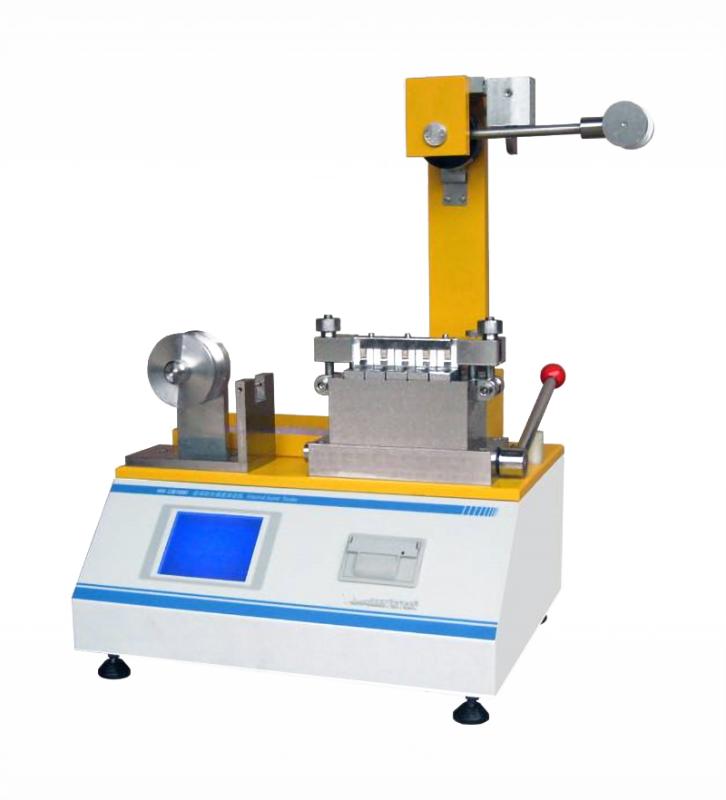
HP-CJQ1000 interlayer bond strength Tester (also known as interlayer peel strength Tester, interlayer bond strength Tester, internal bond strength Tester, etc.) Or interlayer bonding strength) special testing equipment. The principle of the instrument test is: the combination of double-sided adhesive-sample-double-sided adhesive forms a sandwich structure, which is pressed between a metal flat anvil and an aluminum block, and a pendulum is used to hit the inner surface of the upper part of the aluminum block, so that The aluminum block is overturned, and the sample is destroyed in the Z direction, and the energy absorbed by the sample during the destruction process is calculated by measuring the high position of the swing.
Features
1. This instrument is fully computer-controlled, fully automatic testing, high-precision instrument, simple and convenient operation, stable and reliable performance, and it is easy for users who have no professional knowledge or are in contact with this instrument for the first time to learn, understand and operate it.
2. Adopt NXP (Philips) high-performance ARM core processor and Cirrus dual-channel 24-bit independent high-speed sampling chip to ensure accurate sampling and high-speed calculation processing, and effectively ensure test accuracy.
3. 5.7-inch ultra-large full-touch LCD operation, Chinese menu operation interface, compared with traditional buttons plus LCD operation, content display, interface switching, and operation testing are more convenient.
4. Automatic measurement of samples, intelligent judgment function. It has the analysis and management functions of test signals and test data, the automatic saving function of 99 test result data, the data printing function (divided into two types: single test result data printing and all test result data printing), fault alarm prompt function, and correct guidance. Operation prompt function and other convenient and humanized functional systems.
5. Equipped with a micro-printer, the printed display contents are:
Single printing (refers to printing a test result selected by oneself): test name, test time, test number, number of tests, test intensity and other test indicators stipulated in relevant standards.
Statistical printing (refers to printing all the test results stored in the instrument): test name, test time, test number, total number of tests, each test intensity, maximum value, minimum value, average value, Test indicators specified in relevant standards such as coefficient of variation.
6. The real-time clock, in addition to checking the time, can also save the tedious operation of manually entering the date or filling in the date before printing.
Standards
1. "GB/T 26203 Determination of Internal Bonding Strength of Paper and Cardboard (Scott Type)"
2. "TAPPI T-569 internal bond strength (scott type) correction"