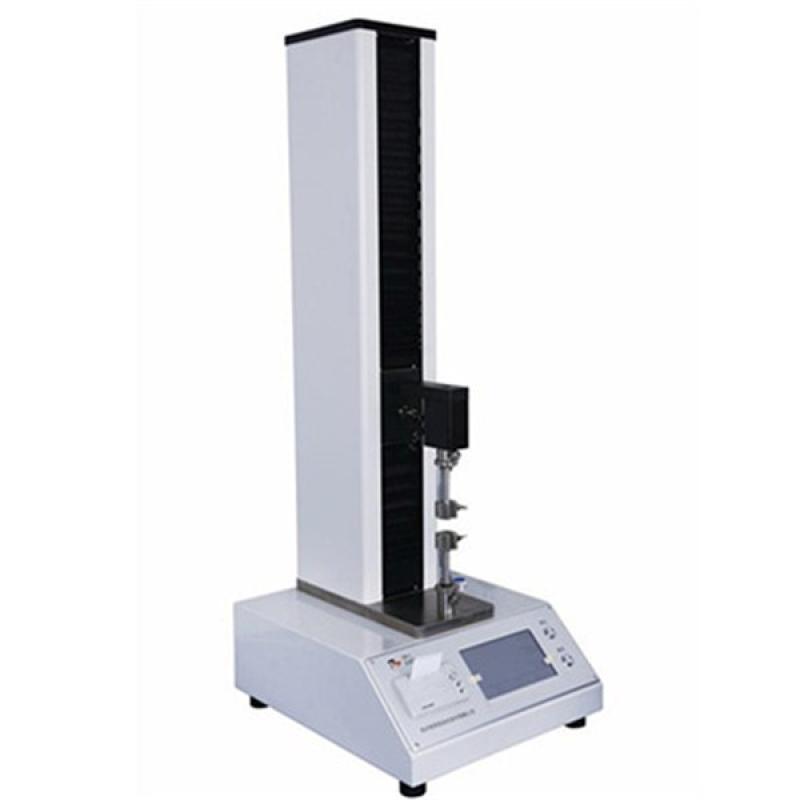
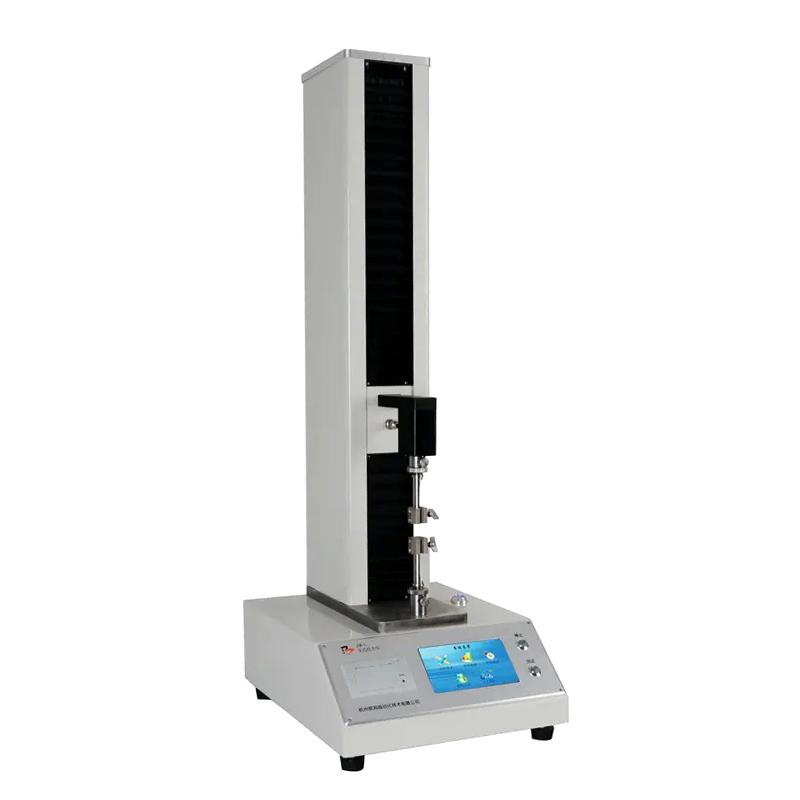

ZHIBANG ZB-L100 Vertical Computer Tension Meter 100N
 ZB-L100

ZhiBang ZB-L100 Vertical computer tensIon MeterSPEC
ZhiBang ZB-L100 Vertical computer tensIon MeterDetails
ZhiBang ZB-L100 Vertical computer tensIon MeterPacking list
- SKU
- NB032787
- Power supply Voltage
- AC220V±10% 50HZ
- Measurement range
- 0~100N
- Indication Precision
- ±1%
- stretching speed
- 1~ 399 mm/min (digitally adjustable)
- Force resolution
- 0.01N
- return speed
- 1~ 399mm/min (can be adjusted digitally)
- Specimen size
- Any adjustment within the range of 0-200mm (digital adjustment)
- Collet width
- 15Mm (other widths can be customized according to needs)
- Instrument size (L * W * H)
- 450*550*1200mm
- Net Weight
- 70kg
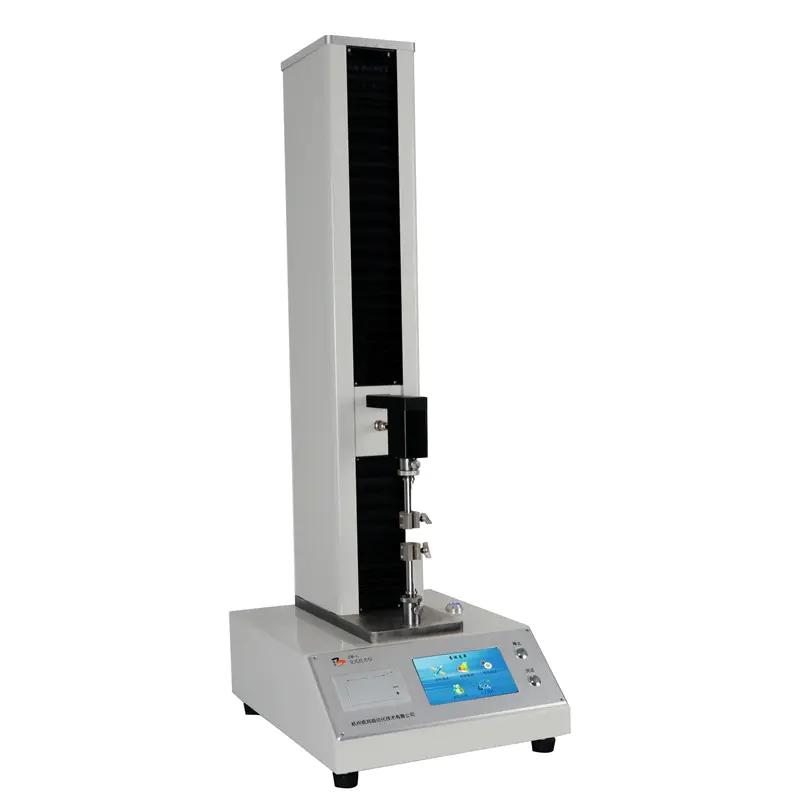
Overview
ZB-L series tensile Tester is a special instrument for testing the tensile strength, crack length, elongation, tensile energy absorption, tensile index, tensile energy absorption index, 180 degree peel strength and heat sealing strength of paper, cardboard, plastic film and other non-metallic materials.
The specific functions of the instrument are as follows:
Measurement of paper tensile strength, tensile strength, elongation, crack length, tensile energy absorption, tensile index, tensile energy absorption index,
Measure the tensile strength, tensile strength, peel strength and elongation of aluminum foil and aluminum-plastic tape
Measure the tensile strength, elongation, and tensile elastic modulus of plastic films
Measure the heat sealing strength, tensile strength and peel strength of food bags
Measure towel adhesion strength, edge banding strength, tensile strength, and elongation
Measure the peel strength and tensile strength of pressure-sensitive adhesive tapes. Measurement of breaking strength and elongation of synthetic fiber filaments
Measure the lightness of the zipper.
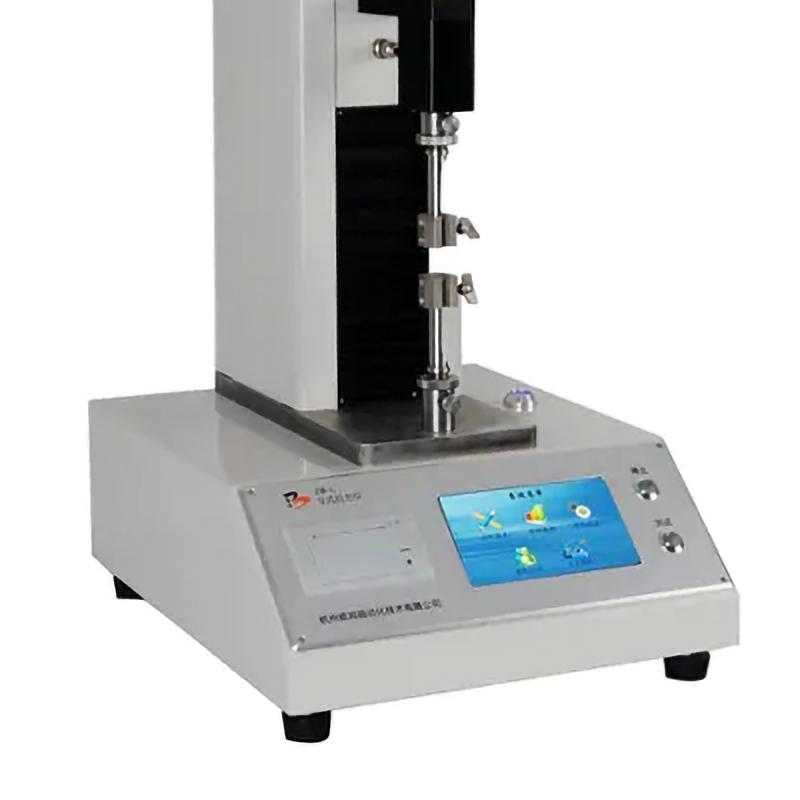
The instrument adopts a vertical, single-column structure, and the distance between the chucks can be adjusted within a certain range. The tensile time and load tension are displayed in real time during the test. When the specimen breaks, the tensile strength, tensile index, fracture length, elongation, tensile energy absorption index, tensile energy absorption value and tensile time at fracture are displayed, and the tensile curve can be displayed. After stretching a group of samples, the average value, standard deviation and coefficient of variation of each measurement parameter can be directly displayed and printed with the push of a button.
Enforce the standard
ISO 1924 "Paper and Cardboard – Determination of Tensile Strength"
GB/T12914 "Paper and cardboard – Determination of tensile strength"
GB8808-1988 Peel test method for soft composite plastic materials
YYT0148-2006 General Requirements for Medical Tapes
GB13022-91 Test Method for Tensile Properties of Plastic Films
Main performance parameters
1. Imported motor, low noise and accurate control
2. Large color touch screen display, Chinese menu. During the test, the tensile time, load tension, etc. are displayed in real time, and the tensile curve can be displayed and printed
3. In the measurement range of 0~30N, the accuracy can reach 0.01N, the resolution is 0.01N, and the corresponding parameters of the paper are professionally measured.
4. Directly obtain the measurement results: After completing a set of tests, it is convenient to directly display the measurement results and print the statistical report, including the average value, standard deviation and coefficient of variation.
5. Variable specimen size and tensile speed: For commonly used standard size specimens, the tensile test can be carried out directly at the specified speed, and the appropriate tensile speed can also be set according to the needs of the situation, and the test length and width of the specimen can be changed.
6. High degree of automation: the instrument design selects professional devices at home and abroad, and the single-chip microcomputer carries out information sensing, data processing and action control, with automatic reset, data memory and overload protection
7. Data communication: The instrument is equipped with a standard serial RS232 interface, which can provide data communication for the upper computer integrated report system.
8. Wide measurement range: The measurement range of the instrument can be converted according to the needs of users with different force Testers, and can be widely used in tensile test determination of various papers and materials.
9. Multi-functional, flexible configuration: the instrument is mainly used for paper measurement, and changing the configuration of the instrument can be widely used for the measurement of other materials.
- 1GB/T 22378-2008《Pressure sensitive adhesives tapes of BOPP for general purpose》
- 2JG/T 158-2013《Products for external thermal insulation systems based on mineral binder and expanded polystyrene granule plaster》
- 3HG/T 5776-2020《Water-based coatings for surface of rubber sealing products》
- 4HG/T 3948-2007《Hot Melt Adhesives for Sanitary napkin & Panty liner》