
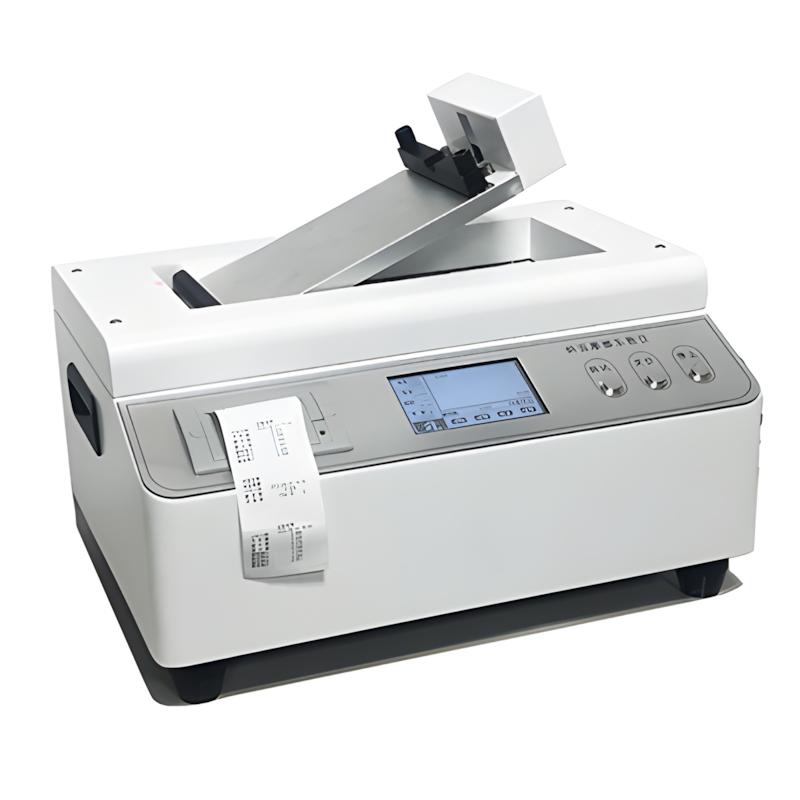
YINUO YN-MC02 oblique coefficient of friction Measurement Instrument, static and dynamic coefficient of friction measurement, inclined surface method 0~85 °
SE YN-MC02



YiNuo YN-MC02 Tester for coefficient of frictionSPEC
YiNuo YN-MC02 Tester for coefficient of frictionDetails
YiNuo YN-MC02 Tester for coefficient of frictionPacking list
- SKU
- NB034004
- Angle range
- 0~85°
- Accuracy
- 0.01°
- angular velocity
- 0.1°/s~10.0°/s
- Slider Mass
- 1300G (standard) 235g (separately purchased) 200g (separately purchased)
- Environment requirements
- 23±2℃
- Humidity
- 20%RH~70%RH
- Dimensions
- 440*305*200mm
- Power
- AC 220V 50Hz
- Net Weight
- 20 kg
use
HK-P01 Slope Coefficient of Friction Meter is professionally used for testing the coefficient of friction of paper, cardboard, plastic film, sheet, conveyor belt and other materials. By measuring the smoothness of the material, it is possible to control and adjust the opening of the packaging bag, the packaging speed of the packaging machine and other production quality process indicators to meet the product use requirements.
Functions such as infinitely variable angular velocity and automatic platform reset can easily meet test requirements under different conditions
Professionally used to test the static friction coefficient of the sample on the inclined surface
Both the instrument test bench and the test slider have undergone degaussing treatment and residual magnetism detection, which effectively reduces the system test error
The equipment is controlled by microcomputer, with menu-type operation interface, PVC control panel and LCD display, which is convenient for users to conduct test operations and view data
Equipped with micro printer
basic application
Paper is suitable for testing the coefficient of friction on inclined planes of paper and cardboard, such as various paper and paper-aluminum-plastic composite prints
The film is suitable for testing the coefficient of friction of inclined planes of plastic films and sheets, such as single-layer and multi-layer composite films such as PE, PP, and PET for various food and drug packaging.
Standard configuration: host, micro printer, 1300g slider
Optional parts: 235g slider, 200g slider, non-standard slider
Standards
The device complies with several national and international standards: ASTM D202, ASTM D4918, TAPPI T815
- 1How do the coefficients of a friction Tester work?
- 2Application and Maintenance of Friction Coefficient Tester
- 3What is the coefficient of friction and how is it determined?
- 4Test method of dynamic friction coefficient and static friction coefficient
- 5Benefits of using friction coefficient Testers in the plastics industry
- 6Packaging and Resource Environment
- 7What are the packaging quality test methods?
- 8Why is coefficient of friction testing important?
- 9How does it work to calculate the coefficient of friction of plastic packaging films?
- 10Difference between static friction coefficient and dynamic friction coefficient
- 1GB/T 44572-2024《Biaxially oriented polyethylene (BOPE) film》
- 2GB/T 19787-2025《Encasement material, polyolefin thermal cissing film》
- 3GB/T 44757-2024《Anodizing coating on titanium and titanium alloys》
- 4GB/T 16311-2024《Specification and test method for road traffic markings》
- 5SY/T 6863-2012《Calibration method of mudcake coefficient device》
- 6JT/T 763-2017《Pendulum friction tester》
- 7GB/T 41899-2022《General quality requirements for coated tinplate and ECCS used in food container》
- 8GB/T 10006-1988《Plastics--Film and sheeting--Determination of the coefficients of friction》
- 9GB/T 10006-2021《Plastics—Film and sheeting—Determination of the coefficients of friction》
- 10ISO 15359-1999《Paper And Board -- Determination Of The Static And Kinetic Coefficients Of Friction -- Horizontal Plane Method》