
CHINA ZY-PH-2 smoothness Tester, Buick method mercury-free paper Tester
SE ZY-PH-2



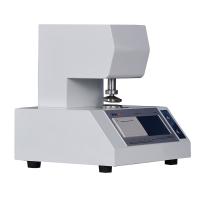
zy ZY-PH-2 Smoothness MeterSPEC
zy ZY-PH-2 Smoothness MeterDetails
zy ZY-PH-2 Smoothness MeterPacking list

- SKU
- NB034055
- effective test area
- 10±0.05cm²
- test pressure
- 100kPa±2kPa
- Measurement range
- 0-9999 seconds
- Large vacuum container
- 380±1mL
- Small vacuum container
- 38±1ml
- Measurement gear selection I gear
- With a large vacuum container (380mL), the vacuum degree changes from 50.66kpa to 48.00kpa
- Measurement gear selection II gear
- With a small vacuum container (38mL), the vacuum degree changes from 50.66kpa to 48.00kpa
- Dimensions
- 475*280*360mm
- Weight
- 30kg
Introduction
This instrument is designed according to GB/T456-1989 Determination of smoothness of paper and cardboard (Buick method), and is used to measure the smoothness of paper and cardboard. However, it is not suitable for measuring paper with a thickness above 0.5mm or with high air permeability.
Product desciption
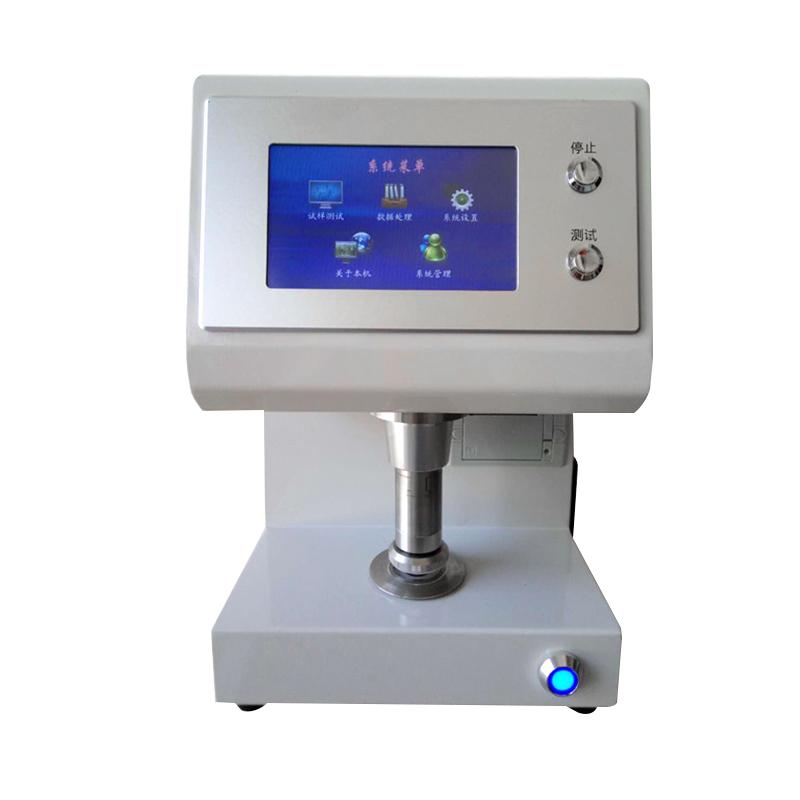
The instrument uses a high-precision vacuum sensor to measure the vacuum degree of the vacuum container, thus replacing the mercury manometer, so the instrument is a mercury-free smoothness meter. The instrument uses a Vacuum Pump imported from Germany to draw vacuum to the vacuum container, which can reach the required vacuum degree in a very short time, and is controlled by a single-chip microcomputer. The instrument uses a single-chip microcomputer and has powerful data processing functions: it can not only measure and automatically store the smoothness value of a single sample, but also can count the experimental data of multiple samples in the same group, and can count the maximum value of the same group of samples, Minimum, average, standard deviation and coefficient of variation, these data are stored in the data memory, and can be displayed on the screen. In addition, the instrument also has a printing function: according to the requirements of the international GB/T456-1989 on smoothness test reports, the statistical data of the tested samples are printed according to the requirements of the test reports.
- 1Smoothness tester core knowledge guide
- 2别克法测定纸和纸板平滑度的标准方法
- 3Influence of smoothness on paper printing and its solution
- 4Determination Principle and Maintenance of Paper Smoothness Instrument