
CCYONGXIN ZCA-625 Dirt Count Tester swirl/spin table 20W fluorescent lamp
SE ZCA-625

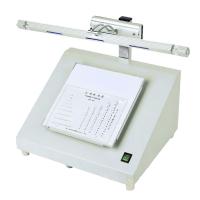

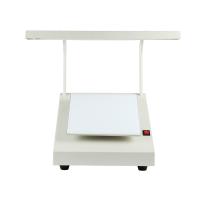
ChangChunYongXin ZCA-625 Dust MeterSPEC
ChangChunYongXin ZCA-625 Dust MeterDetails
ChangChunYongXin ZCA-625 Dust MeterPacking list

- SKU
- NB034364
- Table size
- Effective area 0.0625 m2, swirling/spinning 360 °
- Illuminant
- 20W fluorescent lamp
- illumination angle
- 60°
- Standard dust chart area
- 0.05~5.0mm²
- Dimension
- 750*350*500mm
- Weight
- About 12.5kg
use
The instrument is suitable for the determination of the dustiness of paper or cardboard.
Principle
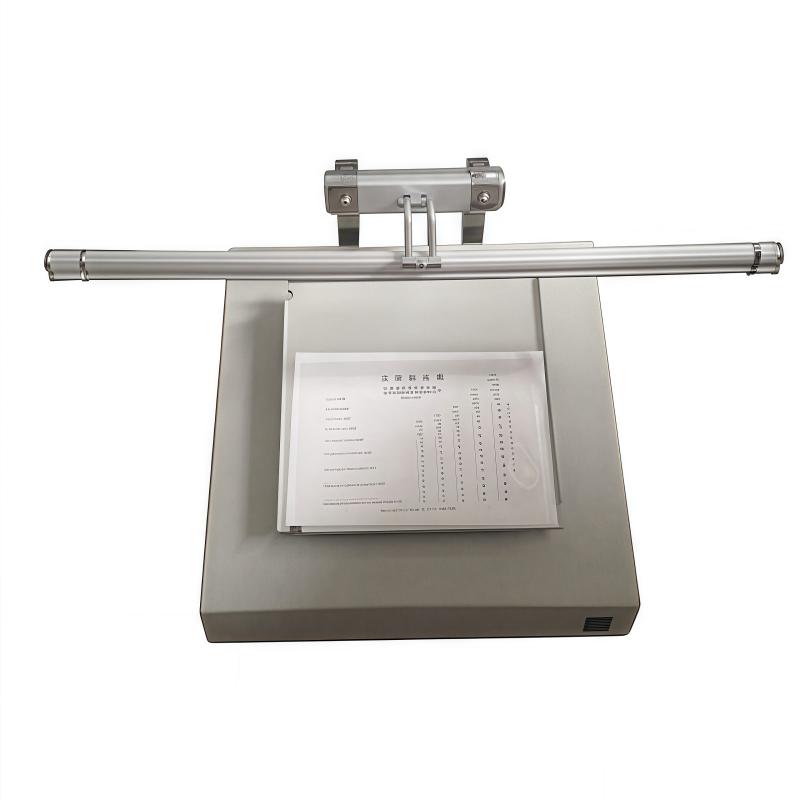
The instrument is composed of machine base, rotary table, 20W fluorescent tube, etc., see schematic diagram. Place the sample on a plastic plate and irradiate it with a 20W fluorescent lamp to observe the fiber bundles and other impurities that are significantly different from the color of the sample surface, and compare it with the dust standard picture.
operating procedures
1. Cut the sample according to the provisions of GB/T450, and cut at least four pieces of 250×250 (mm).
2. Put a sample on the plastic plate of the rotatable rotary table, and check the dust visible to the naked eye on the sample surface under the fluorescent lamp.
The visual distance when observing with the eyes is 250~300mm, with different marks
Circle the dust of different areas, and use the dust standard picture to identify the size of the dust area on the sample. It can also be used to record the number of dust in the same area according to the size of different areas.
3. Rotate the rotary table by 90°, mark the newly discovered dust after each rotation until it returns to the original position, and then check the other side of the sample according to the above method.
4. Check the remaining three samples according to the above method.
test results
1. Calculate the number of dust in each group on the front and back of each sample by grouping according to the table below. If the paper is used on one side, only the dust on the use side is checked, and the four samples are calculated, and then converted into per square meter The number of dust, the calculation result is an integer.
| group | Dust area mm² |
| 1 | ≥2.0 |
| 2 | ≥0.5 2.0 |
| 3 | ≤0.3 |
The calculation formula is as follows
Dirt Count ND (piece/m²)=M/n×16...(1)
In the formula:
M—the total number of dust on the front and back of all samples;
n—the number of dust samples to be inspected.
Note:
① When the same dust penetrates the paper and makes both sides visible, it should be counted as two dusts.
② For large dust and black dust, take a 5m² sample for inspection.
2. When expressed as the number of square millimeters of dust per square meter, calculate according to formula (2), accurate to one decimal place.
Dirt Count SD (mm²/m²) = Σax bx/n×16...(2)
In the formula:
ax—the number of a dust area;
bx—a dust area (mm²);
n—the number of dust samples to be inspected.
- 1Dust meter detection core and quality control essence
- 2What are the common physical properties of paper?
- 3What properties should gravure printing paper be tested for? What are the specific requirements?
- 4What performance requirements should printing paper meet?
- 5What properties should be tested for color offset printing paper? What are the specific requirements?
- 6Determination Method and Standardized Process of Paper and Pulp Dust