
PNSHAR PN-BSTF Buick Smoothness Tester
 PN-BSTF

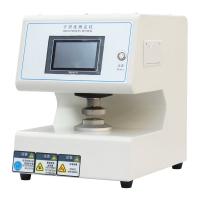
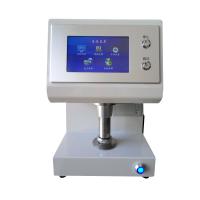


PNshar PN-BSTF Buick Smoothness TesterSPEC
PNshar PN-BSTF Buick Smoothness TesterDetails
PNshar PN-BSTF Buick Smoothness TesterPacking list

- SKU
- NB034743
- Power
- AC220V±10% 2A 50Hz;
- Measurement range
- Divided into (1~ 15) s, (15~ 300) s, (300~9999s) three;
- system Volume
- Large vacuum Volume (380 +/- 1) ml, small vacuum Volume (38 +/- 1) ml;
- Vacuum range
- I rating50.66kPa -> 48kPa;II rating50.66kPa -> 48kPa;III rating50.66kPa -> 29.33kPa;
- test area
- (10±0.05)cm²;
- show
- 5 "color touch screen;
- printout
- Modular integrated thermal printer;
- communication output
- RS232 (standard)/USB (optional);
- Environmental conditions
- Indoor temperature (20 +/- 10) ℃; Relative Humidity < 85%;
- Dimensions
- 375*300*490mm
- Net Weight
- About 38.5kg

Instrument introduction
The PN-BSTF smoothness Tester is a high-precision Bekk-style paper and cardboard surface smoothness testing instrument designed and developed in accordance with the national standards GB/T456 and ISO5627. Smoothness is an index that evaluates the unevenness of the paper surface. It indicates the flatness and smoothness of the paper surface. Smoothness usually refers to the smoothness of paper, which refers to the time required for a certain amount of air to escape between the sample surface and the annular surface under a specific contact state and a certain pressure difference, measured in seconds ( s) means. The longer the time, the smoother the paper and the higher the smoothness. Generally speaking, the smoother the paper, the better the printing quality. Therefore, smoothness is a necessary condition to obtain satisfactory printing quality.
This instrument uses a high-precision pressure sensor, imported oil-free Vacuum Pump, volume block and solenoid valve to form a measurement and control system, achieving mercury-free measurement. A lever mechanical loading is applied to the machine and a cam mechanism is used to unload it. The instrument has functions such as testing, conversion, display, memory, printing, and data processing, and is characterized by easy operation and stable performance.
Features
1. Adopt new module circuit design, with WIFI Internet of Things function. After being connected to the Internet, the test results can be saved to the cloud server, and can be queried and generated through the dedicated QMS quality management system;
2. Lever plus cam clamping mechanism, very easy to operate.
3. It has statistical function, and statistics can display the average value, maximum value, minimum value, standard deviation and coefficient of variation;
4. Modern design concept, compact structure, beautiful appearance and easy maintenance.
Implementation standards
GB/T456, ISO5627, TAPPIT479
- 1Smoothness tester core knowledge guide
- 2Paper Packaging Inspection Solutions
- 3What properties should be tested for color offset printing paper? What are the specific requirements?
- 4What properties should gravure printing paper be tested for? What are the specific requirements?
- 5Influence of smoothness on paper printing and its solution
- 6Roughness/Smoothness Test Method for Paper and Board
- 7What are the factors that affect the printing performance of paper
- 8Vertical and horizontal identification methods and front and back identification methods of paper and paperboard
- 9What is calcium plastic paper?
- 10Gurley triad test paper test paper smoothness