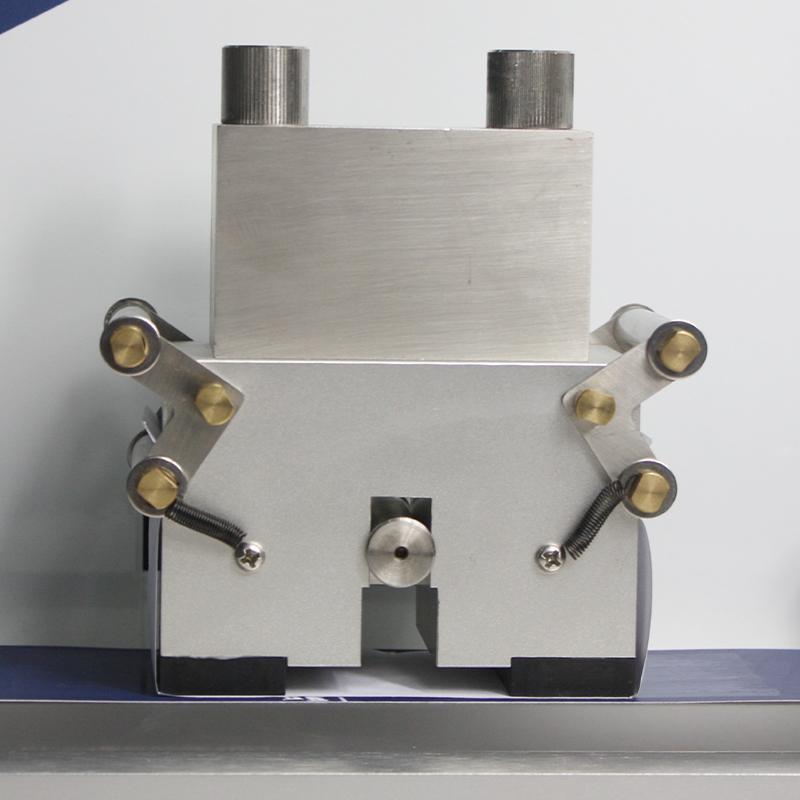

PNSHAR PN-PIDF inks printing Rub Resistance Tester
 PN-PIDF

-
 AISRY NBC-5622 Electric Rub Resistance Tester Crockmeter Color fastness Tester$ 508.00SE
 -
 PUYUN PY-H618 inks printing wear resistance Tester, friction times 9999 LCD display$ 995.00SE
 -
 Jinan HORIZON MCJ-20 Ink Rub Resistance Tester Surface inks Wear resistance instrument$ 951.00SE
 -
 FARI FR-1326 Printing ink decolorization Tester$ 807.00SE
 -
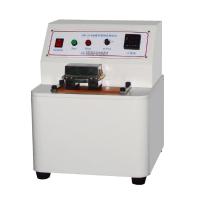 IMT-214 Printing ink wear resistance decolorization Tester





PNshar PN-PIDF Inks printing Rub Resistance TesterSPEC
PNshar PN-PIDF Inks printing Rub Resistance TesterDetails
PNshar PN-PIDF Inks printing Rub Resistance TesterPacking list
- SKU
- NB034769
- Power
- AC220V±10% 2A 50Hz
- Friction paper size
- Width 50mm, general friction paper 210 × 50mm
- Friction sample size
- The width is greater than the width of the friction paper. Generally, the friction sample is 280 × 60mm.
- number of times
- 1~999999
- friction load
- 20N; 2Lb and 4Lb three loads
- friction stroke
- Approx. 60mm
- Display
- 5 "Color touchscreen
- Operating Environment
- Indoor temperature (20 +/- 10) ℃; Relative Humidity < 85%
- Dimensions
- 335*295*295mm
- Weight
- About 16.6kg

product description
PN-PIDF ink printing decolorization testing machine is also called abrasion resistance meter and friction testing machine. It is a testing instrument for the abrasion resistance of ink layer developed by our company in accordance with the national standard GB/T 7706. It is mainly suitable for testing the wear resistance of the printing ink layer of printed matter, the wear resistance of the PS plate photosensitive layer and the wear resistance of the surface coating of related products.
Principle: Fix the friction paper on the friction body, fix the sample to be tested on the friction table, start the instrument, the friction body rubs the sample at a certain speed, and the counter counts once after each reciprocating cycle. When the set value is reached, After a certain number of frictions, the test ends. The wear resistance of the sample is judged by comparing the changes in ink density before and after friction.
This instrument adopts modern mechanical design concepts and ergonomic design principles, and is carefully designed and manufactured using professional microcomputer processing technology. It is a new generation ink printing decolorization testing machine with novel design, easy use, excellent performance, and elegant appearance. .
Implementation standards
GB/T 7706, ASTM D5264, TAPPI T830
Features
1. Adopt new module circuit design, with WIFI Internet of Things function. After being connected to the Internet, the test results can be saved to the cloud server, and can be queried and generated through the dedicated QMS quality management system;
2. Enter the number of frictions into the control system before the test, and the test can be automatically controlled, and a buzzer will sound after each test is completed;
3. The control system has a power-off memory function. After each power-on, the parameter status entered before the last power-off will be maintained;
4. The actuator uses a high-precision gear reduction micro motor to drive the friction body to perform linear reciprocating friction motion;
5. Fully meet the requirements of national standards and be compatible with international standards.
- 1What is the permeability of ink?
- 2Failure of Flexographic Printing and Remedy Method
- 3What faults are prone to photogravure printing? What remedies are there?
- 4Transfer phase of ink transport on the printing press