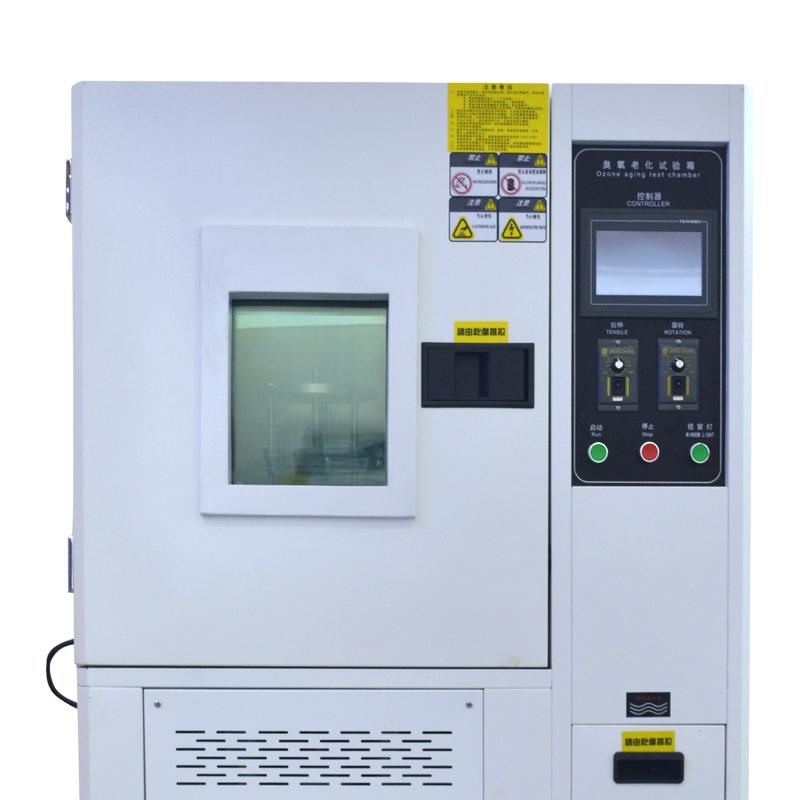
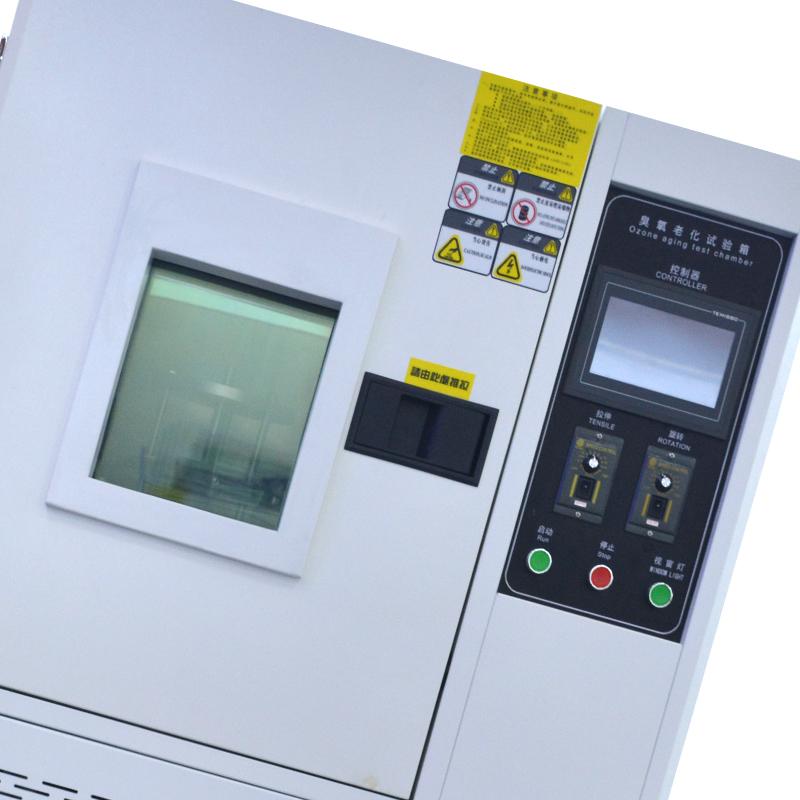
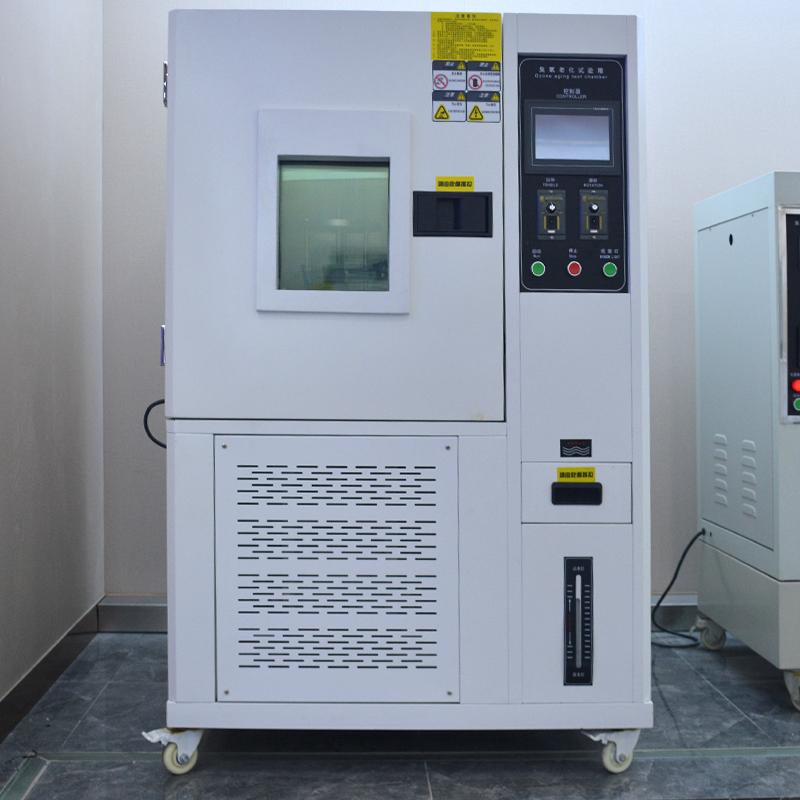
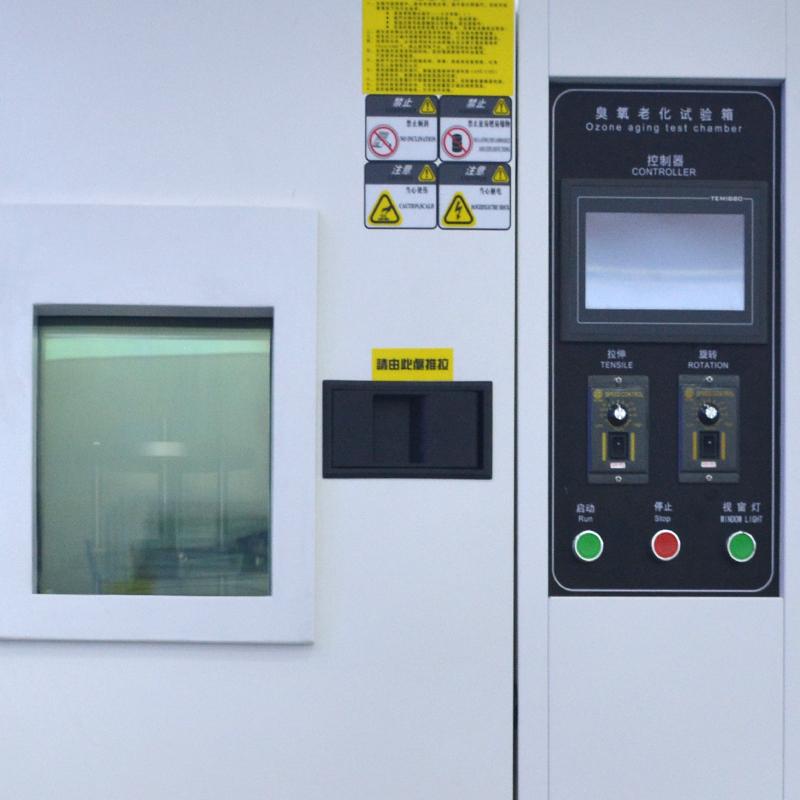
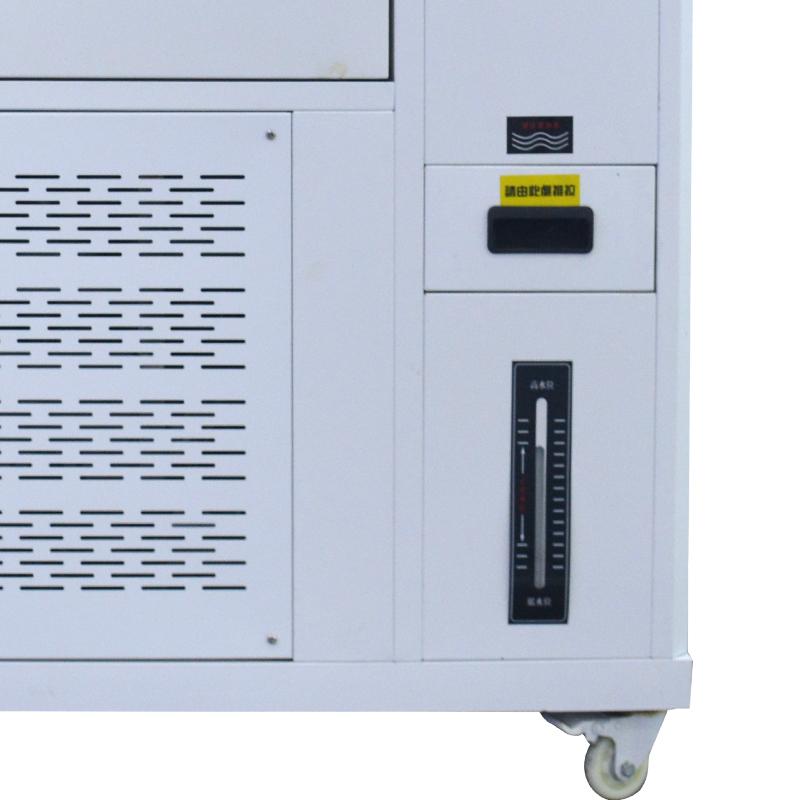

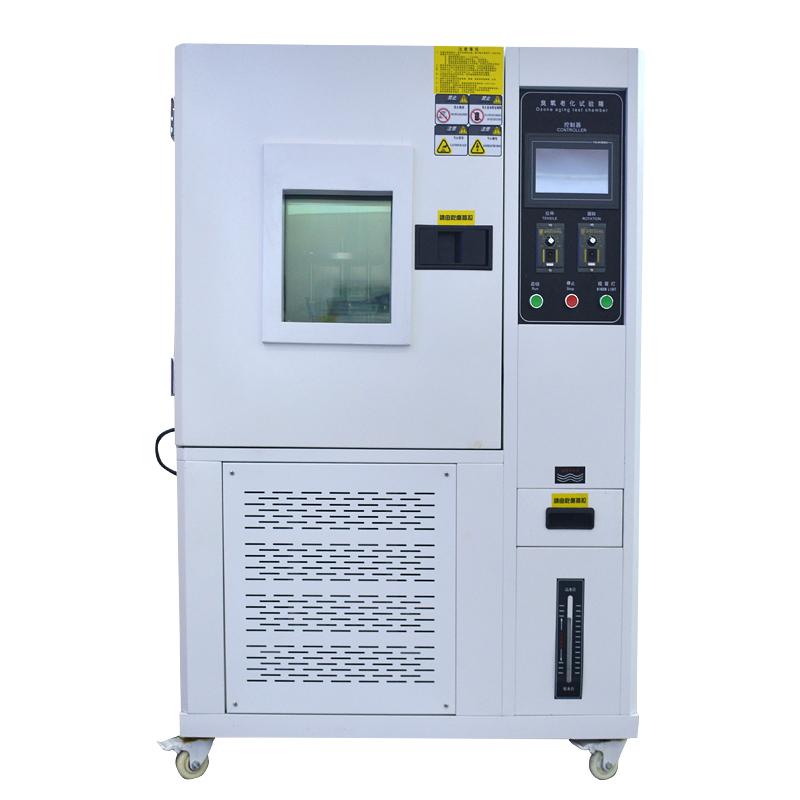
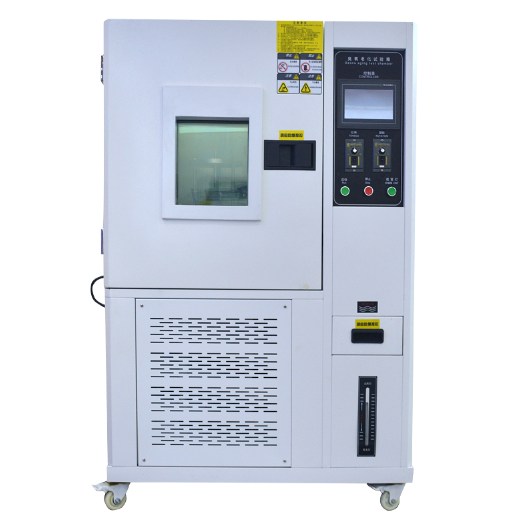
CHINA Ozone Conditioning Test Chamber NBC-CY-100 For Rubber Products
SE NBC-CY-100

HuiTai NBC-CY-100 Ozone Conditioning Test ChamberSPEC
HuiTai NBC-CY-100 Ozone Conditioning Test ChamberDetails
HuiTai NBC-CY-100 Ozone Conditioning Test ChamberPacking list
- SKU
- NB034843
- Ozone concentration range
- 10~1000Pphm or 5~ 500PPM (optional)
- Temperature range
- 0℃~70℃
- Ozone control Accuracy
- ±10%
- Temperature Uniformity
- ±2℃
- Temperature fluctuation
- ±0.5°C
- Humidity Accuracy
- 0.1% RH
- Relative Humidity
- 60~95%RH
- Environment temperature
- RT + 10~80 ℃; -10~80 ℃ (optional)
- Frame lift frequency
- 2R/min (optional)
- Airflow velocity
- 12~16mm/s
- Test gas flow
- 20~70L/min
- Rack speed
- 360 degree swirl/spin sample holder (1 rpm)
Introduction
The Ozone Aging Test Chamber can be used for rubber products such as vulcanized rubber, thermoplastic rubber, cable insulation sheath and other products. Under static tensile deformation, they are exposed to airtight and dark air containing constant ozone concentration and a constant Temperature Test Chamber. Time to test the sample, from the degree of cracking or other performance changes on the surface of the sample to evaluate the ozone aging resistance of the rubber.
Ozone Sample Rack Requirements
1. It is composed of shell, electronic components and ozone generator.
2. Fix the two ends of the sample with clamps under the required elongation. When in contact with ozonated air, the length direction of the sample should be basically parallel to the airflow direction.
3. The fixture should be made of materials (such as aluminum) that are not easy to decompose ozone.
4. Make the sample rotation speed between (20^-25) mm/s, in a plane vertical to the dry air flow, each sample moves continuously along the same path
5. It takes (8^-12) min for the same sample to rotate one circle. The scanning area of the sample (the shaded part shown in Figure 2) is at least 40% of the area of the Test Chamber
6. Sample preparation should comply with the provisions of GB/T 9865.1. Specimens are to be cut from newly molded test pieces or, if desired, from finished products. The sample should be at least
7. Use at least 3 samples for each test condition
8. The width of the long standard sample is not less than 10m, the thickness is 0.2mm above 2.0m, and the length of the sample between the two ends of the clamp before stretching is not less than 40mm
- 1Principle, structure and application of UV aging Test Chamber for aluminum-platinum tape
- 2Introduction of working principle and application of aging Test Chamber for industrial white oil
- 1JJF 2051-2023《Calibration Specification for Ozone Aging Test Chambers》
- 2HG/T 5721-2020《Ozone aging chamber for rubber》
- 3GB/T 7762-2014《Rubber, vulcanized or thermoplastic―Resistance to ozone cracking―Static strain testing》
- 4GB/T 2951.21-2008《Common test methods for insulating and sheathing materials of electric and optical cables - Part 21:Methods specific to elastomeric compounds - Ozone resistance, hot set and mineral oil immersion tests》