
YOUKE YK3650A Melt Flow Indexer
 YK3650A

YouKe YK3650A Melt Flow IndexerSPEC
YouKe YK3650A Melt Flow IndexerDetails
YouKe YK3650A Melt Flow IndexerPacking list

- SKU
- NB036699
- Discharge port diameter
- Φ2.095±0.005mm
- Discharge port length
- 8.000±0.025mm
- Barrel inner diameter
- Φ9.550±0.025mm
- Barrel length
- 152±0.1mm
- Piston rod head diameter
- 9.475±0.015mm
- Piston rod head length
- 6.350±0.100mm
- Temperature range
- 50~400℃
- Thermostatic Accuracy
- ±0.5℃
- Power supply Voltage
- 220V±10% 50HZ
- Operating Environmental conditions
- Environmental temperature 10 ℃ -40 ℃; environment Relative Humidity 30% -80%; no corrosion medium around, no strong air convection; no vibration around, no strong magnetic field interference
- Dimensions
- 250*350*600mm
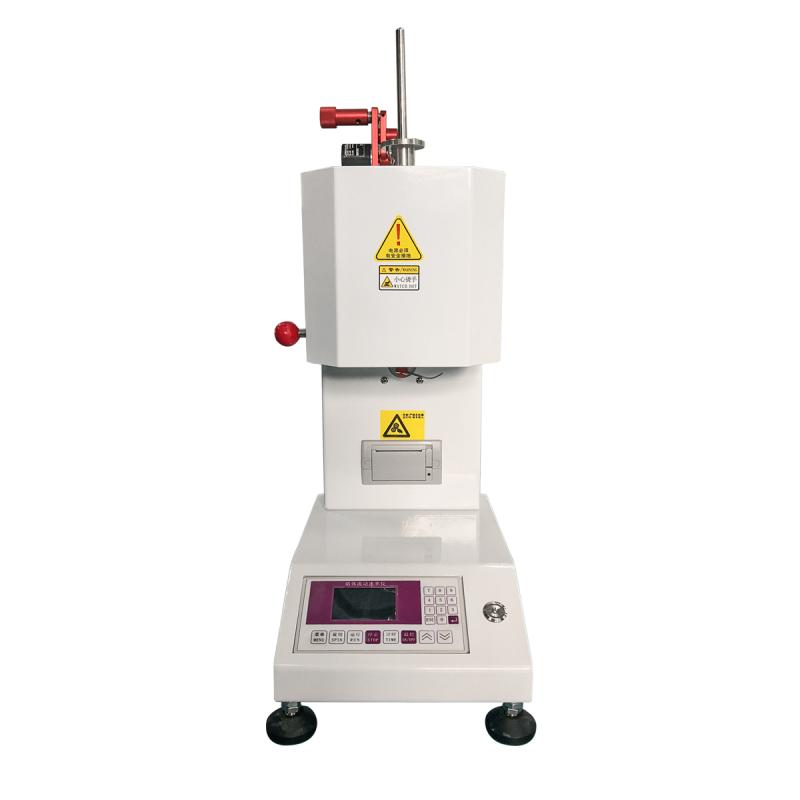
use
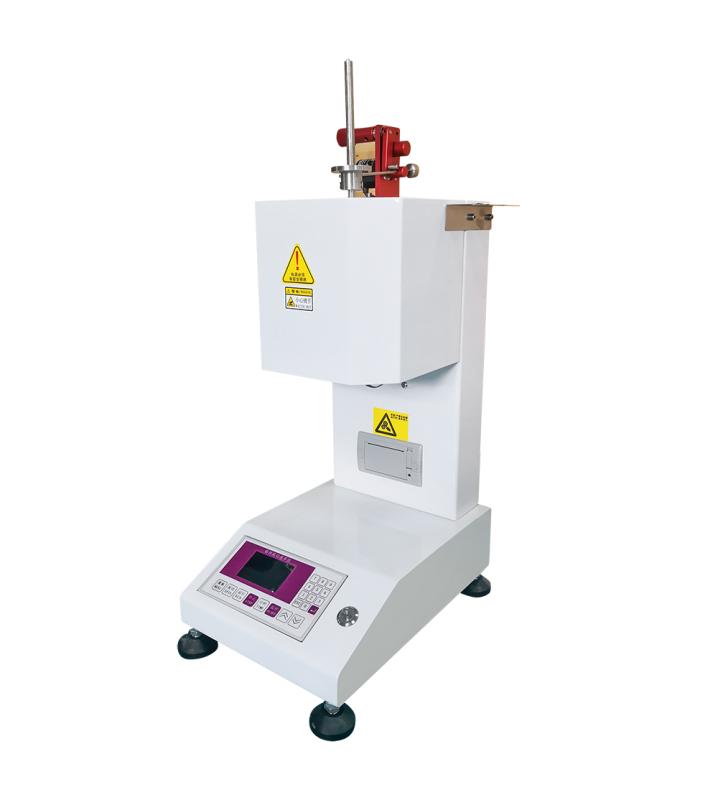
Melt flow rate meter is an instrument for determining the flow properties of plastic polymers at high temperature according to the test method of GB3682-2000, and is used for the determination of melt flow rate of polymers such as polyethylene, polypropylene, polyoxymethylene, ABS resin, polycarbonate, nylon fluoroplastics and other polymers at high temperatures. It is suitable for the production and research of factories, enterprises and scientific research units.
Structure and working principle
The melt flow rate meter is an extruded plastic meter. It is to use a high-temperature heating furnace to make the analyte reach a molten state under the specified temperature conditions. The analyte in this molten state is extruded through a small hole of a certain diameter under the load gravity of the specified weight. In the plastic production of industrial enterprises and the research of scientific research institutes, the "melt (mass) flow rate" is often used to express the physical properties such as fluidity and viscosity of polymer materials in the molten state. The so-called melt flow index refers to the average weight of each section of the extruded sample converted into 10 minutes of extrusion.
1. The melt (mass) flow rate meter is expressed in MFR in grams/10 minutes (g/min)
The formula indicates: MFR(θ, mnom)=tref.m/t
where: θ - test temperature
mnom—nominal load Kg
m – the average mass g of the cut
tref – reference time (10min), S (600s)
t – the time interval s of cut-off
2、Melt (volumetric) flow rate meter is expressed in MVR in cubic centimeters/10 minutes (cm3/10min)
The formula indicates: MvR(θ, mnom) = A.Tref.L/T
where: θ - test temperature
mnom – nominal load Kg
A - the average cross-sectional area of the piston and the barrel (equal to 0.711cm3)
tref – reference time (10min), S (600s)
t – the scheduled measurement time or the average value of each measurement time
L – the piston moves the predetermined measurement distance or the average of the individual measurement distances
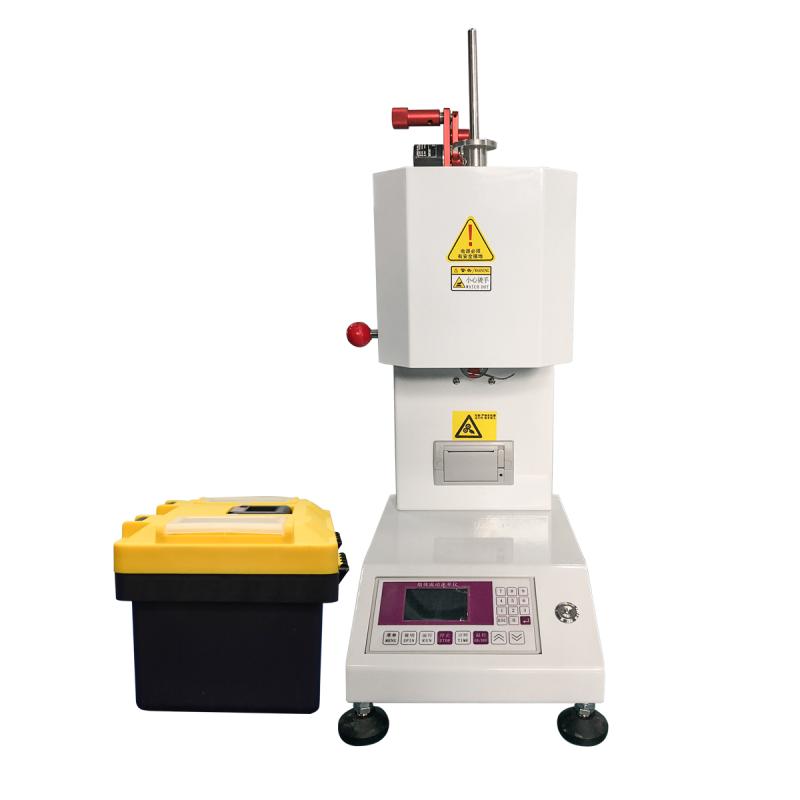
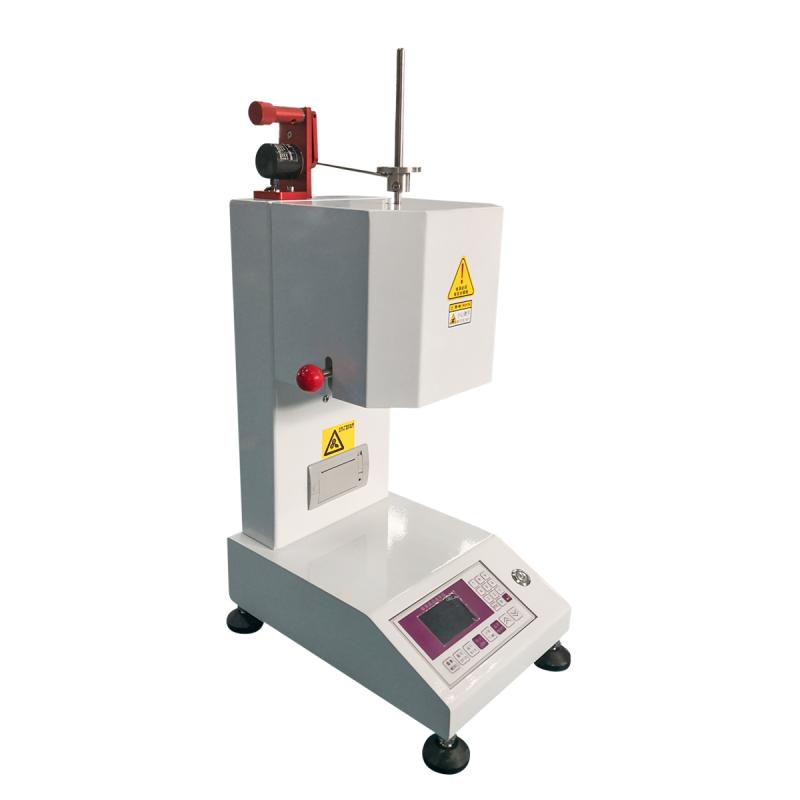
The instrument is composed of a heating furnace and a temperature control system, and is installed on the base of the fuselage (column).
The temperature control part adopts the single-chip microcomputer power control mode, which has strong anti-interference ability, high temperature control accuracy, stable control, and the heating wire in the furnace is wound on the heating rod according to a certain law, so that the temperature gradient is the smallest to meet the standard requirements.
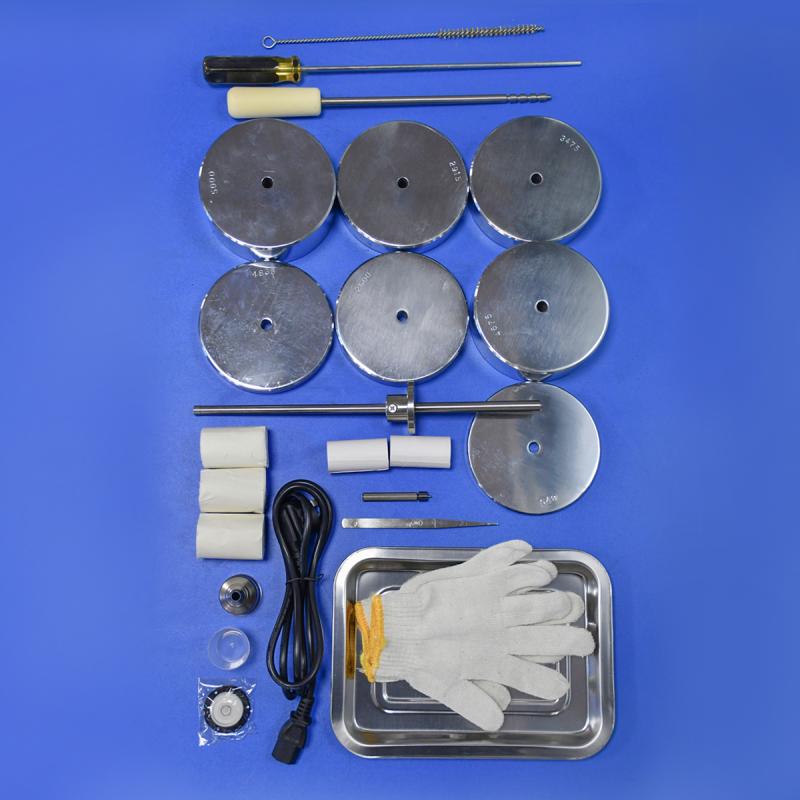
instrumentStandard Test Force (Class 8)
Class 1: 0.325 kg = (piston rod + weight tray + heat shield + weight 1)=3.187N
Level 2: 1.200 kg = (0.325 + 0.875 weight of 2 gauge) = 11.77 N
Grade 3: 2.160 kg = (0.325 + 1.835 weight of No. 3) = 21.18 N
Grade 4: 3.800 kg = (0.325 + 3.475 weight of No. 4) = 37.26 N
Grade 5: 5.000 kg = (0.325 + 4.675 weight of No. 5) = 49.03 N
Grade 6: 10.000 kg = (0.325 + 4.675 weight of size 5 + weight of 5.000 weight of size 6) = 98.07 N
Grade 7: 12.000 kg = (0.325 + 4.675 weight for No. 5 + 5.000 weight for No. 6 + 2.500 weight for No. 7) = 122.58 N
Grade 8: 21.600 kg = (0.325 + 0.875 weight for No. 2 + No. 1.835 + No. 4 for No. 3.)3.475 + 5 No. 4.675 + 6 No. 5.000 + 7 No. 2.500 + No. 8 2.915 weight) = 211.82 N
The relative error of weight mass ≤ 0.5%.
Precautions
A single power outlet needs to have a grounding wire hole and be reliably grounded.
If there is an abnormal display on the LCD monitor, it should be turned off first, and then the test temperature should be reset after turning it on, and the work should be started.
Under normal operation, if the furnace temperature is greater than 450°C, the software will protect it, interrupt the heating, and send out an alarm.
If there is an abnormal phenomenon, such as not being able to control the temperature, not being displayed, etc., the machine should be shut down and repaired.
When cleaning the piston rod, it should not be scraped with a hard object.
- 1Application of Melt index meter on plastic
- 2Melt index meter volume method and mass method
- 3Principle and application of polycarbonic acid ester Melt index meter
- 4Determination of Melt Index of Electrocopying Dry Toner by Melt Index Tester