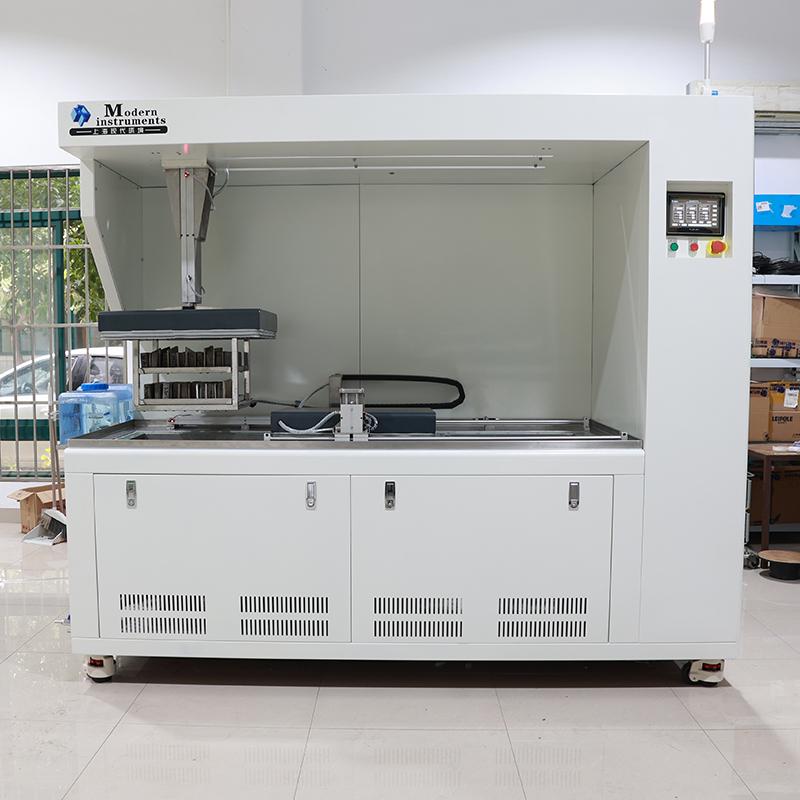

MODERNER XDWR-1-3FA architectural coatings Temperature Test Chamber
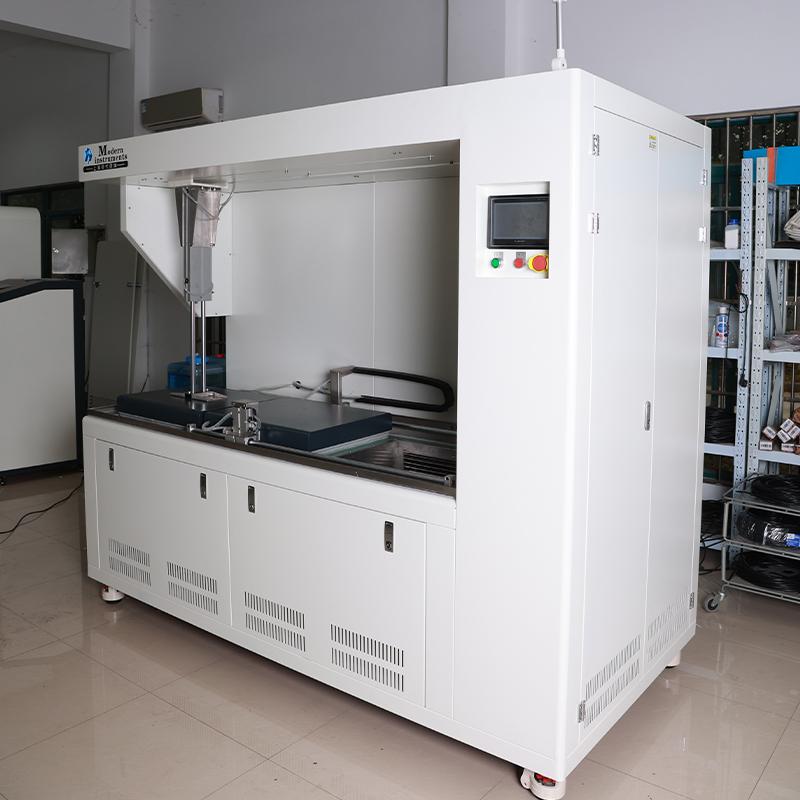
XDWR-1-3FA architectural coatings temperature resistance Test Chamber conforms to JG/T25-2017 "architectural coatings coating resistance to freezing-thaw cycle test method" standard. Three temperature control zones are used to evaluate whether the test plate coating has chalking, cracking, flaking, blistering, discoloration and other phenomena.
Model:
 XDWR-1-3FA

Moderner XDWR-1-3FA Thermal resistance Test Chamber for architectural coatingsSPEC
Moderner XDWR-1-3FA Thermal resistance Test Chamber for architectural coatingsDetails
Moderner XDWR-1-3FA Thermal resistance Test Chamber for architectural coatingsPacking list

- SKU
- NB038431
- exterior size
- 2600 × 1100 × 1860mm (approx.)
- Instrument resolution
- Temperature: 0.1 ℃
- Temperature range
- 1, thermostatic water: 23 +/- 5 ℃, 2, low temperature box: -25~ 20 ℃, 3, high temperature box: room temperature~ 70 ℃
- Temperature Fluctuation
- ±1℃
- Temperature Uniformity
- ≤2℃
- air displacement rate
- 0.5~ 3 times/hour (adjustable)
- Stabilization time
- Stabilization time less than 40min
- noise
- Less than or equal to 75 decibels, there will be no resonance sound between the box door and the equipment door
XDWR-1-3FA
Thermal resistance Test Chamber for architectural coatings
XDWR-1-3FA architectural coatings temperature resistance Test Chamber conforms to JG/T25-2017 "architectural coatings coating resistance to freezing-thaw cycle test method" standard. Three temperature control zones are used to evaluate whether the test plate coating has chalking, cracking, flaking, blistering, discoloration and other phenomena.

This equipment has three temperature control areas, namely constant temperature water control box, low temperature control box and high temperature control box. The equipment hanging basket places the samples into three environmental chambers respectively, and cycles them a specified number of times to evaluate whether the test plate coating has any phenomena such as powdering, cracking, peeling, blistering, or discoloration. It complies with the JG/T25-2017 "Method for Determination of Freeze-Thaw Cycle Resistance of Architectural Coatings" standard.
| Equipment requirements | |
| power supply | â Power supply: AC380V 50Hz |
| â¡ Large load capacity: 10KW | |
| ⢠Large current: 30A | |
| ⣠Power switch capacity: 32A | |
| give water | Please use pure water or distilled water, conductivity â¤10μS/cm2 |
| Move-in conditions | |
| When moving in the parts and components of this laboratory, | Height of path passage and door: more than 1200mm |
| Width of path passage and door: 1900mm or more | |
| Please meet the conditions on the right | When using an elevator; in addition to meeting the above dimensions, the following requirements must also be met |
| Depth: more than 2300mm; load capacity: more than 1000Kg | |
| â»If you cannot meet the above conditions, please be sure to contact our company in advance. | |
FAQ
QIs the price listed on the website the final cost for overseas purchases?
ANo, it isn't. This is the ex-factory price of the product in the Chinese Mainland. In addition to this price, buyers from different countries need to account for additional costs such as shipping fees, tariffs, and others. For specific regional quotes, please consult our customer service or fill out a quotation form.
QWhat is the specific process for purchasing the product?
AFirst, please click on the quotation form on the website and fill in detailed information. Our customer service personnel will then send you a quotation based on your specific country and region, confirming payment and delivery methods. Following this, we proceed with contract signing, payment, and shipment. You can then await delivery.
QWhat should I do if the instrument I purchase needs repair?
AAfter-sales repair for overseas instruments is an unavoidable issue. Our repair terms stipulate that the sender is responsible for the shipping and insurance costs incurred for the repair. Repairs within the warranty period are free, while repair costs beyond the warranty period are determined based on the actual situation.